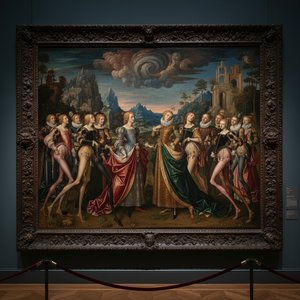
Et liv indgraveret i detaljen: Tobias Stimmers verden
Tobias Stimmer, født i den livlige schweiziske by Schaffhausen i 1539, trådte frem som en central skikkelse i en periode præget af dybe kunstneriske og religiøse transformationer. Selvom detaljerne omkring hans tidligste uddannelse forbliver noget gådefulde, er det tydeligt, at han hurtigt etablerede sig som en alsidig kunstner. Han arbejdede indledningsvis både som væg- og portrætmaler på tværs af Schweiz og ud over landets grænser – fra de pulserende gader i Strasbourg til de elegante hoffer i Baden-Baden. Stimmers karriere udfoldede sig mod baggrunden af Reformationen, en æra der dybt påvirkede kunstneriske udtryk og tematikker i hele Europa. Han var ikke blot en nedskriver af sin tid; han var en følsom fortolker af de skiftende overbevisninger og værdier, som han oversatte til billeder gennemsyret af både præcision og åndelig dybde.Arven fra Holbein og manierismens blomstring
Stimmers kunstneriske slægtshistorie er tydeligt forankret i hans dybe gæld til Hans Holbein den Yngre. Den omhyggelige realisme, den psykologiske indsigt og den rene tekniske mestring, der kendetegnede Holbeins værk, fungerede som en grundlæggende indflydelse på Stimmers tidlige udvikling. Dog efterlignede Stimmer ikke blot sin forgænger; han absorberede disse lektioner og skabte sin egen særprægede vej inden for manierismens fremvoksende æstetik. Dette ses tydeligt i hans tendens til forlængede figurer, elegante kompositioner præget af dynamisk bevægelse og en næsten besat opmærksomhed på intrikate detaljer. Hans arbejde legemliggør en sofistikeret balance mellem renæssancens idealer og de spirende stilistiske tendenser, der skulle definere kunsten i årtier fremover. Han var ikke bange for at eksperimentere med form og komposition, hvor han udfordrede grænserne, mens han opretholdt et bemærkelsesværdigt niveau af teknisk dygtighed.Mesterværker og vedvarende bidrag
Stimmers kunstneriske bedrifter er både mangfoldige og indflydelsesrige. Hans måske mest berømte bidrag findes i de udsøgte malerier, der pryder det astronomiske ur i Strasbourg – et vidnesbyrd om hans evne til sømløst at forene portrætkunst med allegorisk repræsentation. Disse indviklede skildringer, der emmer af symbolsk betydning, fremviser ikke blot hans tekniske formåen, men også hans dybe forståelse for humanistisk tankegang og videnskabelig nysgerrighed. Udover dette monumentale projekt var Stimmer en exceptionelt flittig skaber af designs beregnet til træsnit. Disse tegninger, der ofte illustrerede bibelske scener eller udforskede komplekse allegorier, blev vidt udbredt takket være fremtrædende bogtrykkere som Sigmund Feyerabend i Frankfurt am Main og Bernhart Jobin i Strasbourg, hvilket markant udvidede hans rækkevidde og indflydelse i hele Europa. Selv i dag kan rester af hans vægmalerier anes i "Haus zum Ritter" i Schaffhausen, hvilket giver et forførende glimt ind i hans tidlige dekorative arbejde. Hans portrætter, såsom dem af Jacob Schwytzer og hans hustru Elsbeth Lochmann, står som overbevisende eksempler på hans evne til at indfange ikke blot det fysiske lighedstræk, men også den sociale status og den indre karakter hos hans modeller.Temaer, symbolik og en varig betydning
Gennem hele sin karriere udforskede Stimmer konsekvent temaer som religion, moral og den menneskelige tilstand. Hans illustrationer til træsnit trak ofte inspiration fra bibelske fortællinger eller allegoriske fremstillinger af dyder og laster – en refleksion af tidens åndelige bekymringer. Hans kunstneriske stil er øjeblikkeligt genkendelig gennem flere nøglekarakteristika: en præcision og detaljerigdom, der grænser til det minutiøse; en elegant komposition med vægt på balance og klarhed; den manieristiske forlængelse af figurerne, som giver dem en følelse af ynde og dynamik; samt en gennemtrængende brug af symbolik, der beriger hans værker med lag af betydning. Tobias Stimmers eftermæle rækker ud over hans individuelle kunstværker. Han gav værdifuld indsigt i det kunstneriske og kulturelle landskab i det 16. århundredes Schweiz og omegn, og spillede en afgørende rolle i formidlingen af billeder og idéer under en æra med religiøs og intellektuel opbrud. Han byggede bro mellem højrenæssancens idealer, som blev fremmet af Holbein, og den frembrydende manieristiske æstetik, hvilket cementerede hans position som en dygtig maler, illustrator og en nøglefigur i schweizisk kunsthistorie. Han gik bort i Strasbourg i 1584 og efterlod sig et værk, der fortsat fanger og inspirerer forskere og kunstelskere ligeså meget. Selvom han måske ikke er lige så bredt fejret som nogle af sine samtidige, forbliver Stimmers bidrag betydningsfulde, især for dem, der er interesserede i manierismens udvikling og den rige historie bag schweizisk malerkunst.Spørgsmål & svar
I hvilken historisk periode arbejdede Tobias Stimmer?
Tobias Stimmer arbejdede i Renæssancen-perioden. Perioden placerer kunstnerens virke i historien.
Hvordan er Tobias Stimmers karriere opdelt i perioder?
Kronologi for Tobias Stimmer er en rullevenlig tidslinje, der præsenterer kunstnerens værker i kronologisk rækkefølge, opdelt i kapitler efter karriereperioder.
Hvor kan jeg se Tobias Stimmers værker opdelt efter stemning?
Stemningsrum for Tobias Stimmer er en side, der arrangerer kunstnerens værker efter stemning.