Sælg her
x

1924 - 1990

Kort om kunstneren

  • Movements:
    • surrealism
    • primitivism
  • Top-ranked work: Night bird of Tarkovsky
  • Nationality: Georgia
  • Top 3 works:
    • Night bird of Tarkovsky
    • Strange and ridiculous life of the father
    • The sketch to the movie "Demon". "The person in a black felt cloak"
  • Works on APS: 11
  • Died: 1990
  • Vis flere…
  • Also known as: sergei parajanov
  • Copyright status: Under copyright
  • Lifespan: 66 years
  • Art period: Modern
  • Born: 1924, Tbilisi, Georgia

Kunstquiz

Der er kun ét korrekt svar på hvert spørgsmål.

Spørgsmål 1:
Sergei Parajanov was born in which city?
Spørgsmål 2:
Which of the following best describes Parajanov's cinematic style?
Spørgsmål 3:
What was a significant reason for the suppression of Parajanov's films during his lifetime?
Spørgsmål 4:
Which film is widely considered Parajanov’s most iconic work?
Spørgsmål 5:
Where is Sergei Parajanov buried?

Sergei Parajanov: A Visionary of Armenian Soul

Sergei Parajanov, born Sarkis Hovsepi Parajaniants in Tbilisi, Georgia on January 9th, 1924, was more than just a filmmaker; he was a cultural architect, a visual poet, and a fiercely independent artist who profoundly shaped the landscape of world cinema. His life, tragically cut short by lung cancer in 1990, became intertwined with the turbulent currents of Soviet history, transforming his artistic vision into both a triumph of creativity and a poignant symbol of suppressed expression. Parajanov’s legacy endures not only through his iconic films but also through the unique aesthetic he forged – one deeply rooted in Armenian folklore, religious symbolism, and a deliberate rejection of the prevailing socialist realism that dominated Soviet art.

Early Life and Artistic Foundations

Parajanov's artistic journey began within a family steeped in creative tradition. His parents, Iosif Paradjanov and Siranush Bejanova, were both artists – his father a painter, his mother a sculptor – fostering an environment where art was not merely a profession but a way of life. This early immersion profoundly influenced his later work, imbuing it with a rich tapestry of cultural references and a deep reverence for the traditions of Georgia and Armenia. He studied at Moscow’s prestigious VGIK (All-State Institute of Cinematography) in 1945, absorbing techniques from influential directors like Igor Savchenko and Alexander Dovzhenko, while simultaneously developing his own distinctive style – one that would ultimately challenge the rigid constraints of Soviet artistic dogma. His early experiences with censorship and political upheaval during his imprisonment in 1948 shaped his rebellious spirit and fueled a determination to express himself authentically, regardless of external pressures.

The Birth of a Unique Cinematic Style

Parajanov’s cinematic style was revolutionary, a deliberate departure from the standardized narratives and propagandistic themes favored by Soviet filmmakers. He eschewed conventional dialogue and plot structures in favor of evocative imagery, symbolic sequences, and a haunting musical score – often incorporating traditional Armenian folk music. His films are characterized by meticulous attention to detail, vibrant color palettes, and a dreamlike quality that transports viewers into a world where myth and reality intertwine seamlessly. His most celebrated work, *Shadows of Forgotten Ancestors* (1965), is a prime example of this approach, depicting the tragic love story of a Georgian shepherd and a princess through a series of stunning tableaux vivant – staged scenes that resemble elaborate theatrical productions. This film, alongside *The Color of Pomegranates* (1969), cemented his reputation as a visionary filmmaker whose work transcended traditional cinematic boundaries.

Political Persecution and Artistic Suppression

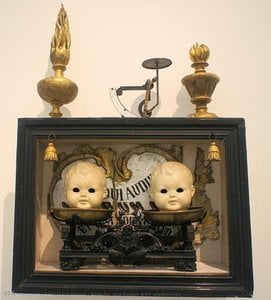
Despite critical acclaim and international recognition, Parajanov’s artistic independence proved to be a dangerous proposition within the confines of Soviet society. His films, with their overt references to Armenian history, religious symbolism, and cultural traditions, were deemed subversive by authorities who sought to enforce ideological conformity. Repeatedly accused of “anti-Soviet” activities and exhibiting “bourgeois decadence,” he faced imprisonment, censorship, and relentless suppression of his work. His arrest in 1973, followed by a lengthy period of house arrest and exile, marked a dark chapter in his life – a testament to the chilling effect of political persecution on artistic expression. Yet, even under duress, Parajanov continued to create, producing poignant sketches, collages, and assemblages that served as both personal reflections and defiant acts of resistance.

Legacy and Enduring Influence

Sergei Parajanov’s untimely death in 1990, just as his films began to gain renewed recognition abroad, felt like a tragic loss for the world of cinema. However, his legacy has only grown stronger over time. His films are now studied and celebrated by critics and filmmakers worldwide, recognized for their innovative techniques, profound symbolism, and enduring emotional power. He is considered one of the 20 greatest film directors of all time, an honor bestowed upon him by the Rotterdam International Film Festival. Parajanov’s influence can be seen in the work of countless contemporary artists and filmmakers who continue to draw inspiration from his unique vision – a testament to the enduring power of artistic courage and creative expression. His art continues to inspire, reminding us of the importance of preserving cultural heritage and celebrating the beauty of human storytelling. He is buried at Komitas Pantheon in Yerevan, a fitting tribute to a man whose spirit remains inextricably linked to the soul of Armenia.