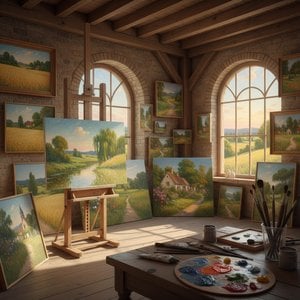
A Quiet Master of Landscape Impressionism
Rolf Julius (1939 – 2011), born Wilhelmshaven, Germany, was a German landscape artist whose serene depictions of nature captivated audiences and cemented his place as a significant figure in contemporary art. While not widely recognized during his lifetime, Julius’s work has gained considerable appreciation posthumously for its masterful execution and profound emotional resonance—a testament to his unwavering dedication to capturing the beauty and tranquility of the natural world.- Early Life & Artistic Beginnings: Julius Mordecai Pincas, whose influence can be seen in Julius’s approach to color and light, instilled a deep appreciation for Impressionism within Julius's formative years. He pursued his artistic education diligently, honing his skills through meticulous observation and experimentation with various mediums.
- Style & Technique: Julius developed a distinctive style characterized by soft brushstrokes and subtle tonal gradations—techniques borrowed heavily from Luminist painters like Julius Leblanc Stewart. His canvases often portray expansive landscapes bathed in diffused sunlight, conveying an atmosphere of stillness and contemplation. He favored oil paints on canvas, achieving remarkable luminosity through careful layering and blending.
- Notable Works: Among his most celebrated pieces is “Uenopark 3,” a breathtaking panorama capturing the essence of German countryside—a scene rendered with exceptional detail and imbued with palpable serenity. Similarly, “Untitled” canvases explore similar themes of quiet beauty and atmospheric observation. These artworks exemplify Julius’s commitment to conveying emotion through visual representation.
- Influences & Artistic Vision: Julius drew inspiration from the Romantic landscape tradition, particularly the works of Caspar David Friedrich, whose emphasis on sublime grandeur and spiritual contemplation mirrored Julius's artistic sensibilities. He sought not merely to depict scenery but to evoke feelings of peace and wonder—a goal achieved through his masterful manipulation of color and texture.
- Legacy & Recognition: Although Julius remained largely independent during his career, his work has garnered increasing acclaim in recent years. Critics have praised his ability to translate the intangible qualities of nature onto canvas with remarkable accuracy and sensitivity. His enduring contribution to landscape Impressionism ensures that Rolf Julius’s serene visions continue to inspire viewers today.
Exploring the Essence of Tranquility
Julius's artistic philosophy revolved around capturing not just what he saw but how it *felt*. Like Leblanc Stewart, he understood that art could transcend mere visual representation and communicate deeper emotional truths. He meticulously studied light—particularly its interplay with color—to create canvases that pulsed with an inner luminescence. This dedication to technique is evident in every brushstroke of “Untitled,” demonstrating a profound respect for the materials and processes involved in artistic creation. His landscapes are more than just pictures; they’re invitations to pause, breathe deeply, and experience the quiet grandeur of the natural world—a legacy that continues to resonate with collectors and art enthusiasts alike.Spørgsmål & svar
Kan jeg gennemse Rolf Juliuss værker efter stemning?
Rolf Juliuss værker kan gennemses efter stemning på kunstnerens Stemningsrum-side, som arrangerer kunstværkerne efter deres registrerede stemninger.
Kan jeg studere Rolf Juliuss farvebrug på tværs af alle værker?
Farvepalettens genom for Rolf Julius er en side, der præsenterer farveprofilen i kunstnerens samlede værk.
Kan jeg udforske Rolf Juliuss værker efter emne?
Emneatlas for Rolf Julius er en side, der kortlægger kunstnerens værker efter deres motiver.