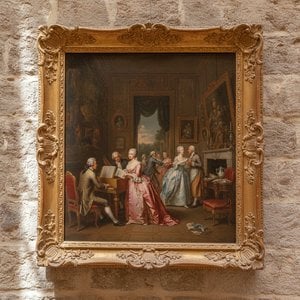
Pompeo Massani: A Painter of Italian Life’s Revelations
Pompeo Massani, born in Florence in December 1850 and passing away in 1920, remains a captivating figure within the landscape of late 19th-century Italian art. More than simply a painter, he was an astute observer of everyday life, capturing the vibrant energy and often boisterous spirit of his native city through a distinctive lens of satirical charm and meticulous detail. His canvases aren’t grand historical narratives or solemn portraits; instead, they offer intimate glimpses into the social rituals, public celebrations, and quiet moments that defined Italian society during a period of significant transformation.
Massani's artistic journey began with formal training at the prestigious Academy of Fine Arts in Florence. He honed his skills under the tutelage of Michele Gordigiani, absorbing traditional techniques while simultaneously developing a unique style characterized by a remarkable ability to portray human character and emotion. His early success was cemented by the award of a silver medal at the Exhibition of Rovigo in 1879 for “La politica in canonica,” a painting that immediately established his talent for capturing lively scenes with a keen eye for detail and a subtle, often humorous, commentary on contemporary society.
The World of Tambourines: Scenes from Florentine Life
Massani’s most celebrated works depict scenes drawn from the bustling streets and public spaces of Florence. He frequently chose subjects that were both commonplace and revealing – taverns filled with boisterous patrons, lively street performances, crowded markets, and gatherings celebrating life's simple pleasures. These weren’t idealized representations; Massani embraced a realism rooted in observation, meticulously rendering every face, gesture, and detail to create an immersive experience for the viewer. His paintings of “Tambourines” – a series including works like *Al teatro delle Marionette* (At the Puppet Theater) and *Al circo equestre* (At the Equestrian Circus) – are particularly noteworthy for their dynamic compositions and ability to convey the energy and excitement of these public events.
A defining characteristic of Massani’s work is his masterful depiction of elderly individuals. He frequently portrayed older men engaged in seemingly frivolous activities—drinking, celebrating, or simply enjoying a quiet moment—often imbued with a sense of wry humor and gentle irony. These portraits weren't merely depictions of age; they were explorations of the human condition, capturing the resilience, wit, and enduring spirit of those who had witnessed decades of change. His painting *Il saluto al gobbo* (Greeting to the Hunched Man) exemplifies this approach, presenting an elderly man with a mischievous grin, suggesting a life lived fully and without regret.
Technique and Influences
Massani’s technique was characterized by a meticulous attention to detail and a skillful use of color. He employed a rich palette, often utilizing warm earth tones and vibrant hues to capture the light and atmosphere of his subjects. His brushwork was generally smooth and controlled, creating a sense of realism while maintaining an expressive quality. While he studied under Gordigiani, adhering to traditional academic principles, Massani’s work demonstrates a subtle departure from rigid formality, injecting a degree of spontaneity and immediacy into his compositions.
It's believed that Massani drew inspiration from the works of artists like Jean-François Millet, whose depictions of rural life offered a similar focus on everyday subjects. However, Massani’s work is distinctly Italian in its sensibility, reflecting the cultural traditions and social dynamics of Florence. The influence of the *macchia*, the Tuscan landscape, can also be detected in his use of light and color, creating a sense of warmth and intimacy.
Legacy and Recognition
Pompeo Massani’s contributions to Italian art are often understated but profoundly significant. He wasn't a revolutionary artist seeking to overturn established conventions; rather, he was a skilled observer who captured the essence of his time with remarkable sensitivity and humor. He was recognized for his talent by being named honorary professor of the Royal Academy of Fine Arts of Florence in 1887 and receiving the Cross of the Knight of the Order of the Crown of Italy in 1887, a testament to his standing within the artistic community.
Today, Massani’s paintings are treasured for their ability to transport viewers back to the vibrant streets of Florence. His work offers a unique window into Italian society during a period of rapid change and provides a lasting reminder of the beauty and humor found in everyday life. His legacy continues to be celebrated through exhibitions and reproductions, ensuring that his captivating scenes will continue to delight and inspire audiences for generations to come.