A Shadowy Figure, a Radiant Legacy: The Life and Art of the Olivetan Master
The identity of the Olivetan Master remains one of the most enduring mysteries in 15th-century Italian art. Known primarily through his exquisite illuminated manuscripts – particularly a lavish Gradual (musical book) now housed at the Beinecke Library in Yale – he represents a pivotal, yet largely undocumented, figure within the vibrant artistic milieu of Milan and beyond. His work, characterized by a delicate balance of meticulous detail and expressive spirituality, reflects a confluence of influences, ultimately establishing him as one of the most important illuminators of the Milanese school during this period.
Born around 1429 in Milan, likely within the walls of the Benedictine monastery of Santa Maria di Baggio, the Olivetan Master’s early life remains shrouded in obscurity. He was ordained as a friar within the Order of Monteoliveto – an offshoot of the larger Benedictine order known for its emphasis on contemplative prayer and devotion to Saint Prosper – around 1431. This monastic connection profoundly shaped his artistic output, imbuing it with a deep sense of piety and reverence. His documented activity spanned across several Lombard cities including Genoa, Venice, Padua, and Bologna between 1431 and 1437, suggesting a period of intense artistic exploration and apprenticeship.
The Olivetan Master’s style is immediately recognizable by its refined elegance and subtle emotional depth. He was heavily influenced by the “Master of the *Vitae Imperatorum*,” an anonymous Milanese illuminator known for his meticulously rendered portraits of emperors and biblical figures. This influence manifests in the careful attention to facial features, the graceful poses, and the overall sense of dignified solemnity that permeates many of his works. However, unlike his predecessor, the Olivetan Master introduced a softer, more intimate approach to composition, prioritizing atmosphere and emotional resonance over rigid formality.
The Art of the Gradual: A Window into His Technique
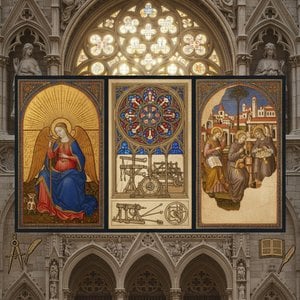
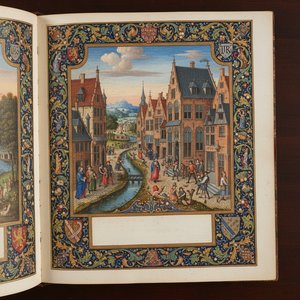
Perhaps the most significant surviving example of the Olivetan Master’s artistry is the Beinecke MS 1184 – an illuminated Gradual dating from around 1439-47. This magnificent manuscript, a cornerstone of liturgical music, showcases his exceptional technical skill and artistic vision. The intricate gold leaf designs, vibrant pigments, and exquisitely rendered miniatures are testament to his mastery of illumination techniques. The use of the ivory gesso ground, combined with thin layers of paint applied in a technique reminiscent of watercolor, creates a remarkable sense of luminosity and depth.
Notable features within the Gradual include a historiated initial P depicting the Prophet Samuel, introducing the text “Prepare your hearts for the Lord and serve.” The manuscript is further adorned with heraldic emblems – specifically the arms of the Visconti family, rulers of Milan – and the emblem of the Olivetan Order itself. The meticulous detail evident in these decorative elements underscores the importance placed on both aesthetic beauty and symbolic representation within the context of monastic worship.
Connections and Collaborations: Unraveling a Complex Artistic Network
Recent scholarship has shed new light on the Olivetan Master’s artistic network, suggesting that he was not entirely independent but rather part of a collaborative workshop. Analysis of his style reveals striking similarities to works attributed to an anonymous artist known as “the Collaborator of the Olivetan Master,” active around the same period in Lombardy. This collaborator likely assisted with tasks such as miniature painting and initial design, while the Olivetan Master oversaw the overall illumination of the manuscripts.
Furthermore, stylistic parallels have been identified between the Olivetan Master’s work and that of Paolo Veronese, a prominent Venetian painter of the High Renaissance. This connection suggests a shared artistic lineage and an exchange of ideas within the broader Italian art world. The influence of other masters such as the Master of the *Vitae Imperatorum* is also evident, highlighting the Olivetan Master’s position at the crossroads of diverse artistic traditions.
Legacy and Historical Significance
Despite the enduring mystery surrounding his identity, the Olivetan Master’s legacy remains secure. His illuminated manuscripts are prized for their exquisite beauty, technical virtuosity, and profound spiritual depth. They offer a valuable glimpse into the artistic practices of 15th-century Milan and provide insights into the religious life of the Olivetan Order. His work continues to inspire admiration and scholarly debate, solidifying his place as one of the most important – and enigmatic – figures in the history of Italian illumination.