Matthys Pool: A Dutch Master of Baroque Detail
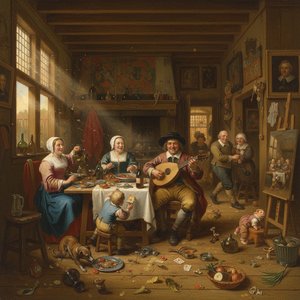
Matthys Pool, born in Amsterdam in 1676 and tragically passing away in the same city in 1732, remains a captivating figure within the history of 17th-century Dutch art. While he may not command the immediate recognition afforded to Rembrandt or Vermeer, Pool’s meticulous craftsmanship and profound understanding of religious and classical subjects have earned him a significant place as a Baroque painter and, crucially, an accomplished engraver. His legacy isn't one of grand, sweeping compositions but rather of exquisite detail, subtle shading, and a remarkable ability to capture the essence of his subjects – often biblical figures or scenes from antiquity – with astonishing realism. Initially trained in engraving, Pool’s skill with line and texture proved invaluable when he began working alongside renowned painters like Gerard de Lairesse, producing engravings for De Lairesse's seminal *Groot schilderboeck*, a comprehensive guide to painting techniques. This early experience undoubtedly shaped his eye for detail and his appreciation for the nuances of artistic representation.
Early Life and Artistic Training
Pool’s biography is somewhat sparse, lacking extensive documentation beyond confirming his birth and death in Amsterdam. However, records indicate a shift in his career trajectory around 1708 when he married Barend Graat's daughter, relocating to the Leidsegracht district. This move coincided with an increased focus on engraving, particularly for publications featuring ivory sculptures after the classics, notably those by Francis van Bossuit. His work during this period demonstrates a growing mastery of technique and a keen interest in replicating the intricate details of sculptural forms. Crucially, Pool’s engravings weren't merely copies; he imbued them with his own artistic sensibility, adding subtle variations in line and shading that elevated them beyond simple reproductions. He also became known for his depictions of the Bentvueghels – traveling birdmen who created and traded engraved illustrations of exotic birds – after paintings by Domenicus van Wijnen (also known as Askaan). These prints offer a fascinating glimpse into 18th-century travel, commerce, and artistic exchange.
The Art of Engraving and Painting
Pool’s true brilliance lies in the intersection of his engraving skills and his painting abilities. He wasn't simply translating images from one medium to another; he was developing a unique visual language that combined the precision of line with the richness of color and texture. His paintings, particularly those depicting religious scenes and classical figures, are characterized by an almost photographic realism – a remarkable feat achieved through careful observation, meticulous layering of paint, and a masterful understanding of light and shadow. The influence of Caravaggism is evident in his use of dramatic chiaroscuro, creating powerful contrasts between light and dark that heighten the emotional impact of his compositions. However, Pool’s style transcends mere imitation; he infused these influences with a distinctly Dutch sensibility – a focus on clarity, detail, and a subtle sense of restraint.
Notable Works and Artistic Style
Among Pool's most celebrated works is “Mars,” a dramatic depiction of the Roman god of war, showcasing his ability to render complex anatomical details and convey a palpable sense of power and intensity. His engravings after Domenicus van Wijnen are equally impressive, capturing the vibrant colors and intricate patterns of the original paintings with remarkable fidelity. Pool’s style can be characterized as meticulously detailed, emotionally resonant, and deeply informed by both classical antiquity and Baroque aesthetics. He wasn't interested in grand gestures or flamboyant displays; instead, he sought to capture the quiet dignity and profound beauty of his subjects through painstaking observation and skillful execution.
Historical Significance and Legacy
Matthys Pool’s contribution to 17th-century art is often overlooked, overshadowed by more prominent figures. However, his work represents a vital link between the Mannerist and Baroque periods, demonstrating the continued importance of classical themes and techniques in Dutch painting during this transformative era. His engravings, in particular, played a crucial role in disseminating artistic ideas and images throughout Europe. Furthermore, Pool’s dedication to detail and his mastery of both engraving and painting established him as a highly respected artist within his time, leaving behind a body of work that continues to fascinate and inspire art historians today. He stands as a testament to the quiet power of meticulous craftsmanship and the enduring appeal of classical subjects rendered with exceptional skill and sensitivity.