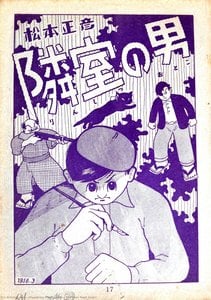
A Pioneer of Alternative Manga: The Cinematic Vision of Masahiko Matsumoto
Masahiko Matsumoto, born in Osaka, Japan, on November 24, 1934, and passing away on February 14, 2005, stands as a pivotal figure in the evolution of Japanese manga. Often overshadowed by contemporaries like Osamu Tezuka and Yoshihiro Tatsumi, Matsumoto nevertheless carved out a unique space for himself, becoming a foundational innovator of alternative manga through his groundbreaking incorporation of cinematic techniques into the medium from the mid-1950s onward. His early life was marked by an ironic restriction: his father, a high school principal, forbade him to read comics. This initial prohibition, however, seems only to have fueled a latent artistic curiosity that would eventually blossom into a revolutionary approach to storytelling. The family’s evacuation to Kobe during the tumultuous final years of World War II further shaped his formative experiences, instilling a sense of displacement and perhaps contributing to the mature themes that would later characterize his work. After the war, Matsumoto found solace in magazines like *Shōnen Club*, initially drawn to its prose fiction and illustrations, but it was an encounter with Osamu Tezuka himself—a pilgrimage for an autograph—that solidified his ambition to become a manga artist.
The Birth of Komaga: A New Visual Language
Matsumoto’s professional journey began in 1953 with the publication of *Botchan Sensei*, a schoolhouse comedy, but it was his shift towards more complex narratives that truly set him apart. Working within the rental library (kashihon) market, he quickly recognized the limitations of existing manga conventions and sought to forge a new path. This quest led to the development of “komaga” (“panel pictures”), a style deliberately conceived as an alternative to traditional manga aesthetics. Komaga was not merely a stylistic choice; it represented a conscious effort to elevate manga by borrowing directly from the language of cinema. Matsumoto meticulously studied film frames, incorporating dynamic panel composition, perspectival depth, and shifting viewpoints to create immersive, story-driven experiences. This innovative approach prioritized visual pacing and atmospheric tension, resulting in works that were strikingly different from the often lighthearted fare dominating the market at the time. His 1956 anthology *Shadow*, particularly his locked-room mystery “The Man Next Door,” stunned contemporaries with its sophisticated narrative structure and evocative imagery. This period saw a burgeoning artistic exchange as Matsumoto collaborated closely with Yoshihiro Tatsumi, leading to the coining of the term "gekiga" ("dramatic pictures") – a movement that would fundamentally alter the landscape of Japanese comics.
Gekiga Kōbō and the Pursuit of Mature Themes
The mid-to-late 1950s were a period of intense creative ferment for Matsumoto, culminating in the formation of Gekiga Kōbō in 1959 alongside Tatsumi and Takao Saito. This atelier served as a collective space for artists dedicated to exploring more realistic, adult-oriented themes—a direct response to what they perceived as the limitations of mainstream manga aimed primarily at children. The group’s publication, *Matenrō*, provided a platform for their experimental work, pushing boundaries and challenging conventional notions of storytelling. Matsumoto produced an astonishing volume of pages during this time, driven by a desire to establish gekiga as a distinct artistic form. However, internal divisions eventually led to the atelier's disbandment in 1962, marking a turning point in his career. Despite its relatively short lifespan, Gekiga Kōbō played a crucial role in transforming manga into a medium capable of addressing complex social issues and psychological depths.
Legacy and Rediscovery
While Matsumoto enjoyed recognition within the gekiga community during his lifetime, much of his early work remained obscure due to the ephemeral nature of kashihon publications. It wasn’t until recent decades that his contributions began to receive wider appreciation, thanks in part to dedicated translations by Breakdown Press (2014) and Top Shelf Productions. These efforts have reintroduced his groundbreaking manga to a new generation of readers, revealing the profound influence he exerted on alternative comics both within Japan and internationally. Matsumoto’s unique komaga style continues to inspire artists today, demonstrating the enduring power of his cinematic vision. His work stands as a testament to the transformative potential of manga—a medium capable of not only entertaining but also challenging, provoking thought, and offering profound insights into the human condition.
Key Works: *Botchan Sensei*, *Kaidanji*, “The Man Next Door”, *Cigarette Girl*.
Influences: Osamu Tezuka, cinematic techniques, post-war Japanese society.
Movement Affiliation: Gekiga movement, pioneer of Komaga style.
Af WahooArt.com' redaktion
Kunstquiz
Der er kun ét korrekt svar på hvert spørgsmål.
Spørgsmål 1:
Masahiko Matsumoto is considered a pioneer of what type of manga?
Spørgsmål 2:
What technique did Matsumoto incorporate into his manga from the mid-1950s onward?
Spørgsmål 3:
What was Matsumoto's unique style called?
Spørgsmål 4:
With which other artists did Matsumoto’s style catalyze the gekiga movement?
Explore the profound beauty of Japanese landscape painting. From Hokusai's iconic vistas to Zen-inspired compositions, discover the spiritual depth and historical mastery of Ukiyo-e art in this expert cultural retrospective.
Embark on a cultural journey through Japan's Edo Period. Discover the profound beauty of Ukiyo-e masters like Kuniyoshi and Toshinobu, exploring the vibrant legacy of Kabuki and Sumo through an art-history lens for the true classic art enthusiast.
Explore the profound beauty of Japanese Ukiyo-e art. Discover the legacy of Hokusai and the Utagawa school through an expert exploration of Edo-period aesthetics, seasonal motifs, and the enduring global influence of Japan's 'Floating World' on fine art history.