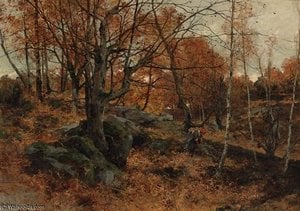
Leon Germain Pelouse: En bretonsk visionær
Leon Germain Pelouse (1838 – 1891) trådte frem fra det stille franske landskab, nærmere bestemt Pierrefort i Val-d'Oise, som en selvlært kunstner, der trodsede konventionerne og fangede publikum med sine stemningsfulde skildringer af Bretagnes landskaber. I modsætning til mange af sin tids kunstnere, der søgte store fortællinger eller historiske motiver, dedikerede Pelouse sig til at indfange den subtile skønhed i den bretonske region – den bugtende Sejn ved Poses og de fredfyldte landsbyer ved flodbredden badet i tusmørke – og transformerede dem til lærreder fyldt med atmosfærisk dybde og teksturel rigdom.- Tidligt liv og kunstneriske begyndelser: Født i 1838, begyndte Pelouses kunstneriske rejse uventet. Han arbejdede oprindeligt som handelsrejsende, hvilket sleb hans evne til at observere, før han opdagede maleriet i en alder af seksten år. Hans militærtjeneste under den fransk-preussiske krig gav ham formative oplevelser, der uden tvivl formede hans verdenssyn og nærede hans passion for at skildre den naturlige verden.
- Salon-debut og kritisk modtagelse: Pelouses kunstneriske ambitioner blev cementeret, da han påbegyndte professionelt maleri i en alder af syvogtyve, hvilket markerede hans debut på Salon de Paris i 1865. På trods af betydelig kritik af hans stil – karakteriseret ved løse penselstrøg og en dæmpet farvepalette – holdt han fast, drevet af en urokkelig tro på sin egen vision.
- Bretonsk inspiration og landskabsmaleri: Ved at flytte til Bretagne omkring 1870 fandt Pelouse frugtbar jord for sit kunstneriske udtryk. Regionens dramatiske kystlinje, bølgende bakker og tågede dale tjente som en konstant inspirationskilde, hvilket resulterede i en omfattende produktion af landskabsmalerier, der hurtigt vandt anerkendelse. Hans omhyggelige opmærksomhed på detaljen – især samspillet mellem lys og skygge – etablerede ham som en fremtrædende skikkelse inden for Barbizon-skolen.
- Anerkendelse og mæcenat: Pelouses dedikation blev belønnet med hyldest fra både kunstfæller og kritikere, hvilket kulminerede i en prestigefyldt medalje tildelt for ”Vallée de Cernay” i 1873. Bemærkelsesværdigt nok anerkendte den franske stat hans talent ved at købe adskillige værker – som i dag findes på institutioner som Orsay, Musée Malraux og Nantes Kunstmuseum – hvilket cementerede hans eftermæle som en af Bretagnes mest fejrede malere.
- Eftermæle og indflydelse: Pelouses værk legemliggør en dyb forbindelse til naturen og afspejler impressionismens indflydelse på fransk kunst. Hans landskaber fortsætter med at inspirere til beundring for deres serene skønhed og mesterlige teknik, hvilket demonstrerer den vedvarende kraft i observation og kunstnerisk følsomhed. Han forbliver en vigtig kunstner i historien om bretonsk kunst.
Bemærkelsesværdige værker og kunstnerisk stil
Pelouses oeuvre inkluderer mesterværker som ”La Seine à Poses”, ”Riverside Village At Dusk” og ”Landscape With Storm Clouds”. Hans særprægede stil prioriterede indfangelsen af flygtige øjeblikke af lys og atmosfære ved at benytte løse penselstrøg og subtile farveharmonier til at formidle motivets essens. Han anvendte dygtigt teksturerede overflader – ofte opnået gennem impasto – for at give sine lærreder en mærkbar fysisk tilstedeværelse og emotionel resonans. Kunstnerens omhyggelige gengivelse af naturlige elementer, især skyer og løv, vidner om en dyb forståelse for kunstneriske principper rodfæstet i observation og følsomhed.Forbindelser og indflydelser
Pelouses kunstneriske sans var uden tvivl formet af Barbizon-skolen, som fremmede friluftsmaleriet (plein air) og vægtede realismen som et middel til at formidle det franske landskabs storhed. Desuden nød han godt af samarbejder med kunstfæller som Albert Gabriel Rigolot, der fungerede som mentor og fremmede hans kunstneriske udvikling. Hans arbejde afspejler også en interesse for orientalistiske temaer – især landskaber inspireret af Marokko – hvilket demonstrerer de bredere kunstneriske strømninger, der bevægede sig gennem Europa i slutningen af det 19. århundrede.Museumssamlinger
Pelouses malerier er stolt udstillet på flere fremtrædende franske museer, herunder Musée d'Orsay og Musée Malraux, hvilket viser hans bidrag til nationens kunstneriske arv. Disse institutioner giver besøgende mulighed for at opleve skønheden og den emotionelle dybde i Pelouses landskaber på tæt hold – et vidnesbyrd om hans vedvarende indflydelse på bretonsk kunst og impressionistisk maleri.Spørgsmål og svar
Kan jeg gennemse Leon Germain Pelouses værker efter farvepalette?
Se Leon Germain Pelouses værker sorteret efter farvepalette på kunstnerens Efter farvepalet side.
Hvilken by og hvilket land er Leon Germain Pelouse født i?
Leon Germain Pelouse blev født i Pierrefort, i Frankrig.
Hvilke kunstværker af Leon Germain Pelouse har flest visninger?
Siden Statistik for Leon Germain Pelouse præsenterer statistikker beregnet ud fra kunstnerens værker, som er listet på denne hjemmeside.