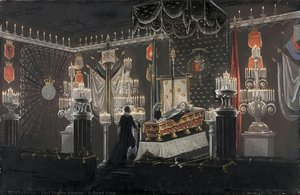
The Shadow of Industry: Exploring the Art of William Henry Ireland (1800-1878)
William Henry Ireland, a figure largely obscured by the grand narratives of 19th-century art, nevertheless carved out a unique and intensely personal artistic space. Born in 1800 in London, his life was inextricably linked to the burgeoning industrial landscape of Britain – an environment that profoundly shaped both his subject matter and his distinctive artistic style. While he never achieved widespread fame during his lifetime, Ireland’s work offers a compelling glimpse into a period of rapid social change and the evolving relationship between humanity and its manufactured world. His career spanned nearly seven decades, marked by a consistent dedication to depicting scenes of urban life, particularly the darker aspects of industrial labor and poverty, often imbued with a haunting sense of melancholy and moral judgment.
Early Life and Artistic Training
Ireland’s artistic journey began under the tutelage of his father, William Ireland, Sr., a skilled engraver and artist who instilled in him a deep appreciation for line and detail. This early training focused heavily on engraving, a technique that would profoundly influence Ireland's later work. He initially apprenticed with the renowned engraver Thomas Bewick, absorbing the meticulous observation and precise rendering characteristic of his style. However, Ireland quickly developed an independent artistic vision, moving beyond mere replication to explore narrative storytelling and social commentary. He studied at the Royal Academy in London, though he found the conventional academic curriculum restrictive, preferring to develop his own distinctive approach—one that prioritized direct observation and a willingness to depict uncomfortable truths. His early works often featured scenes of rural life, but it was his engagement with the rapidly transforming urban environment that would ultimately define his artistic legacy.
The Industrial Landscape: A World of Shadows
Ireland’s most significant contribution to art lies in his unflinching portrayal of the realities of industrial labor and poverty during the mid-19th century. Unlike many artists who romanticized the progress of the era, Ireland consistently depicted the harsh conditions faced by working men and women – the grime, the exhaustion, the despair. His paintings are often characterized by a somber palette dominated by browns, grays, and blacks, reflecting the bleakness of his subjects’ lives. He frequently employed a theatrical lighting style, casting dramatic shadows that emphasized the figures' vulnerability and isolation. His most famous series, “The London Labourers,” (1840-1845) is a testament to this commitment. These paintings—including works like *The Coal Carrier*, *The Ragged School* and *The Poor Law Infirmary*—offer a brutally honest depiction of the lives of those struggling to survive in the overcrowded, polluted city. These weren’t idealized portraits; they were stark examinations of human suffering.
Technique and Style: Line, Detail, and Moral Weight
Ireland's artistic style is immediately recognizable for its meticulous detail and a remarkable command of line. He eschewed the loose brushwork favored by some contemporary artists, instead employing a highly controlled technique that emphasized precision and clarity. This attention to detail wasn’t merely decorative; it served to heighten the emotional impact of his scenes, forcing the viewer to confront the realities depicted with unflinching realism. His use of engraving techniques—particularly cross-hatching and stippling—carried over into his painting style, creating a sense of texture and depth that added to the overall effect. Furthermore, Ireland’s compositions often feature a strong diagonal thrust, drawing the eye through the scene and emphasizing the figures' precarious position within their environment. His work is not simply about recording what he saw; it’s about conveying a moral judgment—a lament for the plight of the marginalized.
Legacy and Historical Significance
Despite his critical neglect during much of his career, William Henry Ireland’s work has experienced a resurgence in recent decades. His unflinching depictions of industrial poverty offer a valuable counterpoint to the more celebratory narratives of Victorian progress. He is now recognized as an important precursor to social realism and a key figure in documenting the often-overlooked realities of 19th-century Britain. His paintings serve as a poignant reminder of the human cost of industrialization, prompting viewers to consider the ethical implications of economic growth and social inequality. Ireland’s legacy lies not only in his artistic skill but also in his courageous commitment to portraying the truth—however uncomfortable—and in doing so, he left an enduring mark on the history of art.