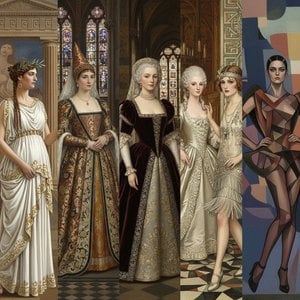
Early Life and Formation: A Fusion of Fashion and Fine Art
Judith Shea, born in Philadelphia, Pennsylvania, in 1948, embodies a rare synthesis of disciplines—a sculptor whose work is profoundly informed by the world of fashion. This unique trajectory began with her education at Parsons School of Design, where she earned a degree in Fashion Design in 1969. However, Shea’s artistic ambitions extended beyond the ephemeral nature of clothing trends; she pursued and ultimately obtained a BFA in 1975, solidifying her commitment to fine art. This dual foundation proved pivotal, imbuing her sculptures with an inherent understanding of form, texture, and the evocative power of drapery. The early years weren’t about choosing between fashion and art, but recognizing their symbiotic potential—the body as a canvas, clothing as a second skin, and both as vehicles for exploring identity and narrative. Her initial explorations were deeply rooted in this intersection, setting the stage for a career marked by innovative material choices and a compelling focus on the human figure.
The Evolution of Form: From Fabric to Metal
Shea’s artistic journey can be broadly divided into three distinct phases, each building upon the previous while pushing the boundaries of sculptural expression. The first phase, spanning from 1974 to 1981, saw her working primarily with textiles and clothing forms. These weren't merely representations *of* garments; they were transformed into abstract, evocative shapes that hinted at the presence of a body without explicitly depicting it. She manipulated fabric—draping, folding, and layering—to create volumes that suggested movement, emotion, and psychological states. This period was characterized by an exploration of softness, vulnerability, and the inherent theatricality of dress. In 1982, Shea embarked on a significant shift in her methodology, transitioning to hollow cast metal figures also shaped like clothing. This move introduced a new dimension of permanence and weight to her work. The metal forms retained the fluidity of fabric but gained a sculptural presence that demanded attention. This phase allowed for greater complexity in form and texture, as Shea experimented with patinas and surface treatments to enhance the emotional impact of her pieces.
Wood, Clay, Foam & Hair: A Return to the Tactile
Beginning in 1990, Shea’s work underwent its most dramatic transformation yet—a return to more organic materials and a focus on life-size, fully realized sculptures. She began carving statues from wood, incorporating elements of fabric, clay, foam, and even human hair into her compositions. This phase represents a culmination of her previous explorations, blending the abstract qualities of her early textile work with the solidity of metal and the raw physicality of natural materials. The figures are often fragmented or incomplete, suggesting a sense of vulnerability, transformation, and the complexities of the human condition. Shea’s use of hair is particularly striking—it adds a layer of intimacy and realism to her sculptures, grounding them in the tangible world while simultaneously evoking themes of mortality and identity. These works aren't simply portraits; they are psychological studies rendered in three dimensions, inviting viewers to contemplate the inner lives of her subjects.
Themes and Symbolism: Narratives Woven into Form
Throughout her career, Judith Shea’s work has been deeply concerned with themes of identity, memory, and the human body. Her sculptures often explore the relationship between interiority and exteriority—how we present ourselves to the world versus how we experience ourselves internally. The clothing forms that permeate her work can be interpreted as metaphors for social roles, masks, or protective layers. The fragmented nature of many of her figures suggests a sense of incompleteness or disembodiment, reflecting the challenges of self-discovery and the fluidity of identity.
Shea’s sculptures are not didactic; they resist easy interpretation. Instead, she creates open-ended narratives that invite viewers to project their own experiences and emotions onto the work. The use of materials also carries symbolic weight—fabric evokes softness and vulnerability, metal suggests strength and permanence, while wood represents growth and resilience.
Her sculptures are imbued with a quiet power, prompting introspection and challenging conventional notions of representation.
Historical Significance and Legacy
Judith Shea’s contribution to contemporary sculpture lies in her innovative use of materials and her ability to seamlessly blend fashion, fine art, and psychological insight. She challenged the traditional boundaries between disciplines, demonstrating that clothing could be more than just adornment—it could be a powerful tool for exploring identity and emotion. Her work emerged during a period of increasing interest in feminist art and body politics, and she contributed to this discourse by offering nuanced representations of the human figure.
- Shea’s sculptures have been exhibited widely in museums and galleries across the United States.
- She has received numerous awards and fellowships for her work.
- Her influence can be seen in the work of younger artists who are exploring similar themes of identity, materiality, and representation.
Shea’s legacy is one of experimentation, innovation, and a deep commitment to exploring the complexities of the human experience. Her sculptures continue to resonate with audiences today, offering compelling narratives that speak to our shared vulnerabilities and aspirations. She stands as a testament to the power of art to transcend boundaries and illuminate the hidden depths of the self.