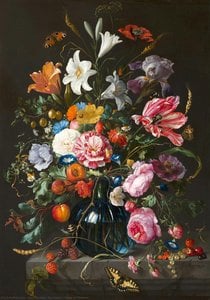
Jan Davidsz. de Heem: Mester af overflod og vanitas
Født i Utrecht, Holland, i 1606, trådte Jan Davidszoon de Heem – ofte blot kendt som Jan de Heem – frem som en af de mest fejrede stillebenmalere fra den hollandske guldalder. Hans karriere strakte sig over årtier og vævede indflydelser sammen fra hans tidlige træning under sin far, David de Heem den Ældre, med de bredere kunstneriske strømninger i Antverps levende kunstscene. De Heem var ikke blot en maler; han var en dirigent for visuelle festmåltider, der med minutiøs præcision arrangerede genstande – frugter, blomster, sølv, skaller og endda symbolske vanitas-elementer – for at skabe scener, der emmer af luksuriøse detaljer og dyb kontemplation.
De Heems tidlige liv lagde fundamentet for hans særprægede stil. Han påbegyndte sin kunstneriske uddannelse under sin far, hvor han opsugede den Ældres mesterskab i blomsterarrangementer og en forkærlelse for rige farvepaletter. Denne indledende træning blev yderligere forfinet i Leiden, hvor han studerede hos David Bailly, en fremtrædende maler kendt for sine minutiøse skildringer af hverdagsobjekter. Det var dog hans flytning til Antwerpen i 1635, der for alvor formede hans kunstneriske bane. Antverpens pulserende kunstmarked og nærheden til den flamske baroktradition eksponerede De Heem for et bredere spektrum af indflydelser, herunder værkerne fra Balthasar van der Ast, kendt for sine elegante stilleben, og Frans Snyders, hvis dramatiske kompositioner med jagtscener og eksotiske dyr tilbød en kontrastfuld, men ligeså fængslende æstetik.
Udviklingen af en unik stil
De Heems stil udviklede sig over tid og afspejlede både hans tekniske kunnen og hans voksende kunstneriske vision. I begyndelsen spejlede hans værker konventionerne fra Leiden – omhyggeligt gengivne genstande arrangeret på mørke klæder, ofte med fokus på morgenmadsscener. Men efterhånden som han slog sig ned i Antwerpen, gennemgik hans malerier en dramatisk transformation. Han begyndte at foretrække lysere baggrunde, hvilket skabte en atmosfære af lysende overflod, der fremhævede motivernes teksturer og farver. Dette skift er særligt tydeligt i hans “pronkstillevens” – overdådige stilleben karakteriseret ved deres overflod af genstande, komplekse arrangementer og symbolske tyngde.
Et nøgleelement i De Heems stil var hans mesterlige brug af lys og skygge. Han benyttede en subtil, men effektiv chiaroscuro-teknik til at skabe dybde og volumen, hvilket ledte beskuerens øje mod specifikke detaljer i kompositionen. Hans minutiøse opmærksomhed på detaljen rakte ud over blot repræsentation; han søgte at indfange selve essensen af hver genstand – ferskenens fløjlsbløde tekstur, perlens iriserende glans, blomsterbladets fine årer. Desuden var De Heems kompositioner sjældent statiske. Han introducerede ofte elementer af bevægelse og dynamik, såsom spredte fjer eller rullende frugt, hvilket tilførte en følelse af liv og vitalitet til hans malerier.
Symbolik og Vanitas
De Heems stilleben er ikke blot dekorative arrangementer; de er ofte gennemsyret af symbolsk betydning. Han integrerede dygtigt vanitas-motiver – symboler, der repræsenterende jordiske glæders forgængelighed og dødens uundgåelighed – i sine kompositioner. Disse elementer, såsom kranier, rådnende frugt, visne blomster og timeglas, tjente som påmindelser om dødeligheden og skønhedens og rigdommens flygtige natur. Dog var De Heems brug af vanitas hverken morbid eller pessimistisk. Snarere fungerede det som en subtil kommentar til vigtigheden af at værdsætte det nuværende øjeblik og leve et dydigt liv.
Udover de traditionelle vanitas-symboler indarbejdede De Heem ofte genstande med specifikke allegoriske betydninger. En slange, der snor sig om en blomst, kunne repræsentere fristelse, mens et knust bæger kunne symbolisere tabt ære eller flygtig glæde. Inklusionen af musikinstrumenter – såsom violiner og luter – henviste ofte til musikken og kunstens nydelser, hvilket antydede, at disse bestræbelser var værdige til eftertanke, men ikke burde forfølges på bekostning af spirituelle værdier.
Store værker og eftermæle
De Heems omfattende produktion inkluderer talrige mesterværker, der hyldes for deres tekniske brillans, overdådige skønhed og dybe symbolik. “Garland of Fruit and Flowers” (1637) eksemplificerer hans mesterskab inden for farve og komposition, mens “Still Life with Books and a Violin” (ca. 1642) viser hans evne til at integrere litterære og musikalske referencer i sine malerier. Hans portrætter, især dem der forestiller Prins Vilhelm III omgivet af en overflod af blomster og frugter, demonstrerer hans alsidighed som maler og hans skarpe forståelse for den aristokratiske smag.
På trods af sin betydelige succes forblev De Heem en relativt privat person. Han fortsatte med at arbejde gennem hele sit liv og producerede hundredvis af malerier, som i dag findes på store museer verden over. Hans eftermæle består som en af de vigtigste skikkelser i hollandsk og flamsk barokmaleri – en mester af stilleben, der transformerede denne genre til en kunstform af uovertruffen skønhed, kompleksitet og filosofisk dybde. Hans indflydelse kan ses i værkerne fra efterfølgende generationer af malere, og hans malerier fortsætter med at fange beskuerne med deres lysende farver, indviklede detaljer og dybe meditationer over den menneskelige tilstand.
Spørgsmål & svar
Hvor er Jan Davidsz. De Heems kunstværker grupperet efter nøgleord?
Siden Efter nøgleord for Jan Davidsz. De Heem grupperer kunstnerens værker efter deres nøgleord.
Hvor kommer Jan Davidsz. De Heem fra?
Jan Davidsz. De Heem blev født i Holland.
Hvilken by og hvilket land er Jan Davidsz. De Heem født i?
Jan Davidsz. De Heem blev født i Utrecht i Holland.