Ilja Holešovský: A Ceramicist of Everyday Life
Born in Brno, Czech Republic, in 1941, Ilja Holešovský’s artistic journey began amidst the complexities of a nation undergoing significant political shifts. His early years were shaped by the evolving landscape of Czechoslovakia, an experience that would profoundly influence his later work – particularly his distinctive approach to ceramic sculpture. Holešovský's formal training commenced at the School of Art and Crafts in Brno and continued at the Academy of Applied Arts in Prague, providing him with a solid foundation in traditional techniques while simultaneously fostering a desire to explore new avenues of expression.
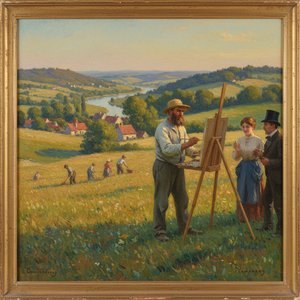
Holešovský’s artistic signature lies in his ability to capture the essence of everyday life through ceramic. Rather than grand narratives or heroic figures, he focuses on the quiet moments and familiar scenes that constitute the rhythm of daily existence – farmers tending their fields, factory workers diligently at their tasks, families sharing meals, and children playing with simple toys. This deliberate choice in subject matter is not merely observational; it’s imbued with a subtle layer of irony and social commentary. He doesn't preach or moralize, but invites the viewer to contemplate the human condition within these commonplace settings.
His sculptures are characterized by a remarkable attention to detail, meticulously rendered figures and objects that possess an almost photographic quality. However, Holešovský avoids strict realism, instead employing a slightly stylized approach that lends his work a charmingly nostalgic feel. The colors he utilizes – earthy tones of ochre, brown, and gray – further contribute to this sense of timelessness, evoking the textures and hues of traditional ceramics while simultaneously grounding his subjects in a tangible reality.
Themes and Influences
Holešovský’s work is deeply rooted in the traditions of Czech folk art, particularly its emphasis on depicting rural life. However, he transcends mere imitation, infusing these elements with a distinctly modern sensibility. The influence of Surrealism can also be detected in his subtly distorted figures and dreamlike compositions, suggesting an underlying exploration of subconscious desires and anxieties. Furthermore, the artist’s experiences during the political upheavals of Czechoslovakia undoubtedly shaped his perspective, prompting him to use his art as a means of quietly documenting and reflecting on the social realities of his time.
He has consistently demonstrated a keen awareness of the materials he works with. Ceramic, with its inherent qualities of earthiness, fragility, and transformation, provides an ideal medium for conveying both strength and vulnerability. Holešovský masterfully exploits these properties, creating sculptures that are not only visually engaging but also possess a tactile quality that invites close examination.
Exhibition History and Recognition
Ilja Holešovský’s work has been exhibited extensively throughout Europe and beyond, gaining recognition from both critics and collectors. His pieces have found their way into numerous galleries and museums, showcasing his commitment to sharing his artistic vision with a wider audience. He has also participated in several international symposia on ceramics, fostering dialogue and collaboration within the global ceramic community.
His membership in the International Academy of Ceramics (IAC) is a testament to his standing as a respected figure in the field. The numerous awards he has received throughout his career further underscore his contributions to the art of ceramics – an art form he continues to push and refine with remarkable skill and dedication.
Contemporary Relevance
In an era increasingly dominated by digital media, Holešovský’s ceramic sculptures offer a refreshing reminder of the enduring power of handcrafted objects. His work speaks to our innate connection with the physical world, inviting us to slow down, observe, and appreciate the beauty in the everyday. The quiet dignity and subtle irony present in his scenes resonate deeply, prompting reflection on themes of labor, human experience, and the passage of time.
Holešovský’s legacy extends beyond individual artworks; he represents a vital link between traditional ceramic practices and contemporary artistic expression. His continued work ensures that this unique voice will continue to be heard within the world of art for years to come.