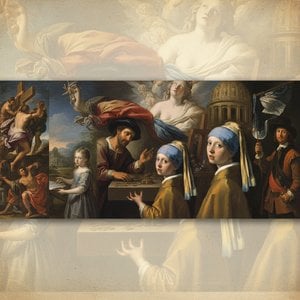
Giovanni Maria Viani (1636–1700): A Bolognese Baroque Pioneer
Giovanni Maria Viani, born in Bologna in 1636, stands as a significant figure within the vibrant artistic landscape of Baroque Italy. Trained under Flaminio Torre alongside Lorenzo Pasinelli, he embarked on a prolific career marked by dedication to religious art and architectural patronage—a testament to the cultural values of his time. His influence extended beyond his own workshop, fostering a thriving school in Bologna that rivaled the celebrated studios of Carlo Cignani.
- Early Training & Influences: Viani’s formative years were shaped by Torre's teachings, emphasizing classical ideals and meticulous observation. This grounding would prove crucial to his subsequent artistic endeavors.
- Notable Pupils: He nurtured the talents of Domenico Maria Viani, Giovanni Girolamo Bonesi, and Odoardo Perini—artists who themselves contributed to Bologna’s artistic heritage.
- Architectural Patronage: Beyond painting, Viani served as director of architectural projects in Bologna, notably overseeing the construction of Santa Maria della Carità, a hospital chapel adorned with frescoes by Caravaggio and Domenichino – showcasing his commitment to elevating public spaces through art.
Religious Art & Artistic Style
Viani’s artistic output predominantly focused on religious subjects—particularly Annunciations and depictions of saints—reflecting the spiritual fervor prevalent in Bolognese society during his lifetime. His style embraced Baroque principles: dramatic chiaroscuro lighting, dynamic compositions, and meticulous detail aimed to convey emotion and grandeur. He skillfully utilized color palettes rich with reds and golds, characteristic of the era, to heighten visual impact.
- Key Paintings: Among his most celebrated works are “The Annunciation” in San Giuseppe (Sposo), a masterpiece demonstrating Viani’s mastery of perspective and expressive brushwork; and monumental frescoes at the Basilica of the Servi honoring Filippo Benizi—a testament to his artistic ambition.
- Technique & Composition: Viani's compositions often employed pyramidal structures, guiding the viewer’s gaze toward the central figure – a technique rooted in Renaissance tradition yet adapted for Baroque dynamism.
Etchings & Legacy
Viani’s artistic versatility extended to etching, producing evocative prints that captured the beauty of Bolognese landscapes and architectural monuments. His etchings served as invaluable documentation of his era and contributed to the dissemination of artistic ideas beyond the confines of Bologna. He established a school that fostered innovation and upheld Bolognese artistic traditions for decades.
- Notable Prints: His engravings include depictions of Piazza Maggiore, Bologna’s central square, capturing its architectural splendor with remarkable precision.
- Influence & Recognition: Viani's dedication to artistic excellence cemented his place as one of Bologna’s foremost painters and educators—a figure whose legacy continues to inspire artists today.
Concluding Remarks
Giovanni Maria Viani’s contribution to Baroque art transcends mere stylistic imitation; it embodies a profound engagement with humanist ideals and a commitment to elevating the visual arts as instruments of spiritual contemplation. His enduring influence can be observed in subsequent Bolognese painters, securing his position as a pivotal voice within Italian artistic history—a true pioneer who shaped the aesthetic sensibilities of his time.