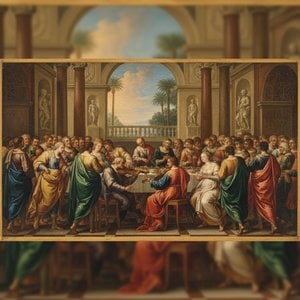
Giovanni Antonio Fasolo: A Venetian Master of Myth and Fresco
Giovanni Antonio Fasolo (1530 – 1572) stands as a pivotal figure in the late Renaissance Venetian art scene, embodying the dynamism and stylistic experimentation that characterized the period. Born in Mandello del Lario, Italy, he emerged from a region steeped in artistic tradition yet eager to embrace new currents of thought—a crucible for artists like Fasolo who sought to synthesize classical ideals with humanist sensibilities. His formative years were spent honing his craft under the tutelage of Paolo Veronese, arguably the most celebrated painter of his time, securing an invaluable connection to the Venetian Mannerist style renowned for its opulent grandeur and dramatic illusionism.
- Early Training & Patronage: Fasolo’s initial artistic endeavors were fueled by commissions from influential patrons—primarily noble families in Vicenza—establishing him as a respected fresco decorator before his mid-twenties. This early exposure to ambitious projects would profoundly shape his subsequent career, imbuing him with an understanding of monumental scale and narrative complexity.
- Collaboration with Palladio: Fasolo’s reputation soared when he was entrusted with decorating several villas and buildings designed by Andrea Palladio, the architect whose humanist vision championed harmony and proportion. Notably, Villa Caldogno and Palazzo Porto Colleoni Thiene benefited from his artistic brilliance alongside Alessandro Maganza, cementing his place in architectural history. These collaborations showcased Fasolo’s ability to integrate mythological themes—a hallmark of Mannerism—into architectural spaces, creating immersive experiences for viewers.
Style & Technique: Embracing Illusion and Dramatic Narrative
Fasolo's artistic style is characterized by a masterful command of color and chiaroscuro – techniques that prioritized dramatic lighting to heighten emotional impact. Like Veronese, he skillfully employed sfumato—a subtle blending of tones—to soften contours and create atmospheric depth, fostering an illusionistic effect that transported audiences into the depicted scenes. His frescoes frequently depict mythological narratives infused with psychological insight, reflecting the humanist preoccupation with human emotion and moral contemplation prevalent during the Renaissance. The ‘Sofonisba before Masinissa’ fresco exemplifies this approach, capturing a moment of intense drama and conveying profound psychological nuance through masterful composition and color orchestration.
- Mythological Frescoes: Fasolo's fascination with mythology is evident in numerous commissions where he reimagined classical tales—often imbued with Christian symbolism—with theatrical flair.
- Color Palette & Composition: His palette favored rich hues—deep reds, blues, and golds—creating visually arresting images that commanded attention. Furthermore, Fasolo’s compositional choices prioritized dynamism and movement, mirroring the spirit of Mannerist art.
Legacy & Historical Significance
Despite his tragically premature death in 1572 during the completion of Palazzo del Capitaniato's ceiling fresco—an accident that abruptly halted his artistic trajectory—Giovanni Antonio Fasolo left an indelible mark on Venetian art history. He stands as a testament to the enduring influence of Veronese’s style and Palladio’s architectural ideals, demonstrating how these forces converged to produce masterpieces of visual storytelling. His work continues to inspire admiration for its technical virtuosity and expressive power, securing his place among the most accomplished artists of the late Renaissance—a period defined by intellectual curiosity and artistic innovation.
Notable Works
* Villa Caldogno: Fresco on the lodge ceiling the Council of Gods
* Sofonisba before Masinissa Mucius Scaevola
* Invitation to Dance