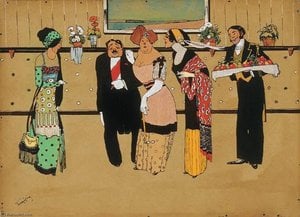
Geza Farago: A Hungarian Symbolist Visionary
Geza Farago (1877–1928) stands as one of Hungary’s most prominent figures in early 20th-century art, particularly celebrated for his distinctive contribution to the Symbolist movement and his masterful execution of poster design. Born into obscurity—precise biographical details remain elusive—Farago's artistic journey unfolded against a backdrop of burgeoning Hungarian cultural dynamism and international artistic currents. His formative years were marked by studies under Ferenc Újházy, establishing a foundation in classical drawing techniques before venturing into the textile industry, where he honed his observational skills and gained practical experience.
A pivotal moment arrived with his relocation to Paris in 1898, propelling him into the orbit of Alphonse Mucha’s atelier. This collaboration proved transformative, immersing Farago within the influential Symbolist aesthetic championed by Mucha—a style characterized by dreamlike imagery, evocative color palettes, and a profound exploration of psychological themes. The Parisian environment fostered his artistic maturation, exposing him to diverse influences and solidifying his commitment to capturing intangible emotions and ideas through visual representation. He attended Colorassi's evening classes for a while, furthering his technical understanding and broadening his artistic horizons.
Farago’s artistic output extended beyond the easel; he actively engaged in theatrical design, crafting costumes and sets for Budapest’s Operetta Theatre for fifteen years—a testament to his versatility and dedication to artistic expression across various mediums. His involvement with Grünwald Iványi at Kecskemét's artists colony provided invaluable opportunities for experimentation and collaboration, nurturing his creative spirit amidst a supportive artistic community.
His prolific poster work cemented Farago’s legacy as Hungary’s foremost Symbolist artist—a distinction earned through an unparalleled command of decorative art principles combined with astute stylistic innovation. Influenced by Japanese woodcuts and captivated by Mucha's grandeur, he developed a singular visual language marked by bold contours, vibrant hues, and ornamental patterns that resonated deeply within the Hungarian public consciousness. His posters weren’t merely advertisements; they were immersive experiences designed to evoke emotion and convey complex narratives—demonstrating his artistic prowess as both designer and storyteller.
Among Farago's celebrated compositions are “The Modern Eve,” “Slim Woman with a Cat,” and "Paradise Lost"—works that exemplify the Symbolist preoccupation with mythology, folklore, and psychological introspection. These paintings delve into realms beyond literal depiction, prioritizing atmosphere and symbolism to communicate profound ideas about human experience. His meticulous attention to detail—particularly in capturing nuanced facial expressions and conveying subtle emotional undertones—underscores his artistic skill and distinguishes him as a visionary artist who transcended conventional stylistic boundaries.
Farago’s enduring influence extends beyond the realm of visual art; he served as stage designer for Budapest's Operetta Theatre, shaping theatrical productions with his distinctive aesthetic sensibilities. His engagement with the Kecskemét artists colony fostered collaborative experimentation and nurtured his artistic development amidst a vibrant cultural milieu. He was recognized as a charismatic figure in Budapest’s nightlife, designing posters for nightclubs and theaters—a reflection of his multifaceted personality and unwavering passion for artistic pursuits.
His legacy continues to inspire contemporary artists and collectors alike—a testament to the timeless beauty and intellectual depth inherent within Farago's Symbolist oeuvre. His contribution to Hungarian art history remains undeniable—solidifying his place as a pivotal voice in shaping the visual culture of his era.