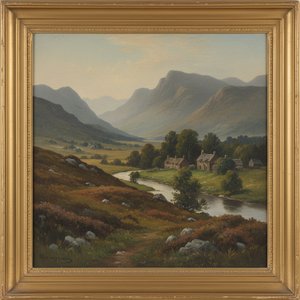
George H. Bogert: A Life in Landscape
George Henry Bogert (February 6, 1864 – December 13, 1944) was an American landscape painter known for his serene and atmospheric depictions of nature. His work reflects the influences of French Impressionism and Tonalism, capturing the essence of light and mood in landscapes across Europe and America.
Early Life and Education
Born in New York City, Bogert was the son of Henry Bogert and Helen Anderson Evans. He demonstrated artistic talent early on, receiving his initial training at the National Academy of Design. He further honed his skills under the tutelage of Thomas Eakins in New York City, laying a strong foundation for his future career.
European Studies & Influences
In 1884, Bogert embarked on an extended period of study and painting in France. He initially worked at Grez, near the Forest of Fontainebleau, before moving to Paris. In Paris, he studied under several influential artists including Colin, Aimé Morot, and Pierre Puvis de Chavannes. These experiences profoundly shaped his artistic style, introducing him to new techniques and perspectives.
Artistic Development & Style
Upon returning to New York in 1888, Bogert became a regular exhibitor at prestigious art institutions such as the Society of American Artists and the National Academy of Design. His paintings gradually matured, attracting attention for their subtle harmonies and evocative atmosphere. He was elected into the National Academy of Design as an associate member in 1899.
Bogert’s style is characterized by a delicate balance between observation and interpretation. He wasn't driven by dramatic narratives but rather sought to capture the quiet beauty of nature, focusing on light, color, and atmospheric effects. He became known as a profound synthesist, striving for unity within his compositions.
Travels & Subject Matter
Bogert’s artistic journey extended beyond France. He painted at Étaples on the French coast alongside Eugène Boudin, and also found inspiration in the Netherlands and on the Isle of Wight. His subjects included coastal scenes, rural landscapes, and atmospheric studies of light and weather. A notable work is ‘Sea and Rain’, which exemplifies his ability to convey mood and atmosphere.
Major Achievements & Recognition
Bogert was a prolific painter with a consistent market for his work. While he didn’t develop a highly distinctive or “pronounced” style, his versatility allowed him to appeal to a wide audience. His success lay in his ability to create harmonious and aesthetically pleasing landscapes that resonated with collectors.
Historical Significance
George H. Bogert represents a significant figure within the late 19th and early 20th-century American landscape tradition. His work bridges the gap between traditional academic painting and the emerging Impressionistic and Tonalist movements. He contributed to the growing appreciation for atmospheric effects and subtle nuances in nature, influencing subsequent generations of landscape painters.
Key Characteristics of his Work
- Serene and peaceful depictions of nature
- Emphasis on light and atmosphere
- Influenced by French Impressionism and Tonalism
- Subtle harmonies of color and tone
- Focus on capturing mood and emotion
Bogert’s legacy lies in his ability to create paintings that evoke a sense of tranquility and beauty, inviting viewers to connect with the natural world.