Frederick Stonehouse: Weaver of Dream Logic and Mythological Landscapes
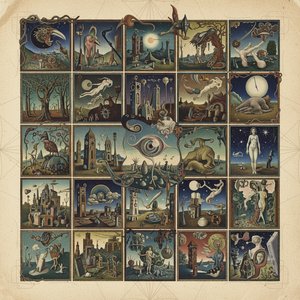
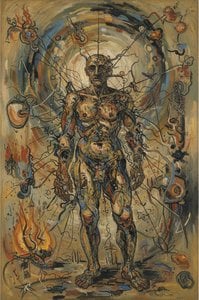
Frederick Stonehouse (born Milwaukee, United States of America in 1960) is a Midwest regional artist whose distinctive style blends representational painting with elements of surrealism and mythology. Rooted in Wisconsin, Stonehouse’s artistic journey began with a BFA from the University of Wisconsin-Milwaukee in 1982, establishing him as a foundational figure within contemporary American art. He eschews conventional realism, opting instead for meticulously crafted landscapes imbued with unsettling beauty—settings that feel simultaneously familiar and profoundly alien.
- Early Influences: Stonehouse’s artistic vision draws heavily from the subconscious mind, mirroring the techniques of Surrealist masters like Salvador Dalí and René Magritte. These artists championed dream imagery as a conduit for exploring hidden truths and challenging rational thought—a principle that profoundly impacted Stonehouse's creative process.
- Personal Mythology: At the core of Stonehouse’s oeuvre lies a deeply personal mythology, meticulously constructed through recurring motifs and symbolic representations. Recurring biomorphic forms – often resembling stylized plants or animals – intertwine with religious iconography, creating layered narratives that grapple with themes of spirituality, transformation, and the cyclical nature of existence.
- Technique: Stonehouse’s meticulous approach to painting is characterized by painstaking detail and a masterful command of color. He employs glazing techniques—applying thin layers of translucent pigment over previous coats—to build up depth and luminosity, achieving an ethereal quality that captures the essence of his dreamlike landscapes.
Stonehouse's artistic reputation grew steadily throughout the 1980s and 1990s, culminating in numerous solo exhibitions across the United States. His work gained recognition from prestigious institutions such as The Metropolitan Museum of Art, The Whitney Museum of American Art, and The Milwaukee Art Museum, cementing his place within the canon of contemporary art. These collections attest to the enduring fascination with Stonehouse’s singular vision—a vision that continues to inspire artists and captivate audiences alike.
- Notable Exhibitions: Highlights include exhibitions at Galerie Nationale Suisse in Zurich, Switzerland; The Aldrich Contemporary Art Museum in Hartford, Connecticut; and The Bemis Center for Contemporary Art in Helena, Montana.
- Public Collections: Stonehouse’s paintings reside in prominent collections including The Metropolitan Museum of Art's American Paintings Collection and The Whitney Museum of American Art’s Collection of Contemporary Art.
Beyond his artistic accomplishments, Stonehouse’s influence extends to the broader art community. He serves as an inspiring example for emerging artists who strive to forge their own distinctive voices—artists who embrace experimentation and challenge conventional boundaries. His unwavering dedication to exploring the depths of human consciousness ensures that Frederick Stonehouse's legacy will endure as a testament to the transformative power of imagination and artistic vision.