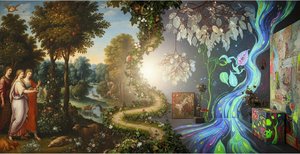
Jean-Jacques Boujot: Bridging Art and Politics Through Photographic Vision
Jean-Jacques Boujot, born in Moulins, France, in 1975, is a multifaceted artist whose creative pursuits extend beyond the realm of photography into parliamentary service and civic engagement. While initially recognized for his striking photographic artwork ‘Lepus europaeus,’ commissioned in 2009 – a piece that captures the delicate beauty of European wildlife with meticulous detail – Boujot’s artistic journey has been interwoven with a commitment to public responsibility, shaping him into an artist deeply attuned to societal concerns.
His background as a civil servant within the French administration provides invaluable insight into his perspective on art's role in reflecting and influencing cultural narratives. This experience informs his approach to visual storytelling, prioritizing authenticity and conveying nuanced observations about the natural world alongside explorations of identity. Serving as a Member of Parliament since 2022, representing the first constituency of Allier, underscores Boujot’s dedication to democratic participation and translating artistic sensibilities into political discourse. He belongs to the Socialist, Radical, Citizen and Ecologist group, reflecting his progressive values.
Boujot's photographic style leans heavily on sfumato—a technique perfected by Leonardo da Vinci—characterized by subtle gradations of tone that create an ethereal quality and imbue images with depth and atmosphere. This masterful blending of light and shadow is evident in ‘Lepus europaeus,’ where Boujot skillfully renders the fur texture and musculature of the European hare, demonstrating a profound understanding of artistic principles rooted in observation and precision.
Beyond his individual work, Boujot’s influence extends to broader cultural dialogues. His involvement with institutions like Musée National Jean-Jacques Henner—a Parisian haven for Symbolist paintings—and Collection of Jacques - Natasha Gelman—which showcases 20th-century Mexican art—highlights a fascination with artistic movements that grapple with philosophical and emotional complexities. Furthermore, his engagement with artists such as Jacques-Louis David and Jean-Baptiste Greuze demonstrates an appreciation for the historical legacy of Neoclassical and Rococo painting respectively, informing his own creative explorations.
His contribution to art history is marked by a singular blend of aesthetic sensitivity and civic duty—a testament to Boujot’s belief that artistic expression can serve as a catalyst for social understanding and cultural enrichment. He continues to pursue his artistic endeavors while actively shaping the landscape of French politics, embodying a rare convergence of creative vision and public service.