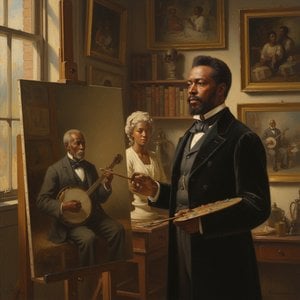
Alvan Clark: Pioneer Astronomer and Master Telescope Maker
Alvan Clark (1804-1887) stands as a monumental figure in the annals of scientific history, inextricably linked to the golden age of astronomy. Initially recognized for his artistic talent—primarily portrait painting—Clark’s unwavering dedication soon propelled him into the realm of optics and engineering, culminating in the creation of telescopes that redefined our understanding of the cosmos. This biography delves into Clark's remarkable journey, exploring his formative years, groundbreaking innovations, enduring legacy, and profound impact on scientific progress.
Early Life and Artistic Beginnings
Born March 8, 1804, in Fall River, Massachusetts—a town steeped in whaling tradition—Alvan Clark’s early life was marked by familial hardship following the death of his father. Despite these challenges, Clark demonstrated exceptional aptitude for drawing from a young age, honing his skills under the tutelage of local artists and establishing himself as a respected portrait painter. His meticulous attention to detail and mastery of realism foreshadowed his future endeavors in crafting instruments capable of capturing the faintest glimmer of celestial light. Notably, he married Maria Pease in 1832, forming a partnership that would prove instrumental in shaping his scientific pursuits.
The Founding of Clark & Sons: A Vision for Optical Excellence
Driven by an ardent passion for astronomy and fueled by familial encouragement—particularly from his sons George Bassett Clark and Alvan Graham Clark—Alvan Clark established Clark & Sons in Cambridgeport, Massachusetts, in 1846. Recognizing the limitations of existing telescopes and envisioning instruments surpassing previous designs, Clark embarked on a transformative mission: to revolutionize optical technology. With unwavering determination and considerable financial backing, he meticulously assembled a team of skilled craftsmen and engineers, laying the groundwork for what would become one of America’s most celebrated telescope manufacturing firms.
Revolutionizing Astronomy Through Giant Refracting Telescopes
Clark & Sons swiftly ascended to prominence as innovators in telescope construction, achieving unparalleled success in producing lenses exceeding any previously conceived size. Their crowning achievement arrived in 1874 with the completion of the Yerkes Observatory’s 40-inch (1020 mm) refracting telescope—a colossal instrument that dramatically enhanced astronomical observation capabilities. Simultaneously, Clark & Sons constructed the Lick Observatory's 36-inch (914 mm) telescope, solidifying their reputation as pioneers in optical instrumentation and propelling advancements in astrophysics. These telescopes facilitated groundbreaking discoveries concerning stellar spectra, planetary orbits, and nebulae formations—forever altering our comprehension of the universe.
Legacy and Enduring Influence
Alvan Clark’s contribution to astronomy transcends mere instrument fabrication; it embodies a spirit of intellectual curiosity and unwavering commitment to scientific advancement. His meticulous craftsmanship—characterized by painstaking grinding, polishing, and mounting techniques—became synonymous with excellence in optical engineering. Furthermore, Clark's firm fostered collaborations between astronomers and physicists, stimulating dialogue and propelling innovation across disciplines. Today, the Clark telescopes continue to inspire awe and serve as tangible reminders of a singular visionary who irrevocably shaped the trajectory of scientific exploration. His legacy persists not only in the magnificent instruments he created but also in the enduring pursuit of knowledge that defines his remarkable life’s work.
Notable Works
- Mrs. Alvan Clark (Maria Pease): A portrait by Alvan Clark capturing Maria Pease's dignified countenance and conveying a sense of serene beauty—a testament to Clark’s artistic prowess.
- Dr. Samuel A. Bemis:Another meticulously rendered portrait showcasing Dr. Bemis’s intellectual stature and embodying the precision of Clark’s artistic style.
- Mrs. Albert Bridges (Eliza Kimball):A captivating depiction of Eliza Kimball, demonstrating Clark's ability to convey emotion and nuance through his artwork.
Source: Wikipedia