Museums on APS: Boccaccio's House Palazzo Pretorio e Casa Boccaccio
Aligi Sassu: A Sardinian Visionary Bridging Futurism and Surrealism
Aligi Sassu (17 July 1912 – 17 July 2000) was an Italian painter and sculptor whose distinctive style—characterized by bold forms, monumental bull imagery, and a rejection of naturalistic representation—established him as a pivotal figure in Sardinian art history and cemented his place within the broader landscape of 20th-century avant-garde movements. Born in Milan, Lombardy, to Lina Pedretti (from Parma, Emilia) and Antonio Sassu (from Sassari, Sardinia), Sassu’s upbringing instilled in him a deep connection to both socialist ideals and Sardinian traditions—influences that would permeate his artistic endeavors throughout his life.
Early Life and Artistic Formation
Antonio Sassu's involvement with the Italian Socialist Party shaped Aligi’s formative years, fostering an engagement with social justice alongside a burgeoning fascination for visual arts. He enrolled at Brera Academy of Fine Arts in Milan, where he honed his skills under the tutelage of Bruno Munari—a collaboration that proved crucial to Sassu’s artistic trajectory. Together, they championed Futurism's radical rejection of academic conventions and embraced Marinetti’s manifesto advocating for dynamism and technological advancement. This initial encounter profoundly impacted Sassu’s aesthetic sensibilities, propelling him toward an exploration of anti-naturalistic forms and a fascination with the expressive potential of abstraction.
Futurist Influences and “L’Ultima Cena”
The Futurist movement's emphasis on speed, violence, and industrial progress directly informed Sassu’s artistic vision. He participated in the Venice Biennale of 1928 alongside Munari, contributing to the Futurist collective effort to redefine painting. This period culminated in his monumental depiction of “L’Ultima Cena,” a canvas that embodies Sassu's core aesthetic principles—a deliberate distortion of perspective and proportion designed to convey emotional intensity rather than accurate representation. The painting stands as a testament to Sassu’s commitment to Futurism’s revolutionary spirit and its challenge to traditional artistic hierarchies.
Moving beyond Futurism's rigid dogma, Sassu embarked on a journey of stylistic experimentation influenced by Surrealism. He studied Diego Velázquez and the nude figure, absorbing techniques that would enrich his oeuvre. His fascination with the Sardinian landscape—particularly its rugged mountains and bovine herds—became a recurring motif in his paintings throughout the 1930s and beyond. Works like “Il Caffè” and “Fucilazione nelle Asturie” exemplify Sassu’s ability to capture both psychological depth and visual grandeur, reflecting his engagement with pressing social and political concerns. He joined the anti-fascist cultural movement *Corrente di Vita* in 1938, demonstrating unwavering solidarity with resistance against oppression.
Later Years and Legacy
Following the Spanish Civil War, Sassu returned to Sardinia, immersing himself in the traditions of his homeland while continuing to refine his artistic practice. He studied mural painting and Vincent van Gogh, absorbing stylistic elements that would contribute to his distinctive visual language. His final years were spent on Majorca, where he cultivated a tranquil existence amidst the beauty of the Balearic Islands. Aligi Sassu died peacefully in Palma de Mallorca in 2000, leaving behind an impressive body of work—a singular synthesis of Futurist dynamism and Surrealist introspection—that continues to inspire artists and scholars alike. His legacy resides not only in his artistic achievements but also in his unwavering commitment to humanist values and his profound connection to the cultural heritage of Sardinia.
Af WahooArt.com' redaktion
Kunstquiz
Der er kun ét korrekt svar på hvert spørgsmål.
Spørgsmål 1:
Where was Aligi Sassu born?
Spørgsmål 2:
Who was Aligi Sassu’s father and what role did he play in Sardinia?
Spørgsmål 3:
With whom did Aligi Sassu collaborate on the Futurist Manifesto?
Spørgsmål 4:
What artistic movement was Aligi Sassu particularly influenced by?
Explore the exhilarating world of Futurism with our expert guide. Discover how masters like Balla and Boccioni captured speed, power, and modern motion through dynamic avant-garde techniques—essential knowledge for any discerning art collector.
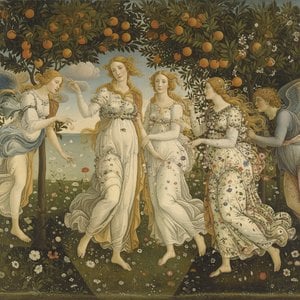
Explore the ethereal beauty of Sandro Botticelli's masterpieces. Delve into the profound symbolism, mythological grace, and technical mastery that define the Italian Renaissance through an expert art-historical lens.
Embark on a sophisticated journey through Italian Baroque art. Discover the dramatic interplay of light and emotion in Caravaggio’s masterpieces and explore how to bring this timeless grandeur into your collection with expert art insights.