


x

 Bestil maleri Køb højopløseligt billede
 Del
Del
 Detaljer
 Tilføj til favoritter
 Download
 Lignende værker
 Røntgen
 Diasshow
 701
701 108.0cm x 28.0cm
Giclée- eller lærredstryk i museumskvalitet med hurtig produktion og fleksible muligheder for finish.
Vælg mellem vores forudindstillede størrelser, der matcher kunstværkets originale proportioner.

Du kan indtaste dine egne mål for at passe til en specifik ramme eller et bestemt område. Hvis den valgte størrelse ikke stemmer overens med det originale billedes proportioner, vil vi enten beskære kunstværket eller udvide billedet med en spejlet eller ensfarvet kant. En digital mockup vil blive sendt til din godkendelse, før produktionen påbegyndes.
Bemærk venligst, at forhåndsvisningen på skærmen ikke afspejler den faktiske beskæring eller udvidelse. Kun mockuppen vil nøjagtigt vise den endelige komposition.
Selvom specialmål er tilgængelige, anbefaler vi at vælge et mål fra den foruddefinerede liste for at bevare de originale proportioner.
Verdensomspændende levering () på 2 uger i stedet for de sædvanlige 4/5 uger. (7 juli)


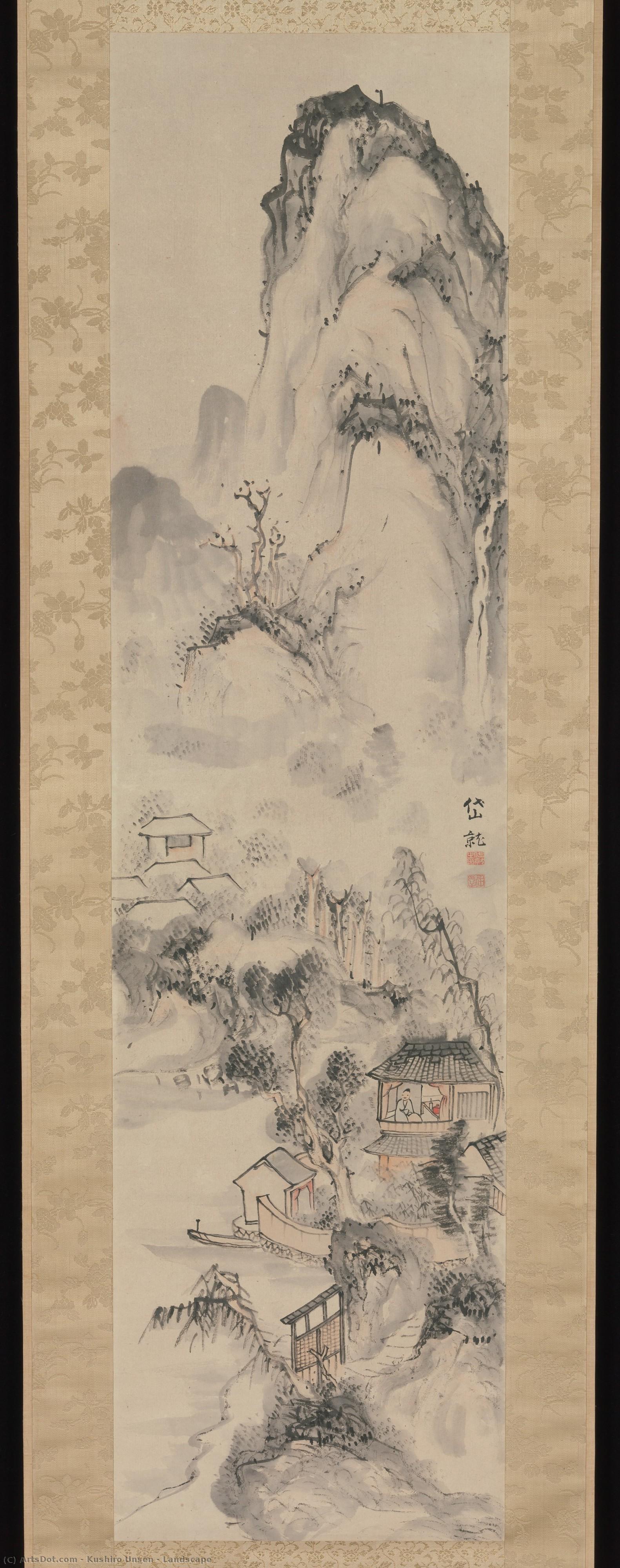
Landscape
Størrelse på reproduktion


Kushiro Unsen (釧雲泉, 1759 – 1811) stands as a singular figure in Japanese landscape painting, embodying the aesthetic ideals of Edo-period Japan—a period marked by social stratification, political intrigue, and burgeoning commercial activity. Unlike many artists of his era who sought patronage from powerful clans or focused on grand historical narratives, Unsen cultivated a deeply personal style rooted in Zen Buddhism and characterized by an unparalleled sensitivity to atmospheric conditions.
Born in Nagasaki, Unsen’s early life remains shrouded in some mystery. He apprenticed under Chinese painters, absorbing techniques that emphasized subtle tonal gradations and meticulous brushwork—a hallmark of Ming Dynasty landscape art. However, he swiftly rejected the conventions of formal portraiture and historical painting, opting instead for a contemplative approach to capturing the beauty of the natural world.
Unsen’s prolific output spanned several decades, producing approximately 300 paintings—a remarkable feat considering the constraints of his time. He primarily focused on depicting mountainous regions surrounding Nagasaki Prefecture, capturing scenes of misty valleys, snow-capped peaks, and tranquil lakes. Recurring motifs included pine trees, plum blossoms, and cranes—symbols laden with Buddhist significance representing longevity and aspiration.
Unsen’s artistic legacy resides not only in his stunning paintings but also in his contribution to the philosophical underpinning of Japanese art. He championed a vision of nature as a source of spiritual enlightenment—a perspective that resonates powerfully with contemporary concerns about environmental stewardship and mindfulness. Kushiro Unsen remains an enduring testament to the transformative power of art and its capacity to elevate our understanding of the world around us.

1759 - 1811 , Japan


Hold dig opdateret med de seneste kunstnyheder, eksklusive tilbud og indretningsideer.
Fortæl os om dit projekt, og vores kunsteksperter vil give dig 3 personlige kunstforslag.
Vi kuraterer 3 valgmuligheder kun til dig – Gratis!
 Del
Del

 Se mere




































 Glasmulighed er kun tilgængelig i størrelser under 110 cm


