A Delicate Hand: The Life and Art of Wang Xuetao
Wang Xuetao, born in Zhengzhou, China, in 1903, emerged as a significant figure in the landscape of modern Chinese painting—a master of small freehand flower-and-bird compositions. His life unfolded during a period of immense social and artistic transformation, witnessing both the waning days of imperial tradition and the burgeoning currents of modernity. Xuetao’s journey began with formal training at the Beijing Art School in 1918, where he honed his skills within the established framework of Chinese art education. However, his talent wasn't simply about replicating existing styles; it was a capacity to breathe new life into them, infusing traditional motifs with a distinctly personal sensibility. He rose through the ranks, eventually becoming Director of the Beijing Art Academy and a leading member of the Chinese Artists Association—positions that underscored his influence on the evolving artistic discourse of the nation. His passing in 1982 marked the end of an era, leaving behind a legacy celebrated for its exquisite detail, subtle emotion, and profound connection to nature.
The Blossoming of a Style: Influences and Development
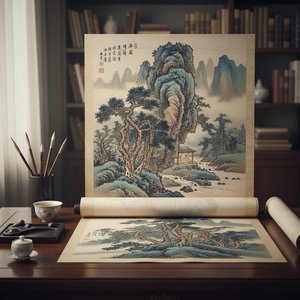
Xuetao’s art is deeply rooted in the *xieyi* (freehand) style, a tradition emphasizing spontaneous brushwork and capturing the essence rather than meticulous representation. While he absorbed the techniques from earlier masters, his work distinguishes itself through an exceptional delicacy and refinement. He wasn't merely copying nature; he was interpreting it—distilling its beauty into evocative compositions that often featured blossoms, bamboo, birds, and insects. The influence of older traditions is palpable, yet Xuetao’s paintings possess a unique lightness and airiness. His early works demonstrate a careful study of form and composition, gradually evolving towards a more fluid and expressive style. He skillfully balanced the demands of traditional aesthetics with his own artistic vision, creating pieces that were both reverent to the past and distinctly modern in their sensibility. The small scale of many of his paintings invites intimate contemplation, drawing the viewer into a world of quiet beauty and subtle symbolism.
Themes and Symbolism: A Language of Flowers and Birds
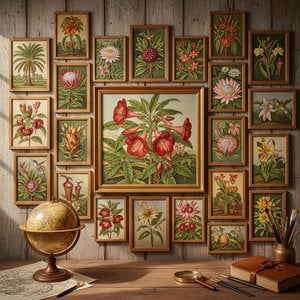
The subjects Xuetao favored—flowers, birds, bamboo—were not chosen arbitrarily. Within Chinese culture, these motifs carry rich symbolic weight. Plum blossoms represent perseverance and hope, orchids embody integrity and refinement, bamboo signifies resilience and strength, while birds often symbolize freedom and joy. Xuetao masterfully employed this visual language, imbuing his paintings with layers of meaning beyond their surface beauty. A painting of a pair of mandarin ducks, for example, might allude to marital fidelity and happiness, while a solitary bird could represent longing or spiritual aspiration. His compositions are rarely grand in scale, but they are profoundly evocative—each brushstroke carefully considered, each element placed with intention. He often incorporated poetic inscriptions into his works, further enriching their narrative depth and inviting viewers to engage with the paintings on multiple levels.
Major Achievements and Artistic Legacy
Throughout his career, Wang Xuetao exhibited widely and received numerous accolades for his contributions to Chinese art. His work is held in prestigious collections both within China and internationally, a testament to its enduring appeal. While he didn’t radically depart from traditional forms, his subtle innovations—the delicate brushwork, the refined color palettes, the evocative compositions—helped shape the direction of modern Chinese painting. He served as an important bridge between generations of artists, mentoring young talents and promoting the study of classical techniques. His paintings continue to be admired for their technical virtuosity, emotional depth, and profound connection to nature.
Beyond the Canvas: Xuetao’s Place in History
Wang Xuetao's significance extends beyond his artistic achievements; he played a crucial role in navigating the complexities of art during a period of rapid change in China. He skillfully balanced the demands of tradition with the pressures of modernity, advocating for the preservation of classical techniques while also embracing new forms of expression. His leadership positions within the Beijing Art Academy and the Chinese Artists Association allowed him to influence artistic education and promote cultural exchange. In an era marked by political upheaval and social transformation, Xuetao remained a steadfast advocate for the enduring values of Chinese art—beauty, harmony, and spiritual contemplation. He left behind not only a body of exquisite paintings but also a legacy of mentorship and dedication that continues to inspire artists today.