Vincent Malò I (1602-1644): Bridging Mannerism and Baroque Brilliance
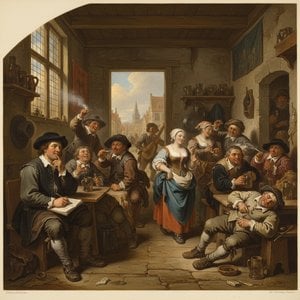
Vincent Malò I, born in Cambrai around 1602 or 1606, stands as a pivotal figure in Flemish Baroque painting. His artistic journey began under the tutelage of Rubens and Teniers in Antwerp, establishing him firmly within the influential artistic milieu of his time. However, it was his subsequent relocation to Italy—specifically Genoa—that cemented his reputation as Vincenzo Malò and propelled him into collaboration with fellow masters like Cornelis de Wael, shaping the visual landscape of the Ligurian Renaissance.Early Training & Antwerp Influence: Malò’s formative years in Antwerp were marked by immersion in Rubens’s workshop, absorbing the dramatic chiaroscuro techniques characteristic of Caravaggio—a stylistic inheritance that profoundly impacted his artistic approach. Simultaneously, he honed his skills alongside David Teniers the Elder, inheriting a penchant for portraying everyday life and religious narratives with meticulous detail; Teniers's realism served as an invaluable counterpoint to Rubens’s grandeur.
Italian Period & Collaboration: Moving to Genoa around 1634, Malò joined forces with Cornelis de Wael, fostering a dynamic exchange of ideas and stylistic influences. This partnership yielded remarkable results, particularly evident in the vibrant depictions of Genoese churches and palaces—a breathtaking panorama reflecting the flourishing cultural environment of the Renaissance. De Wael’s influence encouraged Malò to experiment with innovative compositional strategies and explore new expressive possibilities.
Style Evolution: Initially grappling with Mannerist tendencies – characterized by stylized figures and attenuated forms – Malò swiftly transitioned into the Baroque aesthetic championed by Rubens and Van Dyck. His canvases exploded with dynamism and luminous color palettes, reflecting a masterful grasp of compositional principles and an acute sensitivity to psychological nuance; he sought to convey emotion and grandeur through carefully orchestrated visual elements.
Notable Commissions & Students: Malò achieved considerable renown for his commissions—most notably the monumental Cenacle in the Oratory of SS. Peter, & Paul—a testament to his ability to execute large-scale projects with exceptional skill and precision. He nurtured talent within his studio, mentoring Vincent Malò II and ensuring the continuation of his artistic legacy; Malò II would later become a respected painter in his own right.
Legacy & Recognition: Raffaele Soprani eloquently captured Malò’s renown in the mid-17th century, describing him as “the most esteemed” among painters of Genoa—a testament to his enduring influence and artistic distinction. His canvases continue to captivate viewers today with their masterful blend of technique and expressive power, securing his place as a cornerstone of Flemish Baroque art.