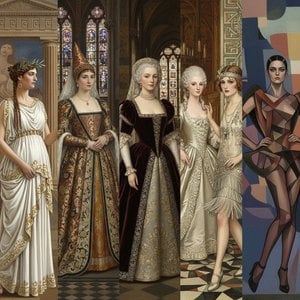
Victor Stiebel: A Life in Couture
Victor Frank Stiebel (1907-1976) was a South African-born British couturier who rose to prominence during and after World War II. Known for his elegant, feminine designs and contributions to wartime utility fashion, Stiebel became one of the most respected names in London’s fashion scene.
Early Life and Education
Born on March 14, 1907, in Durban, South Africa, Victor Stiebel arrived in Britain in 1924 to pursue studies in architecture at Jesus College, Cambridge. However, his passion soon shifted towards design after becoming involved with theatre wardrobe at university. This early experience ignited a lifelong dedication to fashion.
Early Career and Establishment
Following his time at Cambridge, Stiebel honed his skills working as a dress designer for the prestigious House of Reville from 1929 to 1932. This apprenticeship provided invaluable practical knowledge within a leading court dressmaking establishment. In 1932, he boldly established his own fashion house on Bruton Street in London, quickly gaining recognition for his sophisticated aesthetic.
Artistic Development and Style
Stiebel’s designs were characterized by their elegance, femininity, and meticulous attention to detail. He was particularly known for his innovative use of striped fabrics. His pre-war collections showcased a refined sensibility that resonated with discerning clientele. He collaborated with notable figures like Syrie Maugham (interior design) and Constance Spry (floral arrangements), further enhancing the ambiance of his showroom and fashion presentations.
Wartime Contributions & Utility Fashion
The outbreak of World War II significantly impacted Stiebel’s career, as it did for all designers. He closed his house in 1940 to enlist but was permitted to continue designing through his involvement with the Incorporated Society of London Fashion Designers. He played a crucial role in developing “Utility Fashion” – clothing produced using government-controlled fabrics and designs during wartime rationing. This demonstrated his adaptability and commitment to serving national needs.
Post-War Success & Royal Commissions
After the war, Stiebel’s reputation continued to grow. He served as Chairman of the Incorporated Society of London Fashion Designers and received commissions for designing uniforms for the Women's Royal Naval Service (1951) and the Women's Royal Air Force (1954). A particularly notable achievement was designing the going-away outfit worn by Princess Margaret on her wedding day in 1960, cementing his status as a royal favorite.
Later Years & Legacy
Stiebel reopened his own house in 1958 but faced challenges and ultimately closed it in 1963 due to health issues related to multiple sclerosis. Hardy Amies subsequently employed his entire staff. Despite this setback, Stiebel’s influence on British fashion remained significant.
Influences & Historical Significance
- Influences: While not explicitly documented, Stiebel's work reflects the elegance of pre-war Parisian couture and a distinctly British sensibility.
- Historical Significance: Stiebel was a pivotal figure in maintaining London’s position as a global fashion center during and after wartime austerity. His designs embodied resilience, sophistication, and a commitment to quality craftsmanship. He bridged the gap between traditional couture and the practical demands of modern life.
Victor Stiebel's legacy lies not only in his beautiful creations but also in his dedication to his craft and his contribution to British fashion history.
Otázky a odpovědi
V jakém městě a z jaké země pochází Victor Frank Stiebel?
Victor Frank Stiebel se narodil(a) ve městě Durban v zemi South Africa.
Mohu si díla umělce Victor Frank Stiebel seřadit podle barvy?
Díla umělce Victor Frank Stiebel si můžete prohlédnout podle barev na jeho stránce Sestavení podle barev.
Kde najdu díla umělce Victor Frank Stiebel seskupená podle klíčových slov?
Chcete-li najít díla umělce Victor Frank Stiebel na konkrétní téma, navštivte jeho stránku Podle klíčových slov, kde jsou umělecká díla seskupena podle klíčových slov.