Vasily Sadovnikov: A Pioneer of St Petersburg Vedute
Vasily Semenovich Sadovnikov (1800 – 1879) stands as a pivotal figure in Russian landscape painting and architectural illustration, particularly renowned for his masterful depictions of Saint Petersburg. Born into humble beginnings—the son of a serf belonging to Princess Natalia Petrovna Golitsyna—his ascent to artistic prominence was marked by circumstance and serendipitous connections that ultimately shaped his distinctive style and legacy. His brother, Pyotr Sadovnikov, served as the architect of prominent families like the Stroganovs and Golitsyns, fostering an environment rich in artistic discourse and providing invaluable formative experiences for Vasily himself.
Sadovnikov’s formal training commenced with Andrey Voronikhin, a celebrated architect whose studio became a crucible for artistic innovation. This mentorship extended beyond technical skills; Voronikhin instilled in Sadovnikov a profound appreciation for observation and meticulous detail—qualities that would become hallmarks of his oeuvre. He subsequently joined Saint Petersburg Academy of Arts (1849), furthering his education alongside fellow artists Maxim Vorobiev and Alexei Venetsianov, who served as both instructors and influential companions. These formative relationships nurtured not only artistic proficiency but also a shared commitment to social reform and the pursuit of beauty amidst societal constraints.
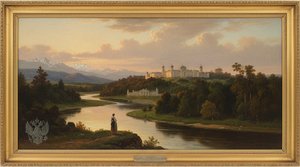
Sadovnikov’s artistic vision centered around ‘vedute,’ Italian-inspired panoramic views that captured the grandeur and complexity of urban landscapes. Unlike merely reproducing scenery, Sadovnikov imbued his paintings with palpable atmosphere and dynamism—transforming static vistas into vibrant narratives populated by figures engaged in everyday life. His depictions of St. Petersburg from 1830 to 1850 and interiors of palaces commissioned by the royal court exemplify this approach, demonstrating a remarkable ability to convey both visual splendor and psychological depth. The monumental panorama of Nevsky Prospect (1830–1850), measuring an astounding 16 meters long, cemented his reputation as a visionary artist and was subsequently etched and disseminated widely, establishing him as one of the foremost illustrators of his time.
- Key Achievements: Sadovnikov’s panoramic view of Nevsky Prospect remains a testament to his ambition and technical prowess. His meticulous renderings of St. Petersburg palaces showcased his dedication to capturing architectural detail with unparalleled accuracy.
- Influences: Voronikhin's studio fostered an environment conducive to artistic experimentation, exposing Sadovnikov to the stylistic innovations championed by Venetsianov and fostering a shared commitment to realism.
Sadovnikov’s contribution to Russian art extends beyond his individual paintings; he played a crucial role in shaping the visual culture of Saint Petersburg during the Romantic era. His work embodies the spirit of observation, empathy, and artistic ambition—qualities that continue to resonate with audiences today. He died peacefully in 1879 at Mitrofanyevskoe Cemetery (now abolished), leaving behind an enduring legacy as a pioneer of perspective painting and a champion of St Petersburg’s visual identity.