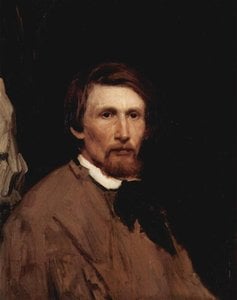
Viktor Michajlovič Vasněcov, 1848 – 1926

Viktor Michajlovič Vasněcov: 100 nejznámějších obrazů

Bojáři (1881) je nejslavnější obraz autora Viktor Michajlovič Vasněcov, který se nachází v muzeu Tretyakovská galerie ve městě Moskva. A Knight At the Crossroads (1878) a Christ Almighty (1896) jsou dalšími dvěma díly, která svět zná nejlépe. Z 234 děl umělce Viktor Michajlovič Vasněcov v našem katalogu uvádíme 100 těch, na které se kolektéři a návštěvníci muzeí nejčastěji dívají, včetně roku vzniku, názvu muzea a příběhu každého díla.

Seřazeno podle našeho skóre popularity, které kombinuje počet vyhledávání, návštěv a objednávek u každého díla. Aktualizováno říjen 2026. Každé dílo na této stránce lze objednat jako ručně malovanou olejovou reprodukci v muzeální kvalitě nebo jako umělecký tisk v požadovaném rozměru.

Portrét Viktor Michajlovič Vasněcov
Viktor Michajlovič Vasněcov · 1848 – 1926
Narozen · zemřel
1848 – 1926, Vyatka
Směr
Realism
Díla v našem katalogu
234
Nejslavnější
Bojáři (1881)
Nejvíce děl v
Tretyakovská galerie

Top 10: nejznámější obrazy autora Viktor Michajlovič Vasněcov

Bojáři (1881) od Viktor Michajlovič Vasněcov
1

Bojáři

1881 · Olej na plátně · Tretyakovská galerie, Moskva

Monumentální plátno s názvem Bojáři (Hrdinové) vychází z štětce Viktora Vasněcova, což je dílo, které se formovalo v rámci dlouhého tvůrčího procesu od roku 1881 až do roku 1898. V rámci této rozlehlé scény kráčou krajinou tři vznešení válečníci Kyjevské Rus, jejichž přítomnost ovládá veškerý prostor kolem nich. Existují v okamžiku tiché síly a jeví se jako strážci bohatou minulosti. Zdá se, že vzduch vteřinu před nimi zadržuje dech, zatímco…

A Knight At the Crossroads (1878) od Viktor Michajlovič Vasněcov
2

A Knight At the Crossroads

1878 · Oil On Canvas · Státní ruské muzeum, Petrohrad

A Knight At the Crossroads is a painting by Viktor Vasnetsov. Created in 1878, the work captures a solitary figure at a point of decision. The knight sits upon a white horse, frozen in a moment of quiet contemplation amidst the vastness of the landscape. It is a scene of stillness and heavy choice.

Christ Almighty (1896) od Viktor Michajlovič Vasněcov
3

Christ Almighty

1896 · Oil

In the painting Christ Almighty by Viktor Vasnetsov, the central figure of Jesus is positioned amidst a celestial landscape. He stands upon a foundation of clouds, holding a book in his hand. His gaze is directed upward toward the sky, a posture that suggests a state of contemplation or wonder. The composition places him within a setting defined by celestial elements, including clouds and stars, which surround the figure to…

Judgement Day (1896) od Viktor Michajlovič Vasněcov
4

Judgement Day

1896 · Fresco

Within the sacred walls of St. Vladimir's Cathedral in Kiev, Ukraine, the fresco Judgement Day unfolds in a grand display of spiritual narrative. This religious painting, created by the artist Viktor Vasnetsov, captures a moment of profound divine reckoning. The work emerges from a long period of creation, spanning from 1885 to 1896, as the artist poured his vision into the very architecture of the cathedral. One can feel the…

Sirin and Alkonost The Birds of Joy and Sorrow (1896) od Viktor Michajlovič Vasněcov
5

Sirin and Alkonost The Birds of Joy and Sorrow

1896 · Oil On Canvas

We are looking at Sirin and Alkonost The Birds of Joy and Sorrow, a significant work by the Russian artist Viktor Vasnetsov. Painted in 1896, this piece captures a specific moment in the artist's exploration of folklore and myth. It is an oil on canvas, rendered with a scale that commands the space it occupies.

Boyan (1910) od Viktor Michajlovič Vasněcov
6

Boyan

1910 · Oil

In this work, titled Boyan, we encounter a significant piece by the Russian artist Viktor Vasnetsov. Created in 1910, the painting belongs to the Romanticism style, a movement that often sought to find meaning within the depths of myth and history. Vasnetsov, a figure central to the Russian Revivalist movement, brings a specific sense of national identity to this composition through his unique approach to historical and mythological subjects.

The Last Judgement (1904) od Viktor Michajlovič Vasněcov
7

The Last Judgement

1904 · Oil On Canvas

The Last Judgement is a significant work by the Russian artist Viktor Vasnetsov. Painted in 1904, this piece reflects a profound engagement with religious narrative and spiritual themes. It was commissioned by Yu. S. Nechayev-Maltsev, a patron who sought to bring this complex theological vision to life through the medium of oil on canvas.

Descent into Hell (1904) od Viktor Michajlovič Vasněcov
8

Descent into Hell

1904 · Oil

The air feels heavy, thick with the scent of earth and the weight of an eternal transition. At the center of this swirling darkness, a figure moves with a quiet, divine purpose. He is a man with long hair and a beard, his presence marked by a soft halo that cuts through the gloom. He wears a simple robe, and in his hand, he carries a book or a scroll,…

God of hosts (1896) od Viktor Michajlovič Vasněcov
9

God of hosts

1896 · Oil

The painting presents a central figure seated in a chair with wings, positioned as the focal point of a celestial assembly. This man, representing God the Father, is depicted with long white hair and a beard, wearing flowing white robes. On his chest, a dove is situated within a golden circle, signifying the Holy Spirit. The figure is surrounded by a multitude of angels and archangels. Some of these celestial…

Acrobats (Festival in a Paris Suburb) (1877) od Viktor Michajlovič Vasněcov
10

Acrobats (Festival in a Paris Suburb)

1877 · Oil On Canvas

In the heart of a bustling Parisian suburb, amidst the flickering glow of gaslight and the scent of sawdust, Victor Vasnetsov captures a moment of breathless intensity in his masterpiece, Acrobats (Festival in a Paris Suburb). This 1877 oil painting is not merely a depiction of a circus; it is a visceral immersion into a world of movement, drama, and human emotion. The composition pulls the viewer directly into the…

Zbytek žebříčku Viktor Michajlovič Vasněcov, od 11 do 100

Ivan Zarevitsh (1880) od Viktor Michajlovič Vasněcov
#12

Ivan Zarevitsh

1880 · Finnish National Gallery

The composition is vertically oriented, centering on two figures mounted upon a large wolf. They move through a dense, shadowy forest where the light is filtered through a…

Objednat reprodukci →
Lull (1881) od Viktor Michajlovič Vasněcov
#46

Lull

1881

A Moment of Tranquility: Exploring Vasnetsov’s ‘Lull’ Viktor Vasnetsov’s 1881 painting, ‘Lull,’ offers a captivating glimpse into the Russian countryside. The artwork depicts a serene forested landscape centered…

Pořiďte si ho domů →
Russian Bishops (1896) od Viktor Michajlovič Vasněcov
#49

Russian Bishops

1896

In the profound stillness of Viktor Vasnetsov’s 1896 fresco, Russian Bishops, we are invited into a sacred moment that transcends the boundaries of mere portraiture. This evocative work…

Témata, která Viktor Michajlovič Vasněcov maloval nejčastěji

Čtyři témata, která se v těchto dílech objevují nejčastěji, spolu s nejlepším příkladem každého z nich.

Kde vidět obrazy autora Viktor Michajlovič Vasněcov

4 muzea, v nichž je umístěno nejvíce obrazů z této stránky.

Muzea Město Díla autora Viktor Michajlovič Vasněcov Obrazy z tohoto seznamu
Tretyakovská galerie, MoskvaTretyakovská galerie Moskva 8 Bojáři
Státní ruské muzeum, PetrohradStátní ruské muzeum Petrohrad 2 A Knight At the Crossroads
Kiev National Picture Gallery, KyivKiev National Picture Gallery Kyiv 2 Three princess of the Underworld
Finnish National Gallery, HelsinkiFinnish National Gallery Helsinki 1 Ivan Zarevitsh

Viktor Michajlovič Vasněcov v průběhu desetiletí: jeden unikátní dílo pro každé období

  1. 1860s
  2. 1870s
    A Knight At the Crossroads (1878) od Viktor Michajlovič Vasněcov
    2 z 100

    A Knight At the Crossroads

    Věk 22 – 31 · Státní ruské muzeum

    A Knight At the Crossroads is a painting by Viktor Vasnetsov. Created in 1878, the work captures a solitary figure at a point of decision. The knight sits…

  3. 1880s
    Bojáři (1881) od Viktor Michajlovič Vasněcov
    Pořadí 1 z 100

    Bojáři

    Věk 32 – 41 · Tretyakovská galerie

    Monumentální plátno s názvem Bojáři (Hrdinové) vychází z štětce Viktora Vasněcova, což je dílo, které se formovalo v rámci dlouhého tvůrčího procesu od roku 1881 až do roku…

  4. 1890s
    Christ Almighty (1896) od Viktor Michajlovič Vasněcov
    Pořadí 3 z 100

    Christ Almighty

    Věk 42 – 51

    In the painting Christ Almighty by Viktor Vasnetsov, the central figure of Jesus is positioned amidst a celestial landscape. He stands upon a foundation of clouds, holding a…

  5. 1900s
    The Last Judgement (1904) od Viktor Michajlovič Vasněcov
    Pořadí 7 / 100

    The Last Judgement

    Věk 52 – 61

    The Last Judgement is a significant work by the Russian artist Viktor Vasnetsov. Painted in 1904, this piece reflects a profound engagement with religious narrative and spiritual themes.…

  6. 1910s
    Boyan (1910) od Viktor Michajlovič Vasněcov
    Pořadí 6 z 100

    Boyan

    Věk 62 – 71

    In this work, titled Boyan, we encounter a significant piece by the Russian artist Viktor Vasnetsov. Created in 1910, the painting belongs to the Romanticism style, a movement…

  7. 1920s

Obrazy umělce Viktor Michajlovič Vasněcov: nejčastější dotazy

Který obraz má nejznámější Viktor Michajlovič Vasněcov?Zobrazit odpověď

Bojáři (1881), Tretyakovská galerie, Moskva. Následují A Knight At the Crossroads (1878) a Christ Almighty (1896).

V jakém věku namaloval(a) Viktor Michajlovič Vasněcov dílo Bojáři?Zobrazit odpověď

33 let: dílo Bojáři pochází z roku 1881 a Viktor Michajlovič Vasněcov se narodil/a v roce 1848.

Kterých 10 nejslavnějších obrazů má Viktor Michajlovič Vasněcov?Zobrazit odpověď

Bojáři, A Knight At the Crossroads, Christ Almighty, Judgement Day, Sirin and Alkonost The Birds of Joy and Sorrow, Boyan, The Last Judgement, Descent into Hell, God of hosts a Acrobats (Festival in a Paris Suburb). Výše uvedené pořadí uvádí rok a muzeum každého díla.

Kolik obrazů má Viktor Michajlovič Vasněcov?Zobrazit odpověď

Náš katalog obsahuje 234 děl autora Viktor Michajlovič Vasněcov z let 1867 až 1926.

Kde mohu vidět nejznámější obrazy autora Viktor Michajlovič Vasněcov?Zobrazit odpověď

Většina z nich se nachází v Tretyakovská galerie (Moskva), Státní ruské muzeum (Petrohrad) a Kiev National Picture Gallery (Kyiv). V tabulce výše jsou jednotlivé muzea uvedeny postupně.

V jakém období vytvořil/a Viktor Michajlovič Vasněcov svá nejznámější díla?Zobrazit odpověď

V období 1880s: 39 z 100 děl na této stránce pochází z tohoto období, z nich Bojáři.

Který je nejstarší a který nejnovější slavný obraz autora Viktor Michajlovič Vasněcov?Zobrazit odpověď

Nejstarší dílo na této stránce pochází z Russian proverbs and sayings (1867), nejnovější z Flying carpet (1926).

Jaká témata maloval/a Viktor Michajlovič Vasněcov?Zobrazit odpověď

Men (18), Women (16) a Portraits (14), z celkových 100 děl na této stránce.

Na čem a jakými prostředky mal Viktor Michajlovič Vasněcov?Zobrazit odpověď

Oil On Canvas: 5 z 100 děl na této stránce.

K jakému směru patří dílo umělce Viktor Michajlovič Vasněcov?Zobrazit odpověď

Realism, jak dokazují obrazy na této stránce.

Kde si mohu koupit reprodukci Viktor Michajlovič Vasněcov?Zobrazit odpověď

Ano. Každý obraz na této stránce lze objednat jako ručně malovanou olejovou reprodukci v muzeální kvalitě nebo jako umělecký tisk v požadovaném rozměru přímo z jeho vlastní stránky.

Viktor Michajlovič Vasněcov: biografie

Viktor Vasnetsov: The Soul of Russian Myth and Legend

Viktor Mikhaylovich Vasnetsov, a name synonymous with the vibrant heart of Russian art, was more than just a painter; he was a conduit to the nation’s soul. Born in 1848 in the remote village of Vyatka (now Kirov), nestled within the vast expanse of Russia, his early life was steeped in both religious tradition and an innate artistic sensibility nurtured by his father, a priest and amateur artist. This unique blend would profoundly shape his distinctive vision – one that seamlessly intertwined folklore, mythology, and historical grandeur into breathtakingly evocative works. Vasnetsov’s journey wasn't a straightforward path; initially drawn to theological studies at the Vyatka Seminary, he ultimately recognized his true calling lay in capturing the spirit of Russia through brushstrokes, abandoning academia for the passionate pursuit of art. His enrollment at the Imperial Academy of Arts in St. Petersburg marked a pivotal moment, placing him within a circle of influential artists and exposing him to diverse artistic styles – including the burgeoning Symbolism movement, which would subtly inform his later work.

The Seeds of Inspiration: Realism and the *Peredvizhniki*

Vasnetsov’s early artistic development was rooted in the realist traditions championed by the *Peredvizhniki*, or Wanderers, a group of artists dedicated to portraying the lives of ordinary Russians. His initial paintings reflected this influence, depicting scenes of peasant life with an honest and observant eye – works like “Moving House” (1876) and “A Game of Preference” (1879) capturing the everyday rhythms and struggles of rural communities. However, a transformative shift occurred when Vasnetsov became utterly captivated by the rich tapestry of Russian folklore, epic tales (*byliny*), and ancient legends. This fascination ignited a creative fire that would propel him beyond mere realism, leading to a distinctive style characterized by vibrant colors, dynamic compositions, and an almost palpable sense of magic. He drew inspiration from artists like Isaak Levitan, known for his atmospheric landscapes, and Ivan Aivazovsky, celebrated for his dramatic seascapes – yet he skillfully synthesized these influences into something uniquely his own.

A Journey to the Heart of Russian Myth

Vasnetsov’s artistic evolution culminated in a profound engagement with the world of Russian mythology and historical epics. He wasn't simply illustrating tales; he was breathing life into them, imbuing them with an emotional depth and visual power that resonated deeply with the Russian public. Works like “After Prince Igor’s Battle with the Polovtsy” (1880) and “Ivan Tsarevich Riding the Grey Wolf” (1889) are testaments to this transformation – monumental paintings that transport viewers to a realm of heroic deeds, fantastical creatures, and timeless legends. These weren't sterile depictions; they were imbued with a palpable sense of drama, heroism, and spiritual significance. Vasnetsov’s travels throughout Europe further broadened his artistic horizons, exposing him to the Symbolist movement and its emphasis on subjective experience and emotional expression. This exposure subtly influenced his later work, adding layers of symbolism and psychological depth to his already evocative imagery.

The Masterpieces: Bogatyrs, Fairytales, and Architectural Visions

Vasnetsov’s legacy is inextricably linked to a series of iconic works that have become enduring symbols of Russian art and culture. “A Knight at the Crossroads” (1883), with its enigmatic figure and dramatic composition, remains one of his most celebrated paintings – a powerful meditation on fate, heroism, and the mysteries of life. The *Bogatyrs* (Three Warriors) – painted between 1890 and 1926 – are perhaps his most famous series, depicting these legendary heroes in all their glory and embodying the spirit of Russian strength and resilience. Beyond painting, Vasnetsov’s talents extended to architectural design, notably his stunning façade for St. Vladimir's Cathedral in Kyiv, a masterpiece of Neo-Russian style that seamlessly blends Byzantine influences with traditional Russian motifs. His designs were not merely decorative; they served as powerful statements about national identity and cultural heritage.

A Legacy Forged in Myth and Memory

Viktor Vasnetsov’s contribution to the Russian Revivalist movement was immense. He played a crucial role in fostering a renewed interest in Russia's rich folklore, historical epics, and artistic traditions – helping to shape a distinct national artistic identity. His work wasn’t simply about recreating the past; it was about interpreting it through a contemporary lens, imbuing it with new meaning and relevance for future generations. Vasnetsov died in 1926, leaving behind a vast body of work that continues to captivate audiences worldwide. His paintings are not merely beautiful images; they are windows into the soul of Russia – a testament to its enduring myths, legends, and spirit. Today, his legacy lives on through the Viktor Vasnetsov Museum in Moscow, offering visitors a rare glimpse into the life and creative world of this extraordinary artist.

Všechna díla od Viktor Michajlovič Vasněcov: 234 →