Giovanni Lanfranco, 1582 – 1647

55 nejznámějších obrazů autora Giovanni Lanfranco

Obrazem, díky němuž se Giovanni Lanfranco stal slavným, je The Council of Gods (1624); visí v Galleria Borghese v místě Řím. Roman Naumachia (1635) a Madonna and Child with the Infant Saint John the Baptist (1630) následují v srdcích sběratelů i návštěvníků muzeí. Z 55 děl umělce Giovanni Lanfranco v našem katalogu je těchto 55 nejoblíbenějších, z nichž každé je uvedeno s datem vzniku, muzeem a unikátními rysy.

Seřazeno podle našeho skóre popularity, které kombinuje počet vyhledávání, návštěv a objednávek u každého díla. Aktualizováno říjen 2026. Každé dílo na této stránce lze objednat jako ručně malovanou olejovou reprodukci v muzeální kvalitě nebo jako umělecký tisk v požadovaném rozměru.

Portrét Giovanni Lanfranco
Giovanni Lanfranco · 1582 – 1647
Narozen · zemřel
1582 – 1647, Parma
Směr
Baroque
Díla v našem katalogu
55
Nejslavnější
The Council of Gods (1624)
Nejvíce děl v
Museo del Prado

Giovanni Lanfranco: deset mistrovských děl

The Council of Gods (1624) od Giovanni Lanfranco
1

The Council of Gods

1624 · Acrylic On Canvas · Galleria Borghese, Řím

Giovanni Lanfranco’s fresco “The Council of Gods,” adorning the Galleria Borghese in Rome, stands as a testament to the artistic fervor of the Baroque period. Painted in 1624 during the reign of Pope Urbano VIII, this monumental artwork transcends mere decoration; it embodies the theological debates and intellectual currents shaping Renaissance Europe.

Roman Naumachia (1635) od Giovanni Lanfranco
2

Roman Naumachia

1635 · Oil On Canvas · Museo del Prado, Madrid

A panoramic naval engagement unfolds across a wide horizontal plane, capturing the violent energy of a Roman Naumachia. The composition is crowded, pulling the viewer into a frantic struggle between wooden vessels. Figures are locked in combat, their muscular forms straining against the weight of spears and the pull of the sea. The scene is defined by a sense of immense scale and continuous, churning movement.

Madonna and Child with the Infant Saint John the Baptist (1630) od Giovanni Lanfranco
3

Madonna and Child with the Infant Saint John the Baptist

1630 · Oil On Canvas · J. Paul Getty Museum, Los Angeles

In the heart of Rome, a quiet intimacy unfolds within Madonna and Child with the Infant Saint John the Baptist. The Italian artist Giovanni Lanfranco breathes life into this scene, capturing a tender moment that feels as though it is happening in the present. Created about 1630–1632, the work emerges from a period of intense creative energy in the city. The figures exist in a space of soft light and…

Funeral Rites of a Roman Emperor (1636) od Giovanni Lanfranco
4

Funeral Rites of a Roman Emperor

1636 · Oil On Canvas · Museo del Prado, Madrid

In this large-scale oil on canvas, we find ourselves witnessing a moment of profound upheaval. The scene, titled Funeral Rites of a Roman Emperor, captures the chaotic energy of a historical transition. A diagonal composition directs the eye through a crowded, swirling mass of figures, leading upward toward the central, deceased emperor. There is a palpable sense of movement here, driven by the muscular, twisting bodies of combatants in the…

The Annunciation (1610) od Giovanni Lanfranco
5

The Annunciation

1610 · Fresco · Státní Ermitáž, Sankt-Petěrburg

Giovanni Lanfranco’s “The Annunciation”: A Symphony of Baroque Drama Giovanni Lanfranco (1582-1647), born in Parma, Italy, stands as a pivotal figure within the flourishing Baroque artistic movement. His oeuvre is characterized by an unparalleled ability to convey emotion and grandeur through meticulously crafted compositions—a skill particularly evident in “The Annunciation,” painted circa 1610. This monumental fresco resides within San Carlo ai Catinari church in Rome, marking Lanfranco’s contribution to the…

Gladiators Fighting (1601) od Giovanni Lanfranco
6

Gladiators Fighting

1601 · Oil On Canvas · Museo del Prado, Madrid

Gladiators Fighting by Giovanni Lanfranco captures a violent struggle within a grand, classical arena. The scene centers on muscular male figures engaged in intense combat, their bodies defined by forceful, diagonal lines and twisting poses. In the foreground, fallen combatants lie prone upon the dusty ground, rendered with anatomical detail. This central conflict is framed by an imposing classical structure, where tall columns and a colonnade rise into the background.…

The Allocution of a Roman Emperor (1638) od Giovanni Lanfranco
7

The Allocution of a Roman Emperor

1638 · Oil On Canvas · Museo del Prado, Madrid

The Allocution of a Roman Emperor is a significant oil on canvas by Giovanni Lanfranco. This work, also attributed to the artist as Giovanni di Stefano Lanfranco, captures a moment of intense oratorical address within a Roman setting. The painting depicts a leader delivering a formal speech to an assembly of troops and onlookers, a subject that allows for a profound exploration of human emotion and physical presence.

Christ Served by Angels (1616) od Giovanni Lanfranco
8

Christ Served by Angels

1616 · Engraving · Museo di Capodimonte, Neapol

In the evocative engraving Christ Served by Angels, created in 1616, the Italian master Giovanni Lanfranco invites viewers into a profound moment where the earthly and the divine intersect. This work is far more than a mere religious illustration; it is a masterful display of Baroque dynamism, capturing a scene that vibrates with both tension and spiritual grace. Through his expert use of line and shadow, Lanfranco orchestrates a narrative…

Gladiators at a Banquet (1638) od Giovanni Lanfranco
9

Gladiators at a Banquet

1638 · Oil On Canvas · Museo del Prado, Madrid

We are looking at Gladiators at a Banquet, a significant work by the Italian painter Giovanni Lanfranco. This oil on canvas was executed about 1638, a period when the artist was establishing his presence within the Baroque movement. The scale of the piece is substantial, measuring 232.0 x 355.0cm, which lends a certain physical weight to the scene it depicts.

Norandino and Lucina Discovered by the Ogre (1624) od Giovanni Lanfranco
10

Norandino and Lucina Discovered by the Ogre

1624 · Oil · Galleria Borghese, Řím

In the sweeping, dramatic tradition of the Italian Baroque, Giovanni Lanfranco’s "Norandino and Lucina Discovered by the Ogre" serves as a breathtaking window into a world where myth and peril collide. Painted in 1624, this masterpiece captures a pivotal moment of high drama: the sudden, terrifying intrusion of a monstrous force into a pastoral sanctuary. The composition is masterfully orchestrated to guide the viewer’s eye through a landscape of both…

Více děl mistrů Giovanni Lanfranco, od 11 do 55

Mary Magdalen Raised by Angels (1616) od Giovanni Lanfranco
#24

Mary Magdalen Raised by Angels

1616 · Museo di Capodimonte

In the grand tapestry of the Italian Baroque, few moments capture the intersection of the earthly and the divine as poignantly as Giovanni Lanfranco’s Mary Magdalen Raised by…

Objednat reprodukci →
St Ursula and the Virgins (1622) od Giovanni Lanfranco
#30

St Ursula and the Virgins

1622 · Galleria Nazionale d'Arte Antica

Giovanni Lanfranco’s “St. Ursula and the Virgins” – A Tapestry of Faith and Tragedy The painting "St. Ursula and the Virgins," attributed to Giovanni Lanfranco, is more than…

Pořiďte si ho domů →
Liberation of Saint Peter od Giovanni Lanfranco
#35

Liberation of Saint Peter

Birmingham Museum of Art

Liberation of Saint Peter is an oil on canvas painting by the Italian artist Giovanni Lanfranco. Executed in Italy about 1620–1621, the work captures a specific moment of…

Objednat reprodukci →
Hagar in the Wilderness od Giovanni Lanfranco
#43

Hagar in the Wilderness

Louvre

Giovanni Lanfranco’s “Hagar in the Wilderness” is not merely a depiction of a biblical narrative; it's a profound exploration of maternal desperation, divine mercy, and the enduring human…

Objednat reprodukci →
Saint Luke od Giovanni Lanfranco
#44

Saint Luke

Musei Civici di Palazzo Farnese

This painting shows the short stay of the artist in Piacenza, after his long activity in Rome (1602-1610). As all the painters who work in the dukedoms of…

Pořiďte si ho domů →

Obrazy umělce Giovanni Lanfranco podle období

Témata, která Giovanni Lanfranco maloval nejčastěji

Čtyři témata, která se v těchto dílech objevují nejčastěji, spolu s nejlepším příkladem každého z nich.

Kde vidět obrazy autora Giovanni Lanfranco

8 muzea, v nichž je umístěno nejvíce obrazů z této stránky.

Muzea Město Díla autora Giovanni Lanfranco Obrazy z tohoto seznamu
Museo del Prado, MadridMuseo del Prado Madrid 6 Roman Naumachia, Funeral Rites of a Roman Emperor, Gladiators Fighting
J. Paul Getty Museum, Los AngelesJ. Paul Getty Museum Los Angeles 3 Madonna and Child with the Infant Saint John the Baptist, Moses and the Messengers from Canaan, Elijah Receiving Bread from the Widow of Zarephath
Museo di Capodimonte, NeapolMuseo di Capodimonte Neapol 3 Christ Served by Angels, Mary Magdalen Raised by Angels, Christ Served by Angels
Louvre, PařížLouvre Paříž 3 Coronation of the Virgin with St Augustine and St William of Aquitaine, LE COURONNEMENT DE LA VIERGE AVEC SAINT AUGUSTIN ET SAINT GUILLAUME D'AQUITAINE, Hagar in the Wilderness
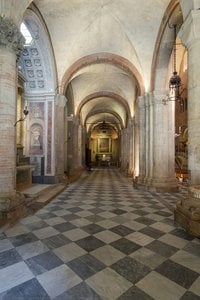
Museo del Duomo e Cattedrale di Fidenza, FidenzaMuseo del Duomo e Cattedrale di Fidenza Fidenza 3 Right nave of Fidenza cathedral, Left nave of Fidenza cathedral, Fidenza cathedral inside
Galleria Borghese, ŘímGalleria Borghese Řím 2 The Council of Gods, Norandino and Lucina Discovered by the Ogre
Bavarské státní sbírky malby, MnichovBavarské státní sbírky malby Mnichov 2 Penitent Mary Magdalene, Assumption of Mary
Statens Museum for Kunst, KodaňStatens Museum for Kunst Kodaň 2 The Glorification of Christ surrounded by Saints, Saint Sebastian

Giovanni Lanfranco, dekáda po dekádě: klíčové dílo každého období

  1. 1600s
    Gladiators Fighting (1601) od Giovanni Lanfranco
    Pořadí 6 z 55

    Gladiators Fighting

    Věk 18 – 27 · Museo del Prado

    Gladiators Fighting by Giovanni Lanfranco captures a violent struggle within a grand, classical arena. The scene centers on muscular male figures engaged in intense combat, their bodies defined…

  2. 1610s
    The Annunciation (1610) od Giovanni Lanfranco
    5 z 55

    The Annunciation

    Věk 28 – 37 · Státní Ermitáž

    Giovanni Lanfranco’s “The Annunciation”: A Symphony of Baroque Drama Giovanni Lanfranco (1582-1647), born in Parma, Italy, stands as a pivotal figure within the flourishing Baroque artistic movement. His…

  3. 1620s
    The Council of Gods (1624) od Giovanni Lanfranco
    Pořadí 1 z 55

    The Council of Gods

    Věk 38 – 47 · Galleria Borghese

    Giovanni Lanfranco’s fresco “The Council of Gods,” adorning the Galleria Borghese in Rome, stands as a testament to the artistic fervor of the Baroque period. Painted in 1624…

  4. 1630s
    Roman Naumachia (1635) od Giovanni Lanfranco
    2 z 55

    Roman Naumachia

    Věk 48 – 57 · Museo del Prado

    A panoramic naval engagement unfolds across a wide horizontal plane, capturing the violent energy of a Roman Naumachia. The composition is crowded, pulling the viewer into a frantic…

Díla mistrovská umělce Giovanni Lanfranco: otázky a odpovědi

Kterým obrazem je Giovanni Lanfranco nejznámější?Zobrazit odpověď

The Council of Gods (1624), Galleria Borghese, Řím. Následují Roman Naumachia (1635) a Madonna and Child with the Infant Saint John the Baptist (1630).

Kolik let bylo Giovanni Lanfranco, když maloval/a The Council of Gods?Zobrazit odpověď

42 let: dílo The Council of Gods pochází z roku 1624 a Giovanni Lanfranco se narodil/a v roce 1582.

Jakých deset nejvýznamnějších obrazů má Giovanni Lanfranco?Zobrazit odpověď

The Council of Gods, Roman Naumachia, Madonna and Child with the Infant Saint John the Baptist, Funeral Rites of a Roman Emperor, The Annunciation, Gladiators Fighting, The Allocution of a Roman Emperor, Christ Served by Angels, Gladiators at a Banquet a Norandino and Lucina Discovered by the Ogre. Výše uvedené pořadí uvádí rok a muzeum každého díla.

Kolik děl namaloval/a Giovanni Lanfranco?Zobrazit odpověď

Náš katalog obsahuje 55 děl autora Giovanni Lanfranco z let 1600 až 1638.

V kterých muzeích mohu vidět díla mistrovská umělce Giovanni Lanfranco?Zobrazit odpověď

Většina z nich se nachází v Museo del Prado (Madrid), J. Paul Getty Museum (Los Angeles) a Museo di Capodimonte (Neapol). V tabulce výše jsou jednotlivé muzea uvedeny postupně.

Kdy Giovanni Lanfranco namaloval svá díla?Zobrazit odpověď

V období 1620s: 16 z 55 děl na této stránce pochází z tohoto období, z nich The Council of Gods.

Jaká jsou první a poslední slavná díla umělce Giovanni Lanfranco?Zobrazit odpověď

Nejstarší dílo na této stránce pochází z Nativity (1600), nejnovější z The Allocution of a Roman Emperor (1638).

Jakými tématy se Giovanni Lanfranco nejčastěji zabýval/a?Zobrazit odpověď

People (7), Figures (5) a Woman (4), z celkových 55 děl na této stránce.

Kterou techniku Giovanni Lanfranco upřednostňoval/a?Zobrazit odpověď

Oil On Canvas: 16 z 55 děl na této stránce.

K jakému uměleckému směru patří Giovanni Lanfranco?Zobrazit odpověď

Baroque, jak dokazují obrazy na této stránce.

Která díla od Giovanni Lanfranco jsou vystavena v Museo del Prado?Zobrazit odpověď

Roman Naumachia, Funeral Rites of a Roman Emperor a Gladiators Fighting patří mezi 6 děl na této stránce, která má v zastarání Museo del Prado, Madrid.

Mohu vlastnit reprodukci díla mistra Giovanni Lanfranco?Zobrazit odpověď

Ano. Každý obraz na této stránce lze objednat jako ručně malovanou olejovou reprodukci v muzeální kvalitě nebo jako umělecký tisk v požadovaném rozměru přímo z jeho vlastní stránky.

Život umělce Giovanni Lanfranco

Giovanni Lanfranco: Přední postava barokního malířství

  • Narozen: Parma, Itálie (1582)
  • Zemřel: 1647

Raný život a formação

Giovanni Gaspare Lanfranco se narodil v roce 1582 v italské Parmě jako třetí syn Stefana a Cornelie Lanfranchi. Jeho umělecký talent byl rozpoznán již v raném věku, což mu otevřelo cestu k mistrovskému učení u Agostina Carracciho, bratra slavného boloňského malíře Annibaleho Carracciho. Svou cestu si dále budoval i prací po boku Sista Badalocchia v palácích rodiny Farnese v Parmě. Lanfrancovo vzdělávání pokračovalo v rozsáhlé dílně Annibaleho Carracciho v Římě, kde se podílel na prestižních projektech, jako byla Galleria Farnese, včetně práce na panelu zobrazujícím Polyféma a Galateu. Toto období ho vystavilo půsozne uměleckému prostředí a položilo pevné základy pro jeho budoucí brilantní kariéru.

Vývoj a umělecký styl

Po smrti Annibaleho Carracciho v roce 1609 se Lanfranco na krátký čas vrátil do Parmy, než se do roku 1612 znovu usadil v Římě. Zde si vyvinul naprosto jedinečný styl, který byl charakteristický dynamickými kompozicemi, teatrálním využitím světla a vizionářským přístupem, který byl obzvláště vhodný pro malbu stropních fresk. Ačkoliv byl ovlivněn pozdními díly Ludovica Carracciho a možná i Caravaggiem, projevoval také silné pouto k dekorativnímu stylu mistra Correggia. Jeho raná díla odrážejí eklektický rozsah, kdy propojoval prvky různých mistrů, zatímco postupně kráčel si vlastní cestou. Klíčovým aspektem jeho vývoje byla schopnost vytvářet iluzionistické efekty v freskovém malířství, čímž zásadně přispěl k rozkvětu barokní estetiky.

Hlavní úspěchy a zakázky

Lanfrancova kariéra zažívala svůj největší rozkvět za vlády papeže Paula V., který mu svěřil četné významné zakázky. Mezi jeho nejdůležitější úspěchy patří:

  • Fresky v Palazzo Mattei: Díla prokazující jeho rostoucí mistrovství v oblasti perspektivy a iluzionismu.

  • Strop ve Villa Borghese (Bogové Olympu): Monumentální dílo představující komplexní narativ a dynamické postavy.

  • Sala de' Corazzieri a Sala Regia v paláci Quirinale: Projekty, které dále upevnily jeho pověst předního freskového malíře v Římě.

  • Nanebevzetí Panny Marie v kostele Sant’Andrea della Valle: Toto ambiciózní fresko kupole je považováno za jeho absolutní mistrovské dílo; je proslulé dramatickým světlem, bohatou kompozicí a inovativním využitím perspektivy, čímž dokonale ztělesňuje barokní důraz na velkolepost a emocionální dopad.

Vliv a historický význam

Giovanni Lanfranco hrál zásadní roli při utváření umělecké krajiny sedmnáctého století v Římě. V boji o nejvýznamnější zakázky soupeřil i s Domenichinem, což přispělo k období intenzivní konkurence mezi předními umělci doby. Jeho inovativní přístup k freskovanému malířství, zejména ovládnutí iluzionistických technik a dramatických kompozic, ovlivnil následující generace tvůrců. Lanfrancovo dílo zrcadlí širší trendy barokní éry – zaměření na dynamiku, emoce a grandióznost – a trvale mu zajistilo místo mezi nejdůležitějšími malíři své doby. Jeho vliv je patrný i v pozdějších dílech Francesca Solimeny a dalších významných italských mistrů.

Všechna díla od Giovanni Lanfranco: 55 →