

Saint Louis Forgiving Pierre de Bretagne (1817) je nejslavnější obraz autora Georges Rouget, který se nachází v muzeu Musée des Beaux-Arts de Quimper ve městě Quimper. Sketch for the church Saint Gervais "Ecce Homo" (1819) a Jean-Nicolas Houchard (1835) jsou dalšími dvěma díly, která svět zná nejlépe. Z 39 děl umělce Georges Rouget v našem katalogu uvádíme 39 těch, na které se kolektéři a návštěvníci muzeí nejčastěji dívají, včetně roku vzniku, názvu muzea a příběhu každého díla.
Seřazeno podle našeho skóre popularity, které kombinuje počet vyhledávání, návštěv a objednávek u každého díla. Aktualizováno říjen 2026. Každé dílo na této stránce lze objednat jako ručně malovanou olejovou reprodukci v muzeální kvalitě nebo jako umělecký tisk v požadovaném rozměru.


A middle-aged man sits in a moment of profound stillness, his gaze drifting toward the upper right as if caught by a sudden, unspoken thought. He is draped in the heavy, dark navy blue of a jacket that absorbs the light, contrasting sharply against the crisp, creamy white of his cravat. The light strikes the left side of his face with a deliberate intensity, sculpting the sharp lines of his…


The canvas before you presents not merely a likeness, but an embodiment of the 19th century’s fascination with portraiture – a meticulously rendered study in dignity and quiet authority. Painted by Georges Rouget between 1803 and 1857, this depiction of Jean Pierre Thenot is more than just a representation; it's a window into a specific moment in French history, imbued with the formal elegance and restrained emotion characteristic of his…


Georges Rouget's "Mesdemoiselles Mollien," painted in 1811, is more than just a portrait; it’s a window into the refined world of early 19th-century French society and a testament…
Objednat reprodukci →
Georges Rouget a jeho obraz Francoise Chasseloup Laubata Georges Rouget (1783–1869) představuje vrcholné období francouzského akademického malířství, zejména během vlády Napoleona Bonaparteho. Nebyl to jméno známé jako David…
Objednejte si ručně malovanou kopii →
This striking portrait depicts Emmanuel de Grouchy, Colonel du 2e Dragon in 1792. Painted by Georges Rouget, a neoclassical French painter known for his historical scenes and association…
Objednat reprodukci →Čtyři témata, která se v těchto dílech objevují nejčastěji, spolu s nejlepším příkladem každého z nich.
8 muzea, v nichž je umístěno nejvíce obrazů z této stránky.
| Muzea | Město | Díla autora Georges Rouget | Obrazy z tohoto seznamu |
|---|---|---|---|
 Opera House |
Versailles | 6 | Achille Alexandre Alphonse, Viscount de Cailleux (1788-1876), Director of the Musées royaux, ALEXANDRE FRANCOIS MARIE, VICOMTE DE BEAUHARNAIS, GENERAL EN CHEF DE L'ARMEE DU RHIN (1760 1794), VICTOR GUY BARON DUPERRE, MATELOT EN 1792 (1775 1846) |
 Louvre |
Paříž | 2 | JEAN PIERRE THENOT (1803 1857), MESDEMOISELLES MOLLIEN |
 Musée des Beaux-Arts de Quimper |
Quimper | 1 | Saint Louis Forgiving Pierre de Bretagne |
 Petit Palais |
Paříž | 1 | Sketch for the church Saint Gervais "Ecce Homo" |
 Musée de l’Armée |
Paříž | 1 | Jean-Nicolas Houchard |
 Bavarské státní sbírky malby |
Mnichov | 1 | Jacques-Louis David |
 Musée Fesch |
Aix-en-Provence | 1 | The King of Rome in the Tuileries Garden |
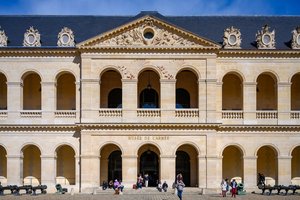 Ministère de la Défense Nationale |
Paříž | 1 | FRANCOIS CHASSELOUP LAUBAT, GÉNÉRAL DE DIVISION |


Saint Louis Forgiving Pierre de Bretagne (1817), Musée des Beaux-Arts de Quimper, Quimper. Následují Sketch for the church Saint Gervais "Ecce Homo" (1819) a Jean-Nicolas Houchard (1835).
34 let: dílo Saint Louis Forgiving Pierre de Bretagne pochází z roku 1817 a Georges Rouget se narodil/a v roce 1783.
Saint Louis Forgiving Pierre de Bretagne, Sketch for the church Saint Gervais "Ecce Homo", Jean-Nicolas Houchard, Jacques-Louis David, Achille Alexandre Alphonse, Viscount de Cailleux (1788-1876), Director of the Musées royaux, The King of Rome in the Tuileries Garden, JEAN PIERRE THENOT (1803 1857), DEBARQUEMENT DE SAINT LOUIS EN EGYPTE.4 JUIN 1249, ALEXANDRE FRANCOIS MARIE, VICOMTE DE BEAUHARNAIS, GENERAL EN CHEF DE L'ARMEE DU RHIN (1760 1794) a FRANCOIS CHRISTOPHE KELLERMAN, GENERAL EN CHEF DE L'ARMEE DE LA MOSELLE EN 1792 (1735 1820). Výše uvedené pořadí uvádí rok a muzeum každého díla.
Náš katalog obsahuje 39 děl autora Georges Rouget z let 1817 až 1850.
Většina z nich se nachází v Opera House (Versailles), Louvre (Paříž) a Musée des Beaux-Arts de Quimper (Quimper). V tabulce výše jsou jednotlivé muzea uvedeny postupně.
V období 1810s: 2 z 39 děl na této stránce pochází z tohoto období, z nich Saint Louis Forgiving Pierre de Bretagne.
Nejstarší dílo na této stránce pochází z Saint Louis Forgiving Pierre de Bretagne (1817), nejnovější z The King of Rome in the Tuileries Garden (1850).
Portrait (4), Dignified (3) a Formal (2), z celkových 39 děl na této stránce.
Oil On Canvas: 3 z 39 děl na této stránce.
Neoclassicism, jak dokazují obrazy na této stránce.
Achille Alexandre Alphonse, Viscount de Cailleux (1788-1876), Director of the Musées royaux, ALEXANDRE FRANCOIS MARIE, VICOMTE DE BEAUHARNAIS, GENERAL EN CHEF DE L'ARMEE DU RHIN (1760 1794) a VICTOR GUY BARON DUPERRE, MATELOT EN 1792 (1775 1846) patří mezi 6 děl na této stránce, která má v zastarání Opera House, Versailles.
Ano. Každý obraz na této stránce lze objednat jako ručně malovanou olejovou reprodukci v muzeální kvalitě nebo jako umělecký tisk v požadovaném rozměru přímo z jeho vlastní stránky.

