

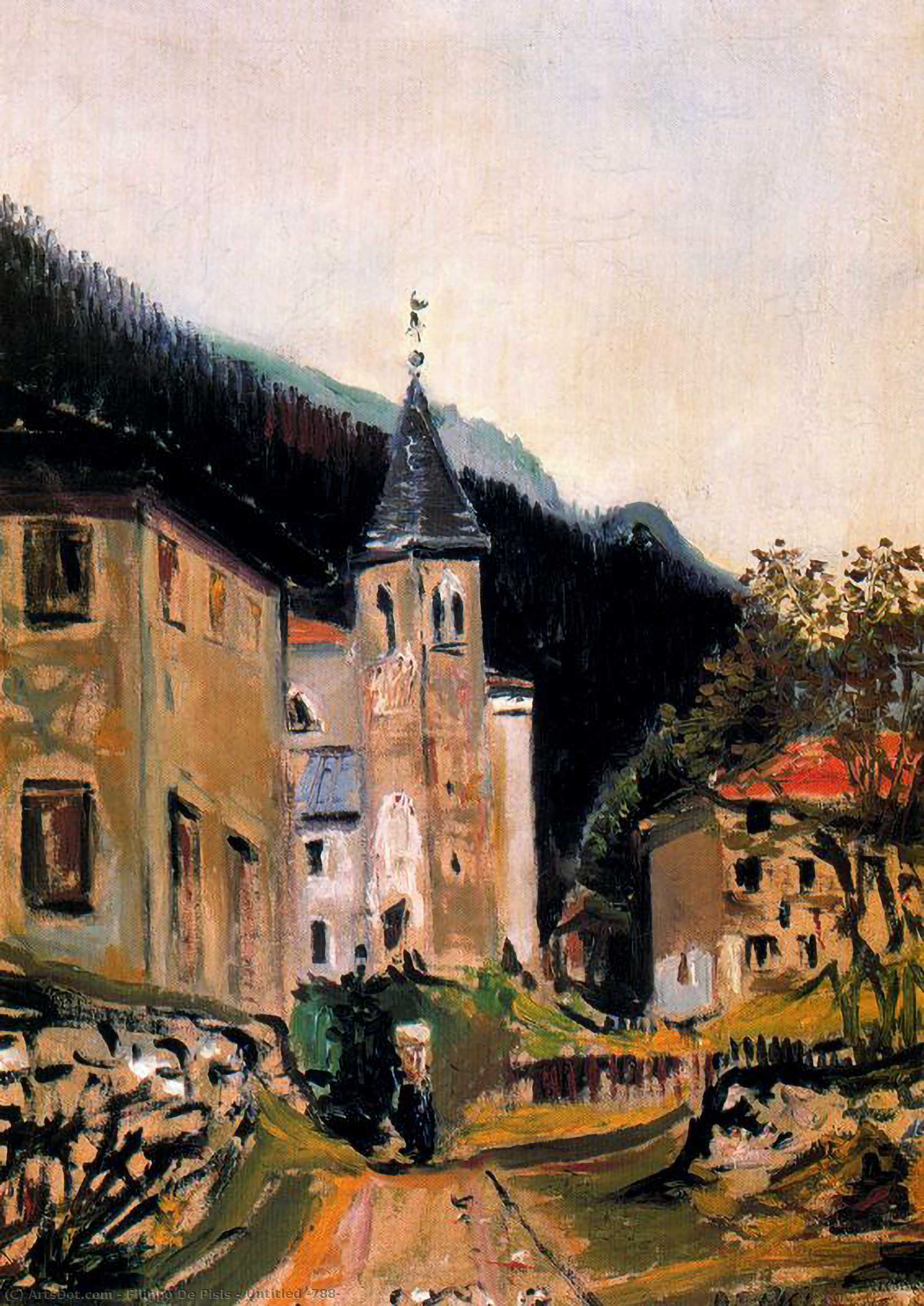
Obrazem, díky němuž se Filippo De Pisis stal slavným, je Untitled (839). Untitled (529) a Untitled (788) následují v srdcích sběratelů i návštěvníků muzeí. Z 61 děl umělce Filippo De Pisis v našem katalogu je těchto 61 nejoblíbenějších, z nichž každé je uvedeno s datem vzniku, muzeem a unikátními rysy.
Seřazeno podle našeho skóre popularity, které kombinuje počet vyhledávání, návštěv a objednávek u každého díla. Aktualizováno říjen 2026. Každé dílo na této stránce lze objednat jako ručně malovanou olejovou reprodukci v muzeální kvalitě nebo jako umělecký tisk v požadovaném rozměru.




In the quiet intimacy of Filippo de Pisis’s Still Life with Mushrooms, we are invited into a world where the mundane is elevated to the level of poetry. Created in 1934, this exquisite composition serves as a masterclass in the art of the fleeting moment. The painting captures a scattered collection of mushrooms, their organic forms resting with a delicate randomness across the canvas. Some lie solitary on the ground,…


Čtyři témata, která se v těchto dílech objevují nejčastěji, spolu s nejlepším příkladem každého z nich.
2 muzea, v nichž je umístěno nejvíce obrazů z této stránky.
| Muzea | Město | Díla autora Filippo De Pisis | Obrazy z tohoto seznamu |
|---|---|---|---|
 Galleria d'Arte Moderna Achille Forti |
Verona | 2 | Still life with Mushrooms, Strawberries. Still Life |
 Art Gallery of New South Wales |
Sydney | 1 | Flowers |
Celých deset let malování, od 1930 až po 1939, bylo pro Filippo De Pisis vším, čím byla: zde jsou její díla, rok po roce.


In the quiet intimacy of Filippo de Pisis’s Still Life with Mushrooms, we are invited into a world where the mundane is elevated to the level of poetry.…
Untitled (839). Následují Untitled (529) a Untitled (788).
Untitled (839), Untitled (529), Untitled (788), Flowers, Untitled (620), Untitled (313), Still life with Mushrooms, Untitled (805), Untitled (699) a Untitled (586). Výše uvedené pořadí uvádí rok a muzeum každého díla.
Náš katalog obsahuje 61 děl autora Filippo De Pisis z let 1930 až 1939.
Většina z nich se nachází v Galleria d'Arte Moderna Achille Forti (Verona) a Art Gallery of New South Wales (Sydney). V tabulce výše jsou jednotlivé muzea uvedeny postupně.
Nejstarší dílo na této stránce pochází z Still Life with Shell (1930), nejnovější z Strawberries. Still Life (1939).
Still life (6), Italian art (6) a Flowers (2), z celkových 61 děl na této stránce.
Impressionism a Post-impressionism, jak dokazují obrazy na této stránce.
Still life with Mushrooms a Strawberries. Still Life patří mezi 2 děl na této stránce, která má v zastarání Galleria d'Arte Moderna Achille Forti, Verona.
Ano. Každý obraz na této stránce lze objednat jako ručně malovanou olejovou reprodukci v muzeální kvalitě nebo jako umělecký tisk v požadovaném rozměru přímo z jeho vlastní stránky.
Born Luigi Filippo Tibertelli in the historic Italian city of Ferrara, Filippo De Pisis was an artist who refused to be confined by a single medium. To understand his canvas, one must first understand his soul as a poet; he viewed the world through a lens of literary sensitivity, where every shadow and light flicker held a narrative weight. His early years in Italy were marked by a profound intellectual curiosity, studying literature and philosophy in Bologna. It was here that he encountered the haunting, dreamlike visions of Giorgio De Chirico, an encounter that would plant the seeds of Metaphysical influence within his burgeoning style. This duality—the precision of a scholar and the wandering eye of a flâneur—defined his approach to art, allowing him to capture not just the physical reality of a subject, but its emotional resonance.
His journey was one of constant movement across the great cultural capitals of Europe. Moving to Rome in 1919 and later settling in Paris in 1925, De Pisis immersed himself in the vibrant, avant-garde pulse of the interwar period. In Paris, his brushwork began to shed its more rigid, metaphysical origins, absorbing the light and movement of French Impressionism. He moved within the same circles as Georges Braque and André Derain, and his style evolved into something uniquely his own: a technique often described as pittura a zancapi mosca—a "fly-wing" style of painting characterized by rapid, fragmented, and nervous brushstrokes. This method allowed him to achieve an airy, almost mirage-like quality, where objects seemed to vibrate with life before dissolving back into the atmosphere.
The heart of De Pisis’s oeuvre lies in his ability to find the eternal within the ephemeral. He possessed a singular talent for elevating the mundane—a simple arrangement of mushrooms, a bowl of strawberries, or a vase of foxgloves—into profound meditations on existence. His still lifes are never merely static arrangements; they are imbued with what he called "pathetic pleasure-pain," a bittersweet recognition of beauty's fleeting nature. Through muted pastel hues and a masterful command of Venetian light, he created compositions where the boundaries between objects and their surroundings blur, suggesting a deep, spiritual interconnectedness between all things.
His fascination with Venice provided much of his most luminous subject matter. The city’s architectural grandeur and its misty, maritime atmosphere served as the perfect stage for his expressive explorations. Whether depicting the rhythmic movement of a seascape or the quiet intimacy of a street scene, De Pisis utilized a broken brushstroke technique that captured the very essence of light hitting water or stone. This period of his work represents a pinnacle of Italian Post-Impressionism, where the artist’s technical skill met an almost obsessive devotion to capturing the "secret spirit" of the moment.
Despite the disruptions of World War II and his eventual return to Italy, De Pisis never lost the cosmopolitan spirit that had defined his youth. His life was famously eccentric, marked by a dandyish lifestyle and an insatiable appetite for the beauty found in the smallest details—even claiming that a discarded feather on a street could spark a masterpiece. This radical openness to the world ensured that his work remained perpetually fresh, avoiding the stagnation that often plagues established masters.
Today, the significance of Filippo De Pisis rests in his unique position as a bridge between the structured metaphysical movements of the early 20th century and the more spontaneous, emotive expressions of later decades. His legacy is found in:
He remains a celebrated figure in the annals of Italian art, remembered not just as a painter of scenes, but as a chronicler of the ephemeral soul.
