Emanuel de Witte, 1617 – 1692

Emanuel de Witte: 99 nejznámějších obrazů

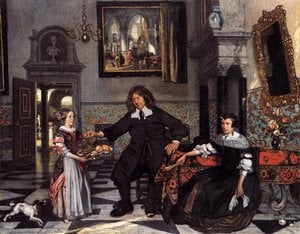
Portrait of a Family in an Interior (detail) (1678) je nejslavnější obraz autora Emanuel de Witte, který se nachází v muzeu Alte Pinakothek ve městě Mnichov. The Interior of a Dutch Church (1680) a Interior of the Nieuwe Kerk in Delft (1664) jsou dalšími dvěma díly, která svět zná nejlépe. Z 99 děl umělce Emanuel de Witte v našem katalogu uvádíme 99 těch, na které se kolektéři a návštěvníci muzeí nejčastěji dívají, včetně roku vzniku, názvu muzea a příběhu každého díla.

Seřazeno podle našeho skóre popularity, které kombinuje počet vyhledávání, návštěv a objednávek u každého díla. Aktualizováno říjen 2026. Každé dílo na této stránce lze objednat jako ručně malovanou olejovou reprodukci v muzeální kvalitě nebo jako umělecký tisk v požadovaném rozměru.

Portrét Emanuel de Witte
Emanuel de Witte · 1617 – 1692
Narozen · zemřel
1617 – 1692, Alkmaar
Směr
Dutch golden age
Díla v našem katalogu
99
Nejslavnější
Portrait of a Family in an Interior (detail) (1678)
Nejvíce děl v
Museum Boijmans Van Beuningen

Top 10: nejznámější obrazy autora Emanuel de Witte

Portrait of a Family in an Interior (detail) (1678) od Emanuel de Witte
1

Portrait of a Family in an Interior (detail)

1678 · Oil On Canvas · Alte Pinakothek, Mnichov

Emanuel de Witte's “Portrait of a Family in an Interior” (1678) isn’t merely a depiction of a wealthy household; it’s a carefully constructed tableau vivant, a frozen moment brimming with quiet dignity and subtle narrative. Painted during the height of the Dutch Golden Age, this oil on canvas offers a rare glimpse into the lives of a prosperous family within their richly appointed home—a space designed to project status, comfort,…

The Interior of a Dutch Church (1680) od Emanuel de Witte
2

The Interior of a Dutch Church

1680 · Oil On Canvas · Scottish National Gallery, Edinburgh

The Interior of a Dutch Church is an oil on canvas by Emanuel de Witte. Created about 1680, the work reflects the artist's specialization in the architectural spaces of the Netherlands. De Witte, who was born in Alkmaar, Netherlands, spent much of his career capturing the specific atmosphere and light within these sacred environments.

Interior of the Nieuwe Kerk in Delft (1664) od Emanuel de Witte
3

Interior of the Nieuwe Kerk in Delft

1664 · Oil On Canvas · Residenzgalerie, Salzburg

To stand before an interior scene like this depiction of the Nieuwe Kerk in Delft is to step across a threshold, leaving the clamor of the outside world behind. The artwork does not merely show us a church; it envelops us within its monumental silence. Emanuel de Witte masterfully captures that unique atmosphere found only in grand, aged sacred architecture—a place where history seems palpable in the very dust motes…

Rest During the Flight (1654) od Emanuel de Witte
4

Rest During the Flight

1654 · Oil · Bavarské státní sbírky malby, Mnichov

The oil painting titled Rest During the Flight by Emanuel de Witte depicts a specific narrative from religious history. Created about 1654, the work presents a scene likely representing the Flight into Egypt. This biblical event is rendered through a composition centered on a nocturnal landscape where light and shadow define the primary figures.

The Interior of the Oude Kerk, Amsterdam, during a Sermon (1658) od Emanuel de Witte
5

The Interior of the Oude Kerk, Amsterdam, during a Sermon

1658 · Oil On Canvas · National Gallery, Londýn

To stand before this depiction of The Interior of the Oude Kerk in Amsterdam is to step across the threshold of time itself. This painting, executed in 1658 by Emanuel de Witte, is far more than a mere record of an architectural space; it is a meticulously crafted meditation on faith, community, and the sublime interplay between human life and divine structure. The high-angle perspective immediately envelops the viewer, drawing…

Portrait of a woman (1648) od Emanuel de Witte
6

Portrait of a woman

1648 · Oil On Canvas · Museum Boijmans Van Beuningen, Rotterdam

A single female figure occupies the center of this oval vignette, presented in a bust-length view. She wears a dark garment, accented by a prominent white collar with scalloped edges and a small black bow. The composition draws the eye directly to her face, where a calm and composed expression suggests a dignified emotional tone. Light originates from the upper left, casting gentle shadows across the right side of her…

Portrait of a man (1648) od Emanuel de Witte
7

Portrait of a man

1648 · Oil · Museum Boijmans Van Beuningen, Rotterdam

is an oil painting by the Dutch artist Emanuel de Witte. Executed about 1648, the work represents a significant example of the artist's early engagement with portraiture before his later specialization in church interiors. The sitter is presented in a bust-length composition, positioned slightly off-center to create a sense of depth and presence.

Interior of a Protestant Gothic Church (1669) od Emanuel de Witte
8

Interior of a Protestant Gothic Church

1669 · Oil On Canvas · Rijksmuseum, Amsterdam

Emanuel de Witte's "Interior of a Protestant Gothic Church," painted in 1669, isn’t merely a depiction of a sacred space; it’s an immersive experience. This remarkable work transcends the simple act of recording architecture, instead capturing the very *feeling* of being within a grand, dimly lit cathedral – a testament to de Witte's unique artistic vision. Unlike his contemporary Pieter Saenredam, who meticulously documented architectural details with photographic precision, de…

Zbytek žebříčku Emanuel de Witte, od 11 do 99

Interior of the Oude Kerk, Delft (1650) od Emanuel de Witte
#38

Interior of the Oude Kerk, Delft

1650 · Metropolitan Museum of Art

Despite its profusion of realistic details, de Witte’s interior view of Delft’s Oude Kerk (Old Church) takes considerable liberties with the actual architecture of the church—omitting, for example,…

Pořiďte si ho domů →
Interior of a Church (1674) od Emanuel de Witte
#67

Interior of a Church

1674 · Wallraf-Richartz-Museum

In this work, titled Interior of a Church, we encounter a significant example of the Dutch Golden Age. Painted by Emanuel de Witte in 1660, the oil on…

Objednat reprodukci →
Interior of the Oude Kerk, Delft (1650) od Emanuel de Witte
#73

Interior of the Oude Kerk, Delft

1650 · Metropolitan Museum of Art

Emanuel de Witte's “Interior of the Oude Kerk, Delft” isn’t merely a depiction of a church; it’s an immersive experience. Painted in 1650, this remarkable work transports us…

Objednat reprodukci →
Interior of a Gothic church od Emanuel de Witte
#86

Interior of a Gothic church

Museum Boijmans Van Beuningen

The scene unfolds within the quiet, soaring reaches of an Interior of a Gothic church. This work, painted by Emanuel de Witte, captures a moment of stillness amidst…

Objednat reprodukci →

Témata, která Emanuel de Witte maloval nejčastěji

Čtyři témata, která se v těchto dílech objevují nejčastěji, spolu s nejlepším příkladem každého z nich.

Kde vidět obrazy autora Emanuel de Witte

8 muzea, v nichž je umístěno nejvíce obrazů z této stránky.

Muzea Město Díla autora Emanuel de Witte Obrazy z tohoto seznamu
Museum Boijmans Van Beuningen, RotterdamMuseum Boijmans Van Beuningen Rotterdam 11 Portrait of a woman, Portrait of a man, Vertumnus and Pomona
Rijksmuseum, AmsterdamRijksmuseum Amsterdam 8 Interior of a Protestant Gothic Church, Interior of a Protestant Gothic Church, Interior of the Portuguese Synagogue in Amsterdam
National Gallery, LondýnNational Gallery Londýn 4 The Interior of the Oude Kerk, Amsterdam, during a Sermon, The Interior of the Oude Kerk, Amsterdam, The Interior of the Oude Kerk, Amsterdam, during a Sermon
Amsterdam Museum, AmsterdamAmsterdam Museum Amsterdam 3 Interior of the Oude Kerk in Amsterdam, Interior of the Oude Kerk in Amsterdam, Interior of the Oude Kerk in Amsterdam
Gemäldegalerie, BerlínGemäldegalerie Berlín 3 Interior View of a Synagogue, Interior of a Gothic Church, Interior of the Nieuwe Kerk in Amsterdam
Státní Ermitáž, Sankt-PetěrburgStátní Ermitáž Sankt-Petěrburg 3 Square in front of the Palace in an Italian Town, Old Church in Delft, Interior of a Church
Metropolitan Museum of Art, New YorkMetropolitan Museum of Art New York 3 Interior of the Oude Kerk, Delft, Interior of the Oude Kerk, Delft (detail), Interior of the Oude Kerk, Delft
Detroit Institute of Arts, DetroitDetroit Institute of Arts Detroit 3 The Nieuwe Kerk at Delft with the Tomb of Willem the Silent, Interior of a Protestant Church, Interior of the Oude Kerk in Amsterdam

Emanuel de Witte v průběhu desetiletí: jeden unikátní dílo pro každé období

  1. 1640s
    Portrait of a woman (1648) od Emanuel de Witte
    6 z 99

    Portrait of a woman

    Věk 23 – 32 · Museum Boijmans Van Beuningen

    A single female figure occupies the center of this oval vignette, presented in a bust-length view. She wears a dark garment, accented by a prominent white collar with…

  2. 1650s
    Rest During the Flight (1654) od Emanuel de Witte
    4 z 99

    Rest During the Flight

    Věk 33 – 42 · Bavarské státní sbírky malby

    The oil painting titled Rest During the Flight by Emanuel de Witte depicts a specific narrative from religious history. Created about 1654, the work presents a scene likely…

  3. 1660s
    Interior of the Nieuwe Kerk in Delft (1664) od Emanuel de Witte
    Pořadí 3 z 99

    Interior of the Nieuwe Kerk in Delft

    Věk 43 – 52 · Residenzgalerie

    To stand before an interior scene like this depiction of the Nieuwe Kerk in Delft is to step across a threshold, leaving the clamor of the outside world…

  4. 1670s
    Portrait of a Family in an Interior (detail) (1678) od Emanuel de Witte
    Pořadí 1 z 99

    Portrait of a Family in an Interior (detail)

    Věk 53 – 62 · Alte Pinakothek

    Emanuel de Witte's “Portrait of a Family in an Interior” (1678) isn’t merely a depiction of a wealthy household; it’s a carefully constructed tableau vivant, a frozen moment…

  5. 1680s
    The Interior of a Dutch Church (1680) od Emanuel de Witte
    Pořadí 2 / 99

    The Interior of a Dutch Church

    Věk 63 – 72 · Scottish National Gallery

    The Interior of a Dutch Church is an oil on canvas by Emanuel de Witte. Created about 1680, the work reflects the artist's specialization in the architectural spaces…

  6. 1690s

Obrazy umělce Emanuel de Witte: nejčastější dotazy

Který obraz má nejznámější Emanuel de Witte?Zobrazit odpověď

Portrait of a Family in an Interior (detail) (1678), Alte Pinakothek, Mnichov. Následují The Interior of a Dutch Church (1680) a Interior of the Nieuwe Kerk in Delft (1664).

V jakém věku namaloval(a) Emanuel de Witte dílo Portrait of a Family in an Interior (detail)?Zobrazit odpověď

61 let: dílo Portrait of a Family in an Interior (detail) pochází z roku 1678 a Emanuel de Witte se narodil/a v roce 1617.

Kterých 10 nejslavnějších obrazů má Emanuel de Witte?Zobrazit odpověď

Portrait of a Family in an Interior (detail), The Interior of a Dutch Church, Interior of the Nieuwe Kerk in Delft, Rest During the Flight, The Interior of the Oude Kerk, Amsterdam, during a Sermon, Portrait of a woman, Portrait of a man, Interior of a Protestant Gothic Church, Danaë and the Shower of Gold a Vertumnus and Pomona. Výše uvedené pořadí uvádí rok a muzeum každého díla.

Kolik obrazů má Emanuel de Witte?Zobrazit odpověď

Náš katalog obsahuje 99 děl autora Emanuel de Witte z let 1641 až 1692.

Kde mohu vidět nejznámější obrazy autora Emanuel de Witte?Zobrazit odpověď

Většina z nich se nachází v Museum Boijmans Van Beuningen (Rotterdam), Rijksmuseum (Amsterdam) a National Gallery (Londýn). V tabulce výše jsou jednotlivé muzea uvedeny postupně.

V jakém období vytvořil/a Emanuel de Witte svá nejznámější díla?Zobrazit odpověď

V období 1650s: 27 z 99 děl na této stránce pochází z tohoto období, z nich Rest During the Flight.

Který je nejstarší a který nejnovější slavný obraz autora Emanuel de Witte?Zobrazit odpověď

Nejstarší dílo na této stránce pochází z Danaë and the Shower of Gold (1641), nejnovější z The Nieuwe Vismarkt (New Fish Market) in Amsterdam, Emanuel de Witte, 1655 - 1692 (1692).

Jaká témata maloval/a Emanuel de Witte?Zobrazit odpověď

Church interior (16), 17th century (10) a Architecture (10), z celkových 99 děl na této stránce.

Na čem a jakými prostředky mal Emanuel de Witte?Zobrazit odpověď

Oil On Canvas: 22 z 99 děl na této stránce.

K jakému směru patří dílo umělce Emanuel de Witte?Zobrazit odpověď

Dutch golden age a Baroque, jak dokazují obrazy na této stránce.

Jaká díla Emanuel de Witte má v obsluze Museum Boijmans Van Beuningen?Zobrazit odpověď

Portrait of a woman, Portrait of a man a Vertumnus and Pomona patří mezi 11 děl na této stránce, která má v zastarání Museum Boijmans Van Beuningen, Rotterdam.

Kde si mohu koupit reprodukci Emanuel de Witte?Zobrazit odpověď

Ano. Každý obraz na této stránce lze objednat jako ručně malovanou olejovou reprodukci v muzeální kvalitě nebo jako umělecký tisk v požadovaném rozměru přímo z jeho vlastní stránky.

Emanuel de Witte: biografie

A Life in Perspective: The World of Emanuel de Witte

Emanuel de Witte, jméno méně okamžitě rozpoznatelné než některé z jeho nizozemských zlatých věků, přesto zaujímá významnou a fascinující pozici v pantonu 17. století. Narodil se v Alkmaaru roku 1617 a jeho umělecká cesta byla poznamenána jak pozoruhodným talentem, tak značnými osobními obtížemi – duality, která se subtilně infiltruje do atmosféry jeho obrazů. Nebyl poháněn důslednou architektonickou dokumentací jako Pieter Jansz Saenredam; spíše toužil zachytit *pocit* prostoru, kvalitu světla a jemné drama rozvíjejícího se v chrámu. Jeho plátna nejsou pouhé reprezentace kostelů; jsou to pohlcující zážitky, které pozvat diváka do světa klidného úklidu a duchovní rezonance.

Od Delftského Tréninku k Amsterdamskému Přijetí

Rané životní zkušenosti De Wittových poskytly pevný základ pro jeho umělecké úsilí. Jeho otec, učitel, v něm zakořenil ocenění učení a intelektuální zvědavost – vlastnosti, které se později projevily ve svém pečlivém pozorování perspektivy a světla. Oficiálně vstoupil do uměleckého světa roku 1636, kdy se připojil k Gildě Svatého Lukáše v Alkmaaru, ale jeho následné učebnictví u Everta van Aelsta v Delftu bylo zvláště formující. Van Aelst, renomovaný malíř krajin, přenesl na De Wittovy dovednosti v detailu a mistrovské ovládání světla a stínu – dovednosti, které se staly charakteristickými znaky jeho zralého stylu. Zpočátku prozkoumal různé žánry – portréty, mytologické scény, náboženské příběhy – ale až po přestěhování do Amsterdamu v roce 1651 skutečně našel své povolání. Bohatství města poskytovalo neomezený zdroj inspirace a začal se specializovat na zobrazení jeho úchvatných interiérů kostelů.

Mistr Atmosféry a Představivkových Prostorů

Amsterdam se ukázal jako klíčový pro umělecký rozvoj De Wittových. Nevytvořil prosté kopie existujících kostelních prostorů; spíše mistrovsky syntetizoval prvky z různých budov, čímž vytvořil idealizované interiéry, které působily jak známými, tak subtilně nadpřirozeně. Oude Kerk v Amsterdamu se stala jeho častým předmětem obrazů, opakovaně se objevovala na jeho plátnech z různých úhlů pohledu. Ale tyto obrazy nebyly prosté a přímé reprezentace. De Witte manipuloval perspektivou, hrál se světlem a stínem a uspořádával v těchto prostorech pečlivě rozmístěné postavy, aby vyvolal konkrétní pocit nebo atmosféru. Jak poznamenala Walter Liedtke, jeho hlavním zájmem nebyla architektura sama, ale „samotný prostor – jeho světlo, barva, rozsah a nálada.“ Tento důraz na atmosférický efekt se odlišuje od více striktně topografických malířů té doby. Nezajímal ho přesný detail; zajímalo ho vytvořit *pocit* grandeuru, úcty a duchovní hloubky.

Rozvoj Stylu a Vlivy

De Witte byl silně ovlivněn dílem Everta van Aelsta, který mu předal dovednosti v detailu a realistickém zachycování světla. Van Aelstova podpora se projevila v De Wittových raných pracích, zejména v portrétech a krajinách. Nicméně, jeho práce s perspektivou a osvětlením se postupně vyvíjely směrem k atmosféře a dynamice, které byly charakteristické pro jeho pozdější díla. Vliv Saenredama, který se zaměřoval na detailní architektonickou dokumentaci, byl spíše omezený. De Witte se inspiroval především v interiérech kostelů, kde mohl experimentovat s osvětlením a perspektivou, aby vytvořil pocit prostoru a hloubky. Jeho práce jsou často charakterizovány bohatými barvami, jemným světlem a dynamickou kompozicí.

Osobní Obtížnosti a Tragický Závěr

Amsterdam představoval pro De Wittova klíčové místo v jeho uměleckém rozvoji. Zatímco se soustředil na zachycení atmosféry kostelních prostorů, jeho osobní život byl poznamenán obtížemi. Smrt jeho první manželky přinesla hluboké utrpení a následné právní problémy spojené s jeho druhou manželkou a dcerou vrhly dlouhý stín na jeho pozdější roky. Finanční potíže ho vedly k ponižující situaci, kdy se stal vazalem umělce Joris de Wijse, situaci, kterou nakonec porušil, což vedlo k dalším komplikacím. Současné zprávy vykreslují obraz temperamentu – muže náchylného k křikání na klienty a zapojování se do sporů. Tato vnitřní zuřivost možná přispěla nerovnoměrnosti jeho pozdějších prací, ale také přidala další vrstvu složitosti k pochopení umělce a jeho děl. Tragicky skončil svůj život v roce 1692, kdy údajně spáchal sebevraždu zavěšením se z mostu nad kanálem; provaz selhal a on potopil. Byl to tragický konec pro muže, který věnoval svůj život zachycování krásy a klidu svatých prostorů.

Dědictví a Trvalý Vliv

Emanuel de Witte stojí jako důležitá postava v posledním období architektonického malířství v Nizozemsku, která propojuje důkladnou dokumentaci s atmosférickou interpretací. Jeho inovativní použití světla a perspektivy ovlivnilo generace následovníků a jeho obrazy pokračují ve poskytovat cenné poznatky do nizozemského náboženského života a sociálních zvyků 17. století. Dnes jsou díla De Wittových vystaveny v prestižních sbírkách po celém světě – v Metropolitan Museum of Art, National Gallery of Art a Rijksmuseum mezi dalšími – což svědčí o jeho trvalém dědictví jako mistra perspektivy, atmosféry a emocionálního vyjádření. Připomíná nám, že umění není jen to, co vidíme, ale jak se cítíme, když na to hledíme.

Všechna díla od Emanuel de Witte: 99 →
