Benvenuto Cellini, 1500 – 1571

Obrazy autora Benvenuto Cellini: 80 nejznámějších děl seřazených podle popularity

Nejslavnějším dílem umělce Benvenuto Cellini je obraz Solnička (1540) v muzeu Kunsthistorisches Museum v Vídeň. Díky Jupiter (1545) a Crucifix (detail) (1562) tvoří celek tří děl, která každý rozpozná. Náš katalog obsahuje 80 děl umělce Benvenuto Cellini; níže je 80 děl, na která se svět dívá nejčastěji, každé s uvedeným rokem vzniku, muzeem, které jej uchovává, a důvodem jeho významu.

Seřazeno podle našeho skóre popularity, které kombinuje počet vyhledávání, návštěv a objednávek u každého díla. Aktualizováno říjen 2026. Každé dílo na této stránce lze objednat jako ručně malovanou olejovou reprodukci v muzeální kvalitě nebo jako umělecký tisk v požadovaném rozměru.

Portrét Benvenuto Cellini
Benvenuto Cellini · 1500 – 1571
Narozen · zemřel
1500 – 1571, Florencie
Směr
Manýrismus
Díla v našem katalogu
80
Nejslavnější
Solnička (1540)
Nejvíce děl v
Museo Nazionale del Bargello

10 nejslavnějších obrazů autora Benvenuto Cellini

Solnička (1540) od Benvenuto Cellini
1

Solnička

1540 · Zlato · Kunsthistorisches Museum, Vídeň

Saliera, vytvořená ze zlata, byla dílem Benvinta Celliniho pro francouzského krále Františka I. v letech mezi 1540 a 1543. Z dědictví jeho potomka Karla IX. následně přešla do rukou arcidukejce Ferdinanda II. Tato solnička představuje nádhernou alegorii Země a vzájemného působení pevniny a moře. Na její pravé straně spatříme muže s tridentem a loď symbolizující vodu, zatímco levá strana je věnována postavě ženy reprezentující Zemi. Základna díla pak ztvárňuje větry,…

Jupiter (1545) od Benvenuto Cellini
2

Jupiter

1545 · Bronze · Museo Nazionale del Bargello, Florencie

To stand before this magnificent depiction of Jupiter is to confront raw, untamed power rendered in the enduring majesty of bronze. This sculpture does not merely represent a god; it embodies the very force of nature—the thunderous authority that commands the skies. The figure dominates the space with an undeniable gravitas, his musculature meticulously articulated as if carved by the passing winds themselves. Observe the dynamic tension captured in his…

Crucifix (detail) (1562) od Benvenuto Cellini
3

Crucifix (detail)

1562 · Marble · Monasterio de San Lorenzo, El Escorial

Benvenuto Cellini’s 1562 marble sculpture, “Crucifix (detail),” is not merely a depiction of Christ’s suffering; it’s an immersive experience. Within the dimly lit confines of El Escorial, this intimate piece draws you into a world of profound emotion and technical mastery – a testament to Cellini's genius as both goldsmith and sculptor. The sculpture immediately commands attention with its stark realism and the palpable sense of agony radiating from the…

Morion for Francesco I de' Medici (1570) od Benvenuto Cellini
4

Morion for Francesco I de' Medici

1570 · Metalwork · Staatliche Kunstsammlungen, Drážďany

In the grand tapestry of the Italian Renaissance, few objects capture the intersection of martial prestige and artistic virtuosity as profoundly as the Morion for Francesco I de' Medici. Created in 1570 by the legendary polymath Benvenuto Cellini, this is far more than a mere piece of protective headgear; it is a sculptural triumph rendered in metal. As a quintessential example of Mannerism, the Morion rejects the tranquil equilibrium of…

Danae and her Son Perseus (1545) od Benvenuto Cellini
5

Danae and her Son Perseus

1545 · Bronze · Museo Nazionale del Bargello, Florencie

The bronze sculpture Danae and her Son Perseus by Benvenuto Cellini captures a moment of divine intersection. Created between 1545 and 1553 for Cosimo I de' Medici, the work depicts the mythological event where Zeus visits Danae in the form of golden rain. This Renaissance Mannerist piece resides within the Museo Nazionale del Bargello in Florence, Italy.

Nymph of Fontainebleau (1542) od Benvenuto Cellini
6

Nymph of Fontainebleau

1542 · Bronze · Louvre, Paříž

To stand before the Nymph of Fontainebleau is to step directly into the languid, sun-dappled world of the Italian Renaissance. This magnificent bronze sculpture by Benvenuto Cellini does more than merely depict a figure; it captures an ephemeral moment—a breath held between slumber and awakening. The central subject, the reclining nymph, embodies a timeless confluence of nature’s grace and mythological mystery. Her pose is one of exquisite repose, her body…

Perseus (1540) od Benvenuto Cellini
7

Perseus

1540 · Bronze · Museo Nazionale del Bargello, Florencie

In the heart of Florence’s Piazza della Signoria, amidst the architectural grandeur of the Loggia dei Lanzi, stands a masterpiece that captures the very essence of Mannerist tension and heroic triumph. Benvenuto Cellini’s Perseus is not merely a sculpture; it is a dramatic performance frozen in bronze. Created between 1545 and 1554, this monumental work depicts the legendary hero Perseus at the climactic moment of his mythic journey. He stands…

Bust of Cosimo I (detail) (1546) od Benvenuto Cellini
8

Bust of Cosimo I (detail)

1546 · Bronze · Museo Nazionale del Bargello, Florencie

In the heart of the Italian Renaissance, where the pursuit of beauty met the raw ambition of political power, Benvenuto Cellini forged a masterpiece that transcends mere portraiture. The Bust of Cosimo I is not simply a likeness of the Grand Duke of Tuscany; it is a profound meditation on authority, captured in the enduring medium of bronze. To gaze upon this work is to step into the vibrant, often…

Bust of Bindo Altoviti (1549) od Benvenuto Cellini
9

Bust of Bindo Altoviti

Benvenuto Cellini's “Bust of Bindo Altoviti,” crafted in 1549, isn’t merely a sculpted likeness; it’s a meticulously constructed window into the heart of Renaissance Florence. This bronze masterpiece, now residing within the Isabella Stewart Gardner Museum in Boston, transcends simple portraiture to become a profound meditation on wealth, power, and the very essence of human representation. The subject, Bindo Altoviti, a prominent Florentine banker and astute political player, is rendered…

Perseus (1540) od Benvenuto Cellini
10

Perseus

1540 · Bronze · Museo Nazionale del Bargello, Florencie

In the heart of Florence, amidst the architectural grandeur of the Loggia dei Lanzi, stands a masterpiece that captures the very essence of human struggle and divine victory. Benvenuto Cellini’s Perseus is not merely a sculpture; it is a breathtaking moment frozen in bronze, a dramatic climax of Greek mythology brought to life through the virtuosity of the Mannerist style. As the light dances across its aged patina, the figure…

Benvenuto Cellini, obrazy od 11 do 80

Crucifix (1562) od Benvenuto Cellini
#11

Crucifix

1562 · Monasterio de San Lorenzo

Benvenuto Cellini's 1562 bronze sculpture, “Crucifix,” stands as a profoundly moving testament to the Renaissance spirit—a collision of technical mastery, religious fervor, and deeply personal emotion. More than…

Nymph of Fontainebleau (detail) (1542) od Benvenuto Cellini
#12

Nymph of Fontainebleau (detail)

1542 · Louvre

To encounter a detail of Benvenuto Cellini’s Nymph of Fontainebleau is to step directly into the languid, sun-dappled world of the High Renaissance. This exquisite bronze sculpture, cast…

Minerva (1545) od Benvenuto Cellini
#13

Minerva

1545 · Museo Nazionale del Bargello

Benvenuto Cellini's "Minerva," crafted in 1545 during the twilight of the High Renaissance, isn't merely a bronze sculpture; it’s a meticulously constructed embodiment of Roman virtue and strategic…

Mercury (1545) od Benvenuto Cellini
#14

Mercury

1545 · Museo Nazionale del Bargello

In the quiet presence of this bronze, one senses the shifting tides of the sixteenth century. Completed in 1545, Benvenuto Cellini’s Mercury marks a departure from the balanced…

Nymph of Fontainebleau (detail) (1542) od Benvenuto Cellini
#15

Nymph of Fontainebleau (detail)

1542 · Louvre

The bronze surface holds a quiet tension, as if the figure might stir at any moment. In this close view, we find ourselves pressed against the smooth, cool…

Perseus (15) (1545) od Benvenuto Cellini
#16

Perseus (15)

1545 · Loggia dei Lanzi

To stand before Benvenuto Cellini's monumental bronze, Perseus with the Head of Medusa, is to be arrested by a moment of sublime, violent apotheosis. This sculpture does not…

Salt Cellar (1540) od Benvenuto Cellini
#17

Salt Cellar

1540 · Kunsthistorisches Museum

To behold Benvenuto Cellini’s Saliera is to step into the opulent heart of the Italian Renaissance, where the boundaries between functional object and profound sculpture dissolve entirely. This…

Salt Cellar (detail) (1540) od Benvenuto Cellini
#18

Salt Cellar (detail)

1540 · Kunsthistorisches Museum

In the hallowed halls of the Kunsthistorisches Museum in Vienna, there exists a treasure that transcends the boundaries of mere functional objecthood to become a profound meditation on…

Ganymede (1548) od Benvenuto Cellini
#19

Ganymede

1548 · Museo Nazionale del Bargello

To stand before Benvenuto Cellini's bronze depiction of Ganymede is to encounter a moment suspended between divine beauty and youthful vulnerability. This masterful sculpture, executed in the vibrant…

Salt Cellar (detail) (1540) od Benvenuto Cellini
#20

Salt Cellar (detail)

1540 · Kunsthistorisches Museum

In the grand tapestry of the Italian Renaissance, few objects capture the audacious spirit of Mannerism as vibrantly as Benvenuto Cellini’s Salt Cellar. Created around 1543 for the…

Bust of Cosimo I (detail) (1546) od Benvenuto Cellini
#21

Bust of Cosimo I (detail)

1546 · Museo Nazionale del Bargello

To gaze upon this detail from Benvenuto Cellini's Bust of Cosimo I is to encounter not merely a portrait, but a monumental declaration of power and Renaissance ambition.…

Juno (1540) od Benvenuto Cellini
#22

Juno

1540 · Louvre

To stand before Benvenuto Cellini's depiction of Juno is to encounter a moment suspended in the golden haze of the Renaissance. This work, executed around 1540, transcends mere…

Pořiďte si ho domů →
Salt Cellar (1540) od Benvenuto Cellini
#23

Salt Cellar

1540 · Kunsthistorisches Museum

Benvenuto Cellini's Salt Cellar, a shimmering testament to the heights of Renaissance goldsmithing, isn’t merely a container for salt; it’s a miniature cosmos, a meticulously crafted allegory brimming…

Perseus (1545) od Benvenuto Cellini
#24

Perseus

1545 · Loggia dei Lanzi

In the heart of Florence’s sun-drenched Loggia dei Lanzi, where the shadows of history dance against classical stone, stands one of the most arresting spectacles of the Mannerist…

Medallion with Leda and the Swan (1520) od Benvenuto Cellini
#25

Medallion with Leda and the Swan

1520 · Museo Nazionale del Bargello

In the delicate, shimmering expanse of Benvenuto Cellini’s Medallion with Leda and the Swan, we find a moment suspended in the amber of the Italian Renaissance. Created around…

Cope pin (front and back) (1520) od Benvenuto Cellini
#26

Cope pin (front and back)

1520 · British Museum

Benvenuto Cellini's "Cope Pin (Front and Back)," crafted in 1520 for Pope Clement VII, transcends the boundaries of a mere decorative object. It’s a potent emblem of Renaissance…

Perseus (1545) od Benvenuto Cellini
#27

Perseus

1545 · Loggia dei Lanzi

In the heart of Florence, within the sun-drenched, open-air majesty of the Loggia dei Lanzi, stands a masterpiece that captures the very essence of human struggle and divine…

Salt Cellar (8) (1540) od Benvenuto Cellini
#28

Salt Cellar (8)

1540 · Kunsthistorisches Museum

Benvenuto Cellini's “Salt Cellar” (Saliera), completed in 1543 for King Francis I of France, isn’t merely a container for seasoning; it’s a shimmering embodiment of the Renaissance spirit—a…

Salt Cellar (detail) (16) (1540) od Benvenuto Cellini
#29

Salt Cellar (detail) (16)

1540 · Kunsthistorisches Museum

The Kunsthistorisches Museum in Vienna holds within its walls not merely a container for salt, but a miniature drama sculpted in gold and enamel—Benvenuto Cellini’s celebrated “Salt Cellar,”…

Pořiďte si ho domů →
Apollo and Hyacinth (detail) (1540) od Benvenuto Cellini
#30

Apollo and Hyacinth (detail)

1540 · Museo Nazionale del Bargello

Benvenuto Cellini’s “Apollo and Hyacinth,” a meticulously rendered marble sculpture from the 1540s, isn’t merely a depiction of a tragic myth; it’s a profound meditation on loss, divine…

Perseus (detail) (12) (1545) od Benvenuto Cellini
#31

Perseus (detail) (12)

1545 · Loggia dei Lanzi

Benvenuto Cellini's “Perseus (detail) (12)” isn’t merely a depiction of the legendary hero; it’s a visceral embodiment of Renaissance ambition, technical prowess, and a profound engagement with classical…

Perseus (detail) (1545) od Benvenuto Cellini
#32

Perseus (detail)

1545 · Loggia dei Lanzi

In the sun-drenched, open-air majesty of Florence’s Loggia dei Lanzi, a breathtaking moment remains frozen in bronze. Benvenuto Cellini’s Perseus with the Head of Medusa is far more…

Perseus (detail) (1545) od Benvenuto Cellini
#33

Perseus (detail)

1545 · Loggia dei Lanzi

The bronze sculpture of Perseus holding aloft the severed head of Medusa, attributed to Benvenuto Cellini and crafted in 1545, stands as a monumental achievement within the Italian…

Shield (1572) od Benvenuto Cellini
#34

Shield

1572 · Louvre

Benvenuto Cellini’s “Shield,” completed in 1572, stands as a captivating emblem of the High Renaissance's waning influence and the burgeoning Mannerist style. Currently residing within the Louvre Museum’s…

Perseus (1540) od Benvenuto Cellini
#35

Perseus

1540 · Museo Nazionale del Bargello

The bronze sculpture titled Perseus was created by the artist Benvenuto Cellini. This work depicts the mythological figure Perseus holding the severed head of the Gorgon Medusa. The…

Seal of Cardinal Ippolito d'Este (1540) od Benvenuto Cellini
#36

Seal of Cardinal Ippolito d'Este

1540 · Musée des Beaux-Arts de Lyon

Commissioned in 1540 by Cardinal Ippolito d'Este, this relief sculpture embodies the stylistic shifts of the Florentine Renaissance. Moving away from the balanced ideals of the High Renaissance,…

Cope pin (profile) (1520) od Benvenuto Cellini
#37

Cope pin (profile)

1520 · British Museum

The drawing titled Cope pin (profile) was executed by the goldsmith and sculptor Benvenuto Cellini. Created around 1520, the work represents a detailed design for a liturgical accessory.…

Pořiďte si ho domů →
Gunpowder case (1570) od Benvenuto Cellini
#38

Gunpowder case

1570 · Royal Armouries

In the grand tapestry of the Italian Renaissance, few names resonate with as much dramatic flair and technical virtuosity as Benvenuto Cellini. His Gunpowder Case, crafted around 1570,…

Portrait Bust of Cosimo I de od Benvenuto Cellini
#39

Portrait Bust of Cosimo I de

Legion of Honor

In the heart of the Italian Renaissance, where the shadows of political intrigue met the brilliance of humanistic discovery, Benvenuto Cellini breathed life into metal. His Portrait Bust…

Shield for Francesco I de' Medici (detail) (11) (1570) od Benvenuto Cellini
#40

Shield for Francesco I de' Medici (detail) (11)

1570 · Staatliche Kunstsammlungen

To gaze upon the Shield for Francesco I de' Medici is to step directly into the heart of the Italian Renaissance, where metalwork transcends utility to become high…

Shield for Francesco I de' Medici (detail) (1570) od Benvenuto Cellini
#44

Shield for Francesco I de' Medici (detail)

1570 · Staatliche Kunstsammlungen

To behold the detail of Benvenuto Cellini’s Shield for Francesco I de' Medici is to step directly into the shimmering heart of the late Renaissance. Crafted around 1570,…

Ganymede (8) (1548) od Benvenuto Cellini
#45

Ganymede (8)

1548 · Museo Nazionale del Bargello

The bronze surface catches the light in a way that mimics the warmth of skin. In this 1548 sculpture, a youth stands caught in a sudden, muscular tension.…

Project for a seal (1563) od Benvenuto Cellini
#46

Project for a seal

1563 · British Museum

In the heart of the sixteenth century, amidst the vibrant intellectual ferment of Florence, Benvenuto Cellini breathed life into a vision that would serve as a cornerstone for…

Pořiďte si ho domů →
Shield for Francesco I de' Medici (1570) od Benvenuto Cellini
#47

Shield for Francesco I de' Medici

1570 · Staatliche Kunstsammlungen

To behold Benvenuto Cellini’s Shield for Francesco I de' Medici is to step directly into the shimmering heart of the High Renaissance. Crafted around 1570, this extraordinary metalwork…

Bust of Cosimo I (1546) od Benvenuto Cellini
#48

Bust of Cosimo I

1546 · Museo Nazionale del Bargello

Benvenuto Cellini’s “Bust of Cosimo I” is more than just a sculpted likeness; it's a meticulously crafted embodiment of power, ambition, and the very spirit of the Florentine…

Medal of Alessandro de' Medici (1530) od Benvenuto Cellini
#49

Medal of Alessandro de' Medici

1530 · Museo Nazionale del Bargello

Benvenuto Cellini’s “Medal of Alessandro de’ Medici,” a small yet profoundly resonant bronze piece from 1530, isn’t merely a commemorative coin; it’s a meticulously crafted microcosm of Renaissance…

Pořiďte si ho domů →
The Rescue of Andromeda (detail) (1550) od Benvenuto Cellini
#50

The Rescue of Andromeda (detail)

1550 · Museo Nazionale del Bargello

Benvenuto Cellini’s “The Rescue of Andromeda” is more than just a bronze sculpture; it's a vibrant tableau of myth, heroism, and the burgeoning spirit of Mannerism that defined…

'Giulio' of Alessandro de' Medici (1530) od Benvenuto Cellini
#51

'Giulio' of Alessandro de' Medici

1530 · Museo Nazionale del Bargello

A Glimpse Into Renaissance Power: Examining Cellini’s ‘Giulio’ of Alessandro de' Medici Coin The coin before us—a diminutive yet powerfully resonant testament to the Florentine Renaissance—represents more than…

Francis I, King of France (1537) od Benvenuto Cellini
#53

Francis I, King of France

1537 · Fitzwilliamovo muzeum

In the delicate interplay of light and shadow upon a polished bronze surface, one encounters more than just a portrait; one meets the very essence of Renaissance sovereignty.…

Medal of Clement VII (obverse) (1534) od Benvenuto Cellini
#54

Medal of Clement VII (obverse)

1534 · Museo Nazionale del Bargello

In the delicate, shimmering expanse of a mere four centimeters, Benvenuto Cellini managed to capture the weight of an entire era. The Medal of Clement VII is not…

Shield for Francesco I de' Medici (detail) (1570) od Benvenuto Cellini
#58

Shield for Francesco I de' Medici (detail)

1570 · Staatliche Kunstsammlungen

The Shield for Francesco I de' Medici (detail), created around 1570, stands as a mesmerizing testament to the extraordinary skill of Benvenuto Cellini. This intricately crafted metalwork piece…

Bust of Cosimo I (detail) (1546) od Benvenuto Cellini
#59

Bust of Cosimo I (detail)

1546 · Museo Nazionale del Bargello

The bronze figure of Cosimo I de' Medici, ruler of Florence and Tuscany, stands as more than just a portrait; it is a meticulously crafted embodiment of Renaissance…

Pořiďte si ho domů →
Shield for Francesco I de' Medici (detail) (10) (1570) od Benvenuto Cellini
#60

Shield for Francesco I de' Medici (detail) (10)

1570 · Staatliche Kunstsammlungen

In the heart of the late Renaissance, where the boundaries between craftsmanship and fine art dissolved into pure brilliance, Benvenuto Cellini forged a legacy that transcends mere metalwork.…

Salt Cellar (detail) (1540) od Benvenuto Cellini
#61

Salt Cellar (detail)

1540 · Kunsthistorisches Museum

The Salt Cellar of Francis I, crafted by the Florentine master Benvenuto Cellini between 1540 and 1543, is more than just a container for salt and pepper; it's…

Pořiďte si ho domů →
Apollo and Hyacinth (1540) od Benvenuto Cellini
#62

Apollo and Hyacinth

1540 · Museo Nazionale del Bargello

In the hallowed halls of the Galleria Nazionale di Palazzo Barberini in Rome, there exists a profound meditation on loss and divine grace captured in stone. Benvenuto Cellini’s…

Study for a seal (1560) od Benvenuto Cellini
#64

Study for a seal

1560 · Louvre

The world of 16th-century Florence pulsed with artistic fervor, a crucible where innovation and tradition intertwined to forge masterpieces that continue to captivate us centuries later. Among the…

Pořiďte si ho domů →
The Rescue of Andromeda (detail) (1550) od Benvenuto Cellini
#66

The Rescue of Andromeda (detail)

1550 · Museo Nazionale del Bargello

Benvenuto Cellini's "The Rescue of Andromeda" – specifically this exquisite detail depicting the confrontation between Perseus and Medusa – is more than just a bronze sculpture; it’s a…

Helmet (1570) od Benvenuto Cellini
#67

Helmet

1570 · Louvre

Benvenuto Cellini’s “Helmet,” created around 1570, stands as a testament to the zenith of Renaissance artistry and the flamboyant spirit of Mannerism. More than just armor—though exquisitely crafted—it…

Objednat reprodukci →
Perseus (13) (1540) od Benvenuto Cellini
#68

Perseus (13)

1540 · Museo Nazionale del Bargello

Benvenuto Cellini's bronze sculpture of Perseus with the Head of Medusa, completed around 1545-1554 for Duke Cosimo I de’ Medici in Florence, is far more than a mere…

Objednat reprodukci →
The Rescue of Andromeda (1550) od Benvenuto Cellini
#69

The Rescue of Andromeda

1550 · Museo Nazionale del Bargello

Benvenuto Cellini's "The Rescue of Andromeda," completed around 1550, is more than just a bronze sculpture; it’s a vibrant distillation of Renaissance mythology, a testament to the artist’s…

Ganymede (1540) od Benvenuto Cellini
#71

Ganymede

1540 · Museo Nazionale del Bargello

Benvenuto Cellini’s sculpture of Ganymede stands as a testament to the artistic fervor of the Mannerist period, capturing a moment of profound beauty and spiritual contemplation. Executed in…

Medal of François I (1540) od Benvenuto Cellini
#72

Medal of François I

1540 · Museo Nazionale del Bargello

Benvenuto Cellini’s *Medal of François I*, created in 1543 for the French King, stands as a pinnacle of Renaissance sculpture and embodies the stylistic fervor of Mannerism. More…

Narcissus (1540) od Benvenuto Cellini
#73

Narcissus

1540 · Museo Nazionale del Bargello

Narcissus by CELLINI, Benvenuto Benvenuto Cellini’s “Narcissus” stands as a testament to Renaissance artistry—a sculpture embodying both meticulous craftsmanship and profound contemplation. Created in 1540 during Cellini's prolific…

Pořiďte si ho domů →
Sakuki Greyhound od Benvenuto Cellini
#79

Sakuki Greyhound

Museo Nazionale del Bargello

In the quiet halls of the Museo Nazionale del Bargello in Florence, there exists a small yet profound masterpiece that commands attention through its sheer vitality. Benvenuto Cellini’s…

Satyr od Benvenuto Cellini
#80

Satyr

National Gallery of Art

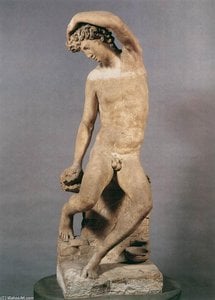
Benvenuto Cellini’s “Satyr” stands as a captivating testament to the dynamism and sensual allure that defined the Mannerist period in Italian art. Completed around 1545, this bronze sculpture…

Pořiďte si ho domů →

Obrazy umělce Benvenuto Cellini podle období

Témata, která Benvenuto Cellini maloval nejčastěji

Čtyři témata, která se v těchto dílech objevují nejčastěji, spolu s nejlepším příkladem každého z nich.

Kde vidět obrazy autora Benvenuto Cellini

8 muzea, v nichž je umístěno nejvíce obrazů z této stránky.

Muzea Město Díla autora Benvenuto Cellini Obrazy z tohoto seznamu
Museo Nazionale del Bargello, FlorencieMuseo Nazionale del Bargello Florencie 30 Jupiter, Danae and her Son Perseus, Perseus
Kunsthistorisches Museum, VídeňKunsthistorisches Museum Vídeň 10 Solnička, Salt Cellar, Salt Cellar (detail)
Louvre, PařížLouvre Paříž 7 Nymph of Fontainebleau, Nymph of Fontainebleau (detail), Nymph of Fontainebleau (detail)
Loggia dei Lanzi, FlorencieLoggia dei Lanzi Florencie 7 Perseus (15), Perseus, Perseus
Staatliche Kunstsammlungen, DrážďanyStaatliche Kunstsammlungen Drážďany 6 Morion for Francesco I de' Medici, Shield for Francesco I de' Medici (detail) (11), Shield for Francesco I de' Medici (detail)
Museo Glauco Lombardi, ParmaMuseo Glauco Lombardi Parma 5 Gold and amethyst parure donated by Maria Luigia to one of her palace ladies, Detail of the gold and amethyst parure donated by Maria Luigia to one of her palace ladies, Gold and amethyst parure donated by Maria Luigia to one of her palace ladies
British Museum, LondýnBritish Museum Londýn 3 Cope pin (front and back), Cope pin (profile), Project for a seal
Monasterio de San Lorenzo, El EscorialMonasterio de San Lorenzo El Escorial 2 Crucifix (detail), Crucifix

Nejslavnější obraz každého desetiletí umělce Benvenuto Cellini

  1. 1520s
    Medallion with Leda and the Swan (1520) od Benvenuto Cellini
    Pořadí 25 / 80

    Medallion with Leda and the Swan

    Věk 20 – 29 · Museo Nazionale del Bargello

    In the delicate, shimmering expanse of Benvenuto Cellini’s Medallion with Leda and the Swan, we find a moment suspended in the amber of the Italian Renaissance. Created around…

  2. 1530s
  3. 1540s
    Solnička (1540) od Benvenuto Cellini
    Pořadí 1 / 80

    Solnička

    Věk 40 – 49 · Kunsthistorisches Museum

    Saliera, vytvořená ze zlata, byla dílem Benvinta Celliniho pro francouzského krále Františka I. v letech mezi 1540 a 1543. Z dědictví jeho potomka Karla IX. následně přešla do…

  4. 1550s
    The Rescue of Andromeda (detail) (1550) od Benvenuto Cellini
    Pořadí 50 z 80

    The Rescue of Andromeda (detail)

    Věk 50 – 59 · Museo Nazionale del Bargello

    Benvenuto Cellini’s “The Rescue of Andromeda” is more than just a bronze sculpture; it's a vibrant tableau of myth, heroism, and the burgeoning spirit of Mannerism that defined…

  5. 1560s
    Crucifix (detail) (1562) od Benvenuto Cellini
    3 z 80

    Crucifix (detail)

    Věk 60 – 69 · Monasterio de San Lorenzo

    Benvenuto Cellini’s 1562 marble sculpture, “Crucifix (detail),” is not merely a depiction of Christ’s suffering; it’s an immersive experience. Within the dimly lit confines of El Escorial, this…

  6. 1570s
    Morion for Francesco I de' Medici (1570) od Benvenuto Cellini
    Pořadí 4 z 80

    Morion for Francesco I de' Medici

    Věk 70 – 71 · Staatliche Kunstsammlungen

    In the grand tapestry of the Italian Renaissance, few objects capture the intersection of martial prestige and artistic virtuosity as profoundly as the Morion for Francesco I de'…

Otázky k obrazům autora Benvenuto Cellini

Který obraz je nejznámější dílem Benvenuto Cellini?Zobrazit odpověď

Solnička (1540), Kunsthistorisches Museum, Vídeň. Následují Jupiter (1545) a Crucifix (detail) (1562).

Kolik let bylo Benvenuto Cellini, když byl/a namalován/a dílo Solnička?Zobrazit odpověď

40 let: dílo Solnička pochází z roku 1540 a Benvenuto Cellini se narodil/a v roce 1500.

Jakých je 10 nejlepších obrazů autora Benvenuto Cellini?Zobrazit odpověď

Solnička, Jupiter, Crucifix (detail), Morion for Francesco I de' Medici, Danae and her Son Perseus, Nymph of Fontainebleau, Perseus, Bust of Cosimo I (detail), Bust of Bindo Altoviti a Perseus. Výše uvedené pořadí uvádí rok a muzeum každého díla.

Kolik obrazů vytvořil/a Benvenuto Cellini?Zobrazit odpověď

Náš katalog obsahuje 80 děl autora Benvenuto Cellini z let 1520 až 1570.

Kde se nacházejí nejznámější obrazy umělce Benvenuto Cellini?Zobrazit odpověď

Většina z nich se nachází v Museo Nazionale del Bargello (Florencie), Kunsthistorisches Museum (Vídeň) a Louvre (Paříž). V tabulce výše jsou jednotlivé muzea uvedeny postupně.

Kdy Benvenuto Cellini namaloval svá nejznámější díla?Zobrazit odpověď

V období 1540s: 42 z 80 děl na této stránce pochází z tohoto období, z nich Solnička.

Jaká jsou nejstarší a nejnovější slavná díla umělce Benvenuto Cellini?Zobrazit odpověď

Nejstarší dílo na této stránce pochází z Medallion with Leda and the Swan (1520), nejnovější z Morion for Francesco I de' Medici (1570).

Co nejčastěji maloval/a Benvenuto Cellini?Zobrazit odpověď

Renaissance (37), Mythology (34) a Sculpture (23), z celkových 80 děl na této stránce.

Jakou techniku používal(a) Benvenuto Cellini nejčastěji?Zobrazit odpověď

Bronze: 30 z 80 děl na této stránce.

K kterému uměleckému směru patří Benvenuto Cellini?Zobrazit odpověď

Manýrismus, jak dokazují obrazy na této stránce.

Která díla Benvenuto Cellini mohu vidět v Museo Nazionale del Bargello?Zobrazit odpověď

Jupiter, Danae and her Son Perseus a Perseus patří mezi 30 děl na této stránce, která má v zastarání Museo Nazionale del Bargello, Florencie.

Mohu si koupit reprodukci obrazu od Benvenuto Cellini?Zobrazit odpověď

Ano. Každý obraz na této stránce lze objednat jako ručně malovanou olejovou reprodukci v muzeální kvalitě nebo jako umělecký tisk v požadovaném rozměru přímo z jeho vlastní stránky.

O umělci Benvenuto Cellini

Benvenuto Cellini: Zlatník, sochař a kronikář renesance

Benvenuto Cellini, jehož jméno dnes evokuje především okázalou slánku pro francouzského krále Františka I., byl mnohem víc než jen mistr zlatnictví. Byl to italský umělec plný vášně a kontroverzí, sochař s neuvěřitelným citem pro detail, hudebník a především brilantní vypravěč vlastního života. Jeho autobiografie, napsaná s nebývalou otevřeností a sebezpychaním, je dodnes považována za jeden z nejcennějších pramenů k pochopení ducha renesance – doby, kdy se umění, věda a osobní ambice propojovaly v jedinečnou směs.

Narodil se ve Florencii roku 1500 do rodiny hudebníka a stavitele hudebních nástrojů. Jeho otec ho zpočátku usiloval k hudební kariéře, ale Benvenuto již brzy směřoval ke zlatnictví. V patnácti letech se stal učněm u Antonia di Sandro Marconeho, kde získal základy řemesla a začal rozvíjet svůj talent pro detail a inovaci. Jeho raná léta však byla poznamenána neklidem a impulzivitou – zapletl se do potyčky a byl nucen opustit Florencii. Následovaly roky putování po italských městech, včetně Sieny, Bologny a Říma, kde si dále prohluboval své umělecké znalosti a získával zkušenosti s různými technikami.

Mistrovská díla a styl

Celliniho tvorba se vyznačovala neuvěřitelnou zručností a dramatičností. Jeho styl, typický pro období manýrismu, se vyznačoval prodlouženými formami, dynamickými kompozicemi a teatrálním výrazem. Mezi jeho nejznámější díla patří bezesporu Slánka pro Františka I., mistrovské dílo zlatnictví, které uchovává v vídeňském Kunsthistorischen Museum. Tato nádherná slánka, zdobená složitými figurami a scénami z řecké mytologie, je ukázkou Celliniho schopnosti spojit technickou dokonalost s uměleckou vizí. Dalším významným dílem je bronzová socha Persea s hlavou Medúzy, která demonstruje jeho mistrovství v práci s kovem a jeho schopnost zachytit pohyb a emoce. Celliniho tvorba zahrnuje také medaile, šperky a návrhy pro pečetě, které svědčí o jeho univerzálnosti a neustálé snaze o inovaci.

Jeho styl byl silně ovlivněn renesančními umělci, zejména Michelangelem, ale Cellini dokázal vytvořit vlastní osobitý výraz. Jeho díla se vyznačují realistickým zobrazením lidské postavy a dynamickými kompozicemi, které diváka vtahují do děje. Použití detailů a zdobnosti bylo pro něj charakteristické, stejně jako jeho schopnost kombinovat různé materiály – zlato, stříbro, slonovou kost a smalt – aby dosáhl maximálního efektu.

Životopis a odkaz

Největším Celliniho příspěvkem k dějinám umění je však jeho autobiografie Život Benvenuta Celliniho. Tento dílo, napsané s nebývalou otevřeností a sebezpychaním, poskytuje fascinující pohled do života renesančního umělce – jeho ambicí, vášní, ale i neúspěchů a konfliktů. Autobiografie je plná barvitých anekdot o patroních, rivalech a osobních dobrodružstvích, které čtenáře vtahují do světa italské renesance. I když je Celliniho vyprávění někdy zkresleno jeho vlastními předsudky a touhou po sebeprezentaci, zůstává cenným zdrojem informací o uměleckém prostředí doby.

Benvenuto Cellini zemřel ve Florencii roku 1571. Jeho odkaz jako jednoho z nejvýznamnějších umělců manýrismu a mistra zlatnictví žije dodnes. Jeho díla jsou vystavována v předních muzeích po celém světě a jeho autobiografie je studována historiky umění a literáty. Cellini představuje ideál renesančního člověka – polymatha, který se vyznačoval talentem v mnoha oborech a nebál se vyjádřit svou individualitu.

Všechna díla od Benvenuto Cellini: 80 →