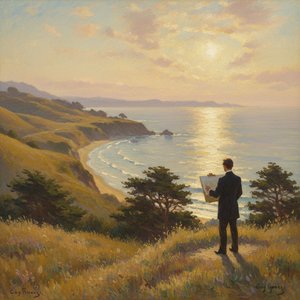
Rose Maynard Barton: Život v akvarelu
- Narození: 21. dubna 1856, Rochefort, Irsko
- Úmrtí: 1930
Rose Maynard Barton (1856–1930) byla oslavovanou anglo-irskou akvaretkou, známou svými poutavými krajinami, okouzlujícími pouličními scénami z Dublinu a Londýna a jemnými portréty dětí. V uměleckém světě se vyvinula v významnou postavu, která se pravidelně účastnila prestižních výstav v rámci nejvýznamnějších malířských společností své doby.
Raný život a umělecké vzdělání
- Rodinné zázemí: Rose se narodila do rodiny s hlubokými uměleckými sklony; byla příbuzná s Evou Henrietta a Letitií Marion Hamilton, které byly samy známé svým malířským talentem. Její otec byl právník a její matčina rodina pocházela ze hrabství Galway.
- Soukromé vzdělání: Díky soukromému vzdělání získala liberální přístup k společenským událostem, který ji provázel po celý život.
- Rané cesty a studia (1875): Zlomový okamžik nastal v roce 1875, kdy Rose společně se svou sestrou Emily navštívila Brusel, kde pod vedením francouzského umělce Henriho Gervexe prošla kreslickou výukou. To znamenalo počátek její formální umělecké cesty.
- Další rozvoj: Své schopnosti později dále zdokonalovala v londýnském ateliéru Paula Jacoba Naftela, což byl zásadní krok pro vývoj její techniky práce s akvarelem.
Umělecká kariéra a výstavy
- Akvaretní společnost Irska (WCSI): Kariéra Bartonové rozkvétala díky její neustálé činnosti ve WCSI, kde systematicky prezentovala svůj neustále se vyvíjející umělecký talent.
- Královská akademie (RA) a Královská hibernská akademie (RHA): Její dílo získalo širší uznání prostřednictvím výstav v RA a RHA, čímž si upevnila svou pověst zdatné akvaretkářky. Mezi její významná raná díla patří například obraz „Dead Game“, který byl vystaven na RHA v roce 1882.
- Londýnské výstavy: Své umění prezentovala také v prestižních londýnských galeriích, jako byly Japanese Gallery, Dudley Gallery či Grosvenor Gallery.
- Společnost žen umělkyně: Jako členka této společnosti aktivně prosazovala postavení žen umělkyně v rámci celé umělecké komunity.
Styl a významná díla
- Charakteristika: Bartonovy akvarely jsou typické svou jemností a expresivitou; využívají barvu a světlo k vytváření hloubky a emocí. Její styl často odrážel vlivy impresionismu.
- Věnovaná témata: Často malovala krajiny, pouliční scény (zejména z Dublinu a Londýna), zahrady a půvabné portréty dětí.
- Významná díla:
- Old Chelsea Wall, London – vynikající příklad její schopnosti zachytit podstatu scény, dostupné na WahooArt.com.
- The Doorway (1918) – dílo, které evokuje dětskou nevinnost v kontrastu s monumentální branou.
- Sbírky: Její práce jsou zastoupeny v prestižních veřejných sbírkách, včetně Národní galerie v Irsku, Dublin City Gallery The Hugh Lane a Ulster Museum.
Odkaz a historický význam
- Přínos k irlickému umění: Rose Maynard Barton udělala pro irské umění zásadní krok díky své bohaté tvorbě a neustálé výstavní činnosti.
- Vliv a uznání: Její spojenost s váženými malířskými spolky, jako byly RWS, RA a RHA, upevnila její pozici respektované umělkyně. V roce 1911 se stala první ženou přijatou do Královské akvaretní společnosti (Royal Watercolour Society).
- Přátelství s Mildred Anne Butler: Celoživotní přátelství s spolupracující umělkyní Mildred Anne Butler podpořilo uměleckou výměnu a vzájemnou inspiraci.
Otázky a odpovědi
V jakém historickém období působil/a Rose Maynard Bartonová?
Rose Maynard Bartonová působil v období – 19. století. Toto období historicky vymezuje uměleckou činnost tohoto autora.
Existuje kompletní seznam děl umělce Rose Maynard Bartonová?
Veškerá díla umělce Rose Maynard Bartonová na tento web lze prohlédnout na jeho stránce Všechna umělecká díla.
Mohu si prohlédnout díla umělce Rose Maynard Bartonová podle jednotlivých uměleckých směrů?
Umělecká směrečnictví, ve kterých působil/a Rose Maynard Bartonová, si můžete prohlédnout na stránce Všechna umělecká hnutí umělce, která seskupuje díla podle jednotlivých směrů.
Odkud pochází Rose Maynard Bartonová?
Rose Maynard Bartonová se narodil(a) v zemi Irsko.
V jakém městě a z jaké země pochází Rose Maynard Bartonová?
Rose Maynard Bartonová se narodil(a) ve městě Rochefort v zemi Irsko.
Mohu si prohlédnout díla umělce Rose Maynard Bartonová podle nálady?
Díla umělce Rose Maynard Bartonová si můžete prohlédnout podle nálady na jeho stránce Pokoj nálad, kde jsou umělecká díla uspořádána podle jejich vyvolané nálady.
Kde a kdy se narodil/a Rose Maynard Bartonová?
Rose Maynard Bartonová se narodil(a) ve městě Rochefort v roce 1856.