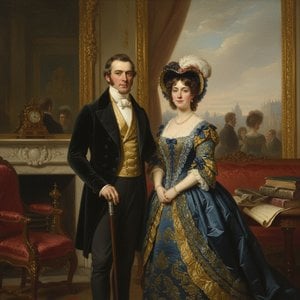
A Pioneer of Spanish Photography: The Life and Legacy of Pedro Martínez de Hebert
Pedro Martínez de Hebert, born in Vitoria-Gasteiz, Spain, in 1840, occupies a fascinating yet often overlooked position in the history of photography. Emerging from a background steeped in fine arts training—he initially studied painting in Barcelona before relocating to Madrid—Martínez de Hebert seamlessly bridged the gap between traditional artistic techniques and the burgeoning world of photographic representation. His career unfolded during a pivotal era, witnessing the rapid evolution of photographic processes and its growing acceptance as both an art form and a powerful tool for documentation. While often categorized simply as a miniaturist and photographer, this label belies the depth of his contribution to establishing photography’s legitimacy within Spanish society.
From Miniature Painting to the Lens: An Artistic Transition
The mid-19th century was a period of significant artistic upheaval. The rise of photography presented both a challenge and an opportunity for painters. Martínez de Hebert's early training in miniature painting proved crucial in his transition to photography. Miniatures demanded meticulous detail, precise rendering of likenesses, and a keen understanding of light and shadow—skills that translated remarkably well to the photographic medium. In the 1850s, he quickly established himself as a portrait artist in Madrid, skillfully capturing the essence of his subjects through both brushstrokes and lens-based techniques. This dual expertise allowed him to cater to a diverse clientele, offering portraits in various formats and styles. His appointment as “Miniaturist of Camera” by Queen Isabel II in 1851—a prestigious title—underscores the high regard for his artistic abilities and his growing influence within royal circles. It’s important to note that this wasn't merely a ceremonial position; it signified official recognition of photography as a legitimate art form worthy of royal patronage, something still debated at the time.
The Carte de Visite and the Democratization of Portraiture
Martínez de Hebert’s work coincided with the widespread adoption of the *carte de visite*—a small photograph format patented by André Adolphe Eugène Disdéri in 1854. This innovation revolutionized portrait photography, making it accessible to a much broader segment of society. Previously, portraits were largely reserved for the wealthy elite due to their cost and time-consuming nature. The *carte de visite*, however, offered an affordable alternative, allowing individuals from various social classes to possess photographic representations of themselves and their loved ones. Martínez de Hebert embraced this format wholeheartedly, producing numerous portrait cards that captured not only the likenesses of prominent figures but also scenes of everyday life. These photographs weren’t simply technical reproductions; they were carefully composed works of art, reflecting his painterly sensibilities and attention to detail. The resulting albums filled with *cartes de visite* became a common fixture in Victorian parlors—a testament to the format's popularity and its role in shaping social interactions.
Exhibition and Historical Significance
The inclusion of Martínez de Hebert’s work at prestigious institutions like the Musée d’Orsay in Paris speaks volumes about his artistic merit and international recognition. While details regarding specific exhibited works remain scarce, this acknowledgement firmly places him within the broader context of 19th-century European photography. His contribution extends beyond mere technical proficiency; he played a vital role in establishing a distinctly Spanish photographic aesthetic. He documented the social fabric of Spain during a period of significant change, providing invaluable visual records of its people, customs, and landscapes. Furthermore, his collaboration with the press—documented through photographs published in *La Ilustración Española y Americana*—highlights his engagement with contemporary culture and his ability to utilize photography as a medium for storytelling and information dissemination. His legacy is preserved not only in museum collections but also within the archives of institutions like the Museo Cerralbo and the Fundación Lázaro Galdiano, ensuring that future generations can appreciate his pioneering work.
A Lasting Impression
Pedro Martínez de Hebert’s life and career represent a pivotal moment in Spanish photographic history. His ability to seamlessly transition from painting to photography, coupled with his embrace of innovative formats like the *carte de visite*, democratized portraiture and established him as a leading figure within the artistic community. While further research is needed to fully illuminate the scope of his oeuvre, his existing body of work—and his inclusion in prominent museum collections—solidifies his position as a true pioneer, whose influence continues to resonate today. He wasn’t simply documenting reality; he was shaping it through the lens, creating lasting impressions that offer invaluable insights into 19th-century Spanish society and the evolving art of photography itself.