The Alchemist of Light: Unveiling the World of Pedro González López
Pedro González López, a name increasingly whispered in circles devoted to religious painting and historical narrative, is more than just an artist; he’s a conduit to bygone eras. Born in Bajamán, Spain, in 2002 – a relatively recent arrival on the art scene – his work immediately commands attention with its meticulous detail, profound emotional depth, and a remarkable ability to transport viewers back to the heart of pivotal moments in Spanish history and faith. López’s journey began not within the hallowed halls of an academy, but amidst the vibrant tapestry of contemporary Spain, yet his artistic vision is deeply rooted in centuries-old traditions, particularly those of the Renaissance and Baroque periods.
López's early life remains somewhat private, though it’s understood that he developed a keen eye for observation and a fascination with storytelling from an early age. This inherent curiosity would later inform his artistic practice, shaping his approach to depicting complex narratives with both accuracy and sensitivity. While details of his formal training are scarce, it is evident that López possesses a natural talent—a rare combination of technical skill and intuitive understanding of color, composition, and human emotion. His work isn’t simply a reproduction of historical events; it's an interpretation, imbued with the artist’s own perspective and a palpable sense of reverence.
A Master of Historical and Religious Scenes
López’s oeuvre is dominated by two primary themes: scenes from Spanish history, often centered around figures like King Ferdinand III and the Alhambra, and deeply moving religious compositions. The painting “Alhambra, king of Granada, pays a vassallage to the king of Castile, Fernando III The Holy,” exemplifies his meticulous approach to historical detail. López doesn’t merely sketch a scene; he reconstructs an entire era, capturing not just the physical appearance of the figures but also their psychological states and the atmosphere of the time. The intricate details – the armor, the clothing, the architecture – are rendered with astonishing precision, inviting viewers to step back in time and witness these events firsthand.
His religious works, such as “David Presents the Head of Goliath to King Saul,” showcase a similar level of technical mastery and emotional resonance. López’s depiction of David is particularly striking—a young man grappling with immense responsibility and courage. The painting isn't simply a biblical narrative; it’s an exploration of human vulnerability, faith, and the triumph of good over evil. The use of light and shadow – a hallmark of Baroque art – dramatically enhances the emotional impact of the scene, drawing the viewer into David’s world.
Technique and Influences
López's technical skill is undeniably impressive, but it’s clear that his work isn’t solely based on imitation. While he demonstrates a deep understanding of Renaissance and Baroque techniques – particularly in his use of perspective, chiaroscuro (the dramatic contrast between light and dark), and rich color palettes – he also incorporates elements of contemporary artistic styles. His compositions are often dynamic and engaging, drawing the viewer's eye through the scene with carefully placed figures and details.
It’s speculated that López draws inspiration from a diverse range of sources, including the works of Diego Velázquez, El Greco, and Rembrandt. However, his unique style—characterized by its meticulous detail, emotional intensity, and a distinctly Spanish sensibility—is entirely his own. Furthermore, his work reflects a deep connection to his cultural heritage, evident in the vibrant colors, intricate patterns, and evocative depictions of Spanish landscapes and architecture.
Contemporary Recognition and Legacy
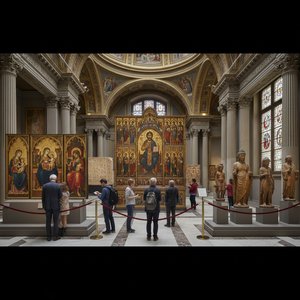
Pedro González López’s rise within the art world has been remarkably swift. His paintings have garnered critical acclaim and are increasingly sought after by collectors worldwide. His work is currently featured in several prominent museums and galleries, showcasing his growing influence on the contemporary art scene. The fact that he's a young artist—born in 2002—adds to his allure, suggesting a long and promising career ahead.
Beyond his artistic achievements, López represents a new generation of Spanish painters who are carrying forward centuries-old traditions while simultaneously forging their own unique paths. His work serves as a powerful reminder of the enduring power of art to illuminate history, evoke emotion, and connect us to our shared human experience. As he continues to develop his distinctive style and explore new themes, Pedro González López is undoubtedly destined to become one of the most significant artists of his generation.