Mir Mohsun Navvab: A Polymath of Azerbaijani Culture
Early Life and Background
Mir Mohsun Navvab (Azerbaijani: mir möhsün nəvvab) was born in 1833 in Shusha, Azerbaijan, a city renowned as a cultural hub. He lived his entire life within its walls, deeply embedding himself in the traditions and evolving landscape of Karabakh. His upbringing coincided with a pivotal period for Azerbaijan, witnessing the transition from established customs to emerging modern influences.
A Versatile Polymath
Navvab was an exceptionally versatile individual, excelling in numerous disciplines. He wasn’t simply an artist; he was a poet, music historian, astronomer, carpenter, chemist, and mathematician – truly a polymath of his time. This broad range of skills informed his artistic output and allowed him to contribute significantly to Azerbaijani intellectual life.
Artistic Development & Calligraphy
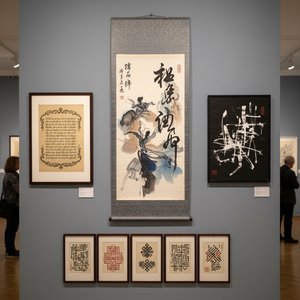
Navvab is particularly celebrated as a master calligrapher. He meticulously preserved and disseminated the poetry of Karabakh’s poets through his exquisite handwriting, ensuring its survival for future generations. Beyond calligraphy, he illustrated his manuscripts with vibrant pictures and portraits, showcasing his artistic talent. He also decorated interiors of buildings with intricate ornaments; remnants of these decorations were reportedly visible in Shusha before 1992.
Literary & Musical Contributions
Recognizing the need to foster cultural growth, Navvab founded two significant societies: Majlis-i Faramushan (“Society of the Forgotten”), a second literary society in Azerbaijan dedicated to preserving forgotten works, and Majlis-i Khanende (“Society of Singers”), the first music society. These organizations played a crucial role in promoting literacy, culture, and artistic expression within Karabakh.
Scholarly Works & Musical Legacy
Navvab authored over 20 books spanning diverse fields. His most significant work is Vuzuh al-argam (“Explanation of the Numbers”), a comprehensive study detailing 82 *maqams* (traditional Azerbaijani musical modes) and songs prevalent in Karabakh during his time. This work provides invaluable insight into the origins, rules, and performance practices of this unique musical tradition. He also penned Tezkirey-i-Navvab, a biographical dictionary featuring one hundred poets and writers from Karabakh.
Historical Context & Political Writings
Navvab’s life unfolded during a period of social and political unrest. He documented the tumultuous events surrounding the Armenian–Tatar massacres of 1905–1907 in his chronicle, Tavārīkh-i razm u shūrish-i ṭāʾifa-yi arāmana bā musalmānān-i qafqāz. In this work, he identified Armenian nationalists as a primary source of conflict, while largely blaming the Social Democrat Hunchakian Party.
Legacy & Significance
Mir Mohsun Navvab died in 1918 in Shusha Fortress. He occupies a prominent place in Azerbaijani cultural history as the last representative of the old traditional school of science, arts and literature. His dedication to preserving artistic heritage, promoting literacy, and documenting his era makes him a vital figure for understanding Azerbaijan’s rich cultural past. Despite remaining rooted in tradition, he was a progressive force advocating for cultural growth within Karabakh.
Otázky a odpovědi
Kde mohu najít statistiky o dílech umělce Mir Mohsun Navvab?
Statistiky o dílech umělce Mir Mohsun Navvab naleznete na jeho profilové stránce Statistiky.
Odkud pochází Mir Mohsun Navvab?
Mir Mohsun Navvab se narodil(a) v Azerbaijan.
Mohu si prohlédnout díla umělce Mir Mohsun Navvab podle uměleckých směrů?
Stránka Všechna umělecká hnutí seskupuje díla umělce Mir Mohsun Navvab podle jednotlivých uměleckých směrů.