Max Roosmann: Pioneer of Estonian Glass Art
Born in Ouma, Latvia, in 1909, Maks Julius Roosmann – later known as Maks Roosma – emerged as a pivotal figure in the nascent field of Estonian glass art. His life and work represent a crucial bridge between traditional craftsmanship and modern artistic expression, establishing him as one of the country’s first professional glass artists and a foundational voice in shaping Estonia's unique visual identity. Roosmann’s journey began with formal training at the Haida (Novy Bor) Applied Arts School in Czechoslovakia, an institution renowned for its focus on decorative arts and craftsmanship. This early exposure to diverse techniques laid the groundwork for his later innovations. Subsequently, he continued his artistic education at the State Art and Design College in Tallinn, where he earned a degree in glass engraving – a skill that would profoundly influence his distinctive style.
Roosmann’s career was deeply intertwined with the development of Estonian art institutions. He served as a teacher at the Estonian Academy of Arts, imparting his knowledge and passion to generations of aspiring artists. Crucially, he headed the glass department at the academy, fostering a dedicated environment for experimentation and artistic growth. This role wasn't merely instructional; it was actively involved in shaping the direction of Estonian glass art itself, nurturing talent and establishing standards.
A World of Myth and Symbol
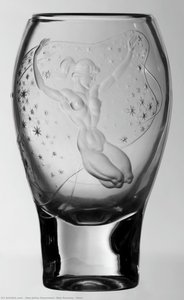
Roosmann’s artistic output is characterized by an extraordinary level of detail and a captivating blend of technical skill and symbolic richness. His work extended beyond simple vases and bowls; he created intricate sculptures, often imbued with mythological and folkloric themes. He drew heavily from the rich tapestry of Estonian mythology and folklore, translating ancient stories and legends into shimmering glass forms. These weren’t merely decorative objects; they were visual narratives, inviting viewers to contemplate the deeper meanings embedded within their designs.
The influence of his engraving training is immediately apparent in his work. He employed meticulous techniques to create incredibly detailed patterns – swirling vines, stylized animals, and geometric motifs – that seemed to dance across the surface of the glass. These intricate designs weren’t applied superficially; they were integrated into the very structure of the piece, demonstrating a profound understanding of both form and texture. The use of color was equally deliberate, often employing rich jewel tones and subtle gradations to enhance the visual impact of his creations.
Technique and Materials
Roosmann’s mastery lay not only in his artistic vision but also in his technical proficiency. He worked primarily with traditional glassblowing techniques, skillfully manipulating molten glass to achieve astonishing levels of precision and complexity. His ability to combine hand-engraving with blown glass created a unique aesthetic – a harmonious blend of organic forms and meticulously crafted details. The use of color was integral to his process, often achieved through layering different colored glasses or incorporating pigments into the molten material.
While he primarily worked with traditional methods, Roosmann also explored innovative techniques, pushing the boundaries of what was possible with glass. He experimented with various surface treatments, including sandblasting and etching, to create textured effects and further enhance the visual interest of his pieces. His dedication to mastering these diverse techniques allowed him to realize his artistic vision with unparalleled skill and sophistication.
Legacy and Recognition
Maks Roosmann’s impact on Estonian glass art is undeniable. He wasn't simply a craftsman; he was a visionary who helped establish the field as a legitimate form of artistic expression. His work continues to be celebrated for its beauty, intricacy, and profound symbolic depth. He played a vital role in preserving and promoting traditional Estonian crafts while simultaneously embracing modern artistic principles.
Roosmann’s legacy extends beyond his individual creations. He mentored numerous artists who went on to become prominent figures in the field, ensuring that his influence would continue to resonate for generations to come. His work is now housed in museums and private collections throughout Estonia and internationally, serving as a testament to his enduring contribution to the world of art.
Born in 1909 in Ouma, Latvia, and passing away in Tallinn in 1971, Maks Roosmann’s life was dedicated to the pursuit of artistic excellence. His work stands as a shining example of Estonian creativity and innovation, forever etched in the annals of glass art history.