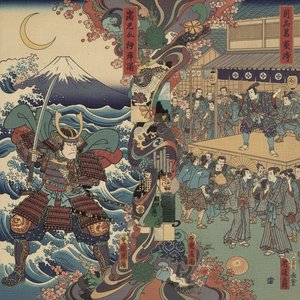
A Brush with Serenity: The Life and Art of Matsukawa Hanzan
Born in Japan in 1820, Matsukawa, more widely known by his art name Hanzan, emerged from the vibrant artistic landscape of the late Edo period. While specific details surrounding his early life remain elusive – a common characteristic for many artists working within established traditions – it’s clear that he was deeply immersed in the aesthetic principles and techniques prevalent during this era. The Edo period (1603-1868) fostered a flourishing culture, particularly in *ukiyo-e* woodblock prints and ink wash painting, providing a rich environment for Hanzan to develop his unique style. He passed away in 1882, leaving behind a body of work that continues to resonate with its quiet power and spiritual depth. His art wasn’t about grand narratives or dramatic displays; it was an invitation to contemplation, a visual echo of Zen Buddhist principles.The Echoes of Tradition: Influences and Artistic Development
Hanzan's artistic lineage is rooted in the centuries-old tradition of Japanese ink painting, known as *sumi-e*. This art form emphasizes simplicity, spontaneity, and a deep connection with nature. He undoubtedly studied the works of earlier masters like Sesshū Tōyō and Suiboku artists, absorbing their techniques for creating evocative landscapes using varying shades of black ink. However, Hanzan wasn’t merely a copyist; he infused his paintings with a distinctly personal sensibility. While influenced by the established conventions of *ukiyo-e* – particularly in its compositional elements and subject matter – he moved away from the bright colors and detailed depictions often associated with woodblock prints. Instead, he favored a more restrained palette, focusing on subtle gradations of ink and wash to create atmospheric effects. His work reflects a deliberate move towards capturing the *essence* of a scene rather than its literal appearance.Landscapes of the Mind: Themes and Techniques
The core subject matter of Hanzan’s art revolves around landscapes – mountains, rivers, trees, and often solitary figures within these natural settings. These aren't depictions of specific locations so much as they are representations of inner states, reflections of a contemplative mind. His paintings frequently feature mist-shrouded peaks, suggesting distance and mystery, and gnarled branches of ancient trees symbolizing resilience and longevity. He masterfully employed the technique of *bokkusu*, or splashed ink, to create dynamic textures and suggest movement within his compositions. The use of empty space – a crucial element in Zen aesthetics – is also prominent, allowing the viewer’s eye to wander and complete the scene imaginatively. Hanzan often worked on hanging scrolls (*kakemono*), a format that lends itself well to meditative viewing. These weren't intended as mere decorations but as objects for contemplation, meant to be appreciated in quiet solitude.A Legacy of Quietude: Major Achievements and Historical Significance
Although Hanzan didn’t achieve the widespread fame of some of his contemporaries, his work is increasingly recognized for its subtle beauty and profound spiritual resonance. His paintings offer a glimpse into the artistic sensibilities of the late Edo period, bridging the gap between traditional ink painting and the emerging trends of modern Japanese art. He represents a continuation of the Zen-inspired landscape tradition, emphasizing the importance of intuition, spontaneity, and a deep connection with nature. His skillful use of ink wash techniques, combined with his refined compositional sense, created works that are both visually captivating and emotionally evocative. Today, Matsukawa Hanzan’s art serves as a reminder of the power of simplicity and the enduring appeal of contemplative landscapes. His legacy lies not in grand pronouncements but in the quiet invitation to find peace and serenity within the natural world – and within oneself.Exploring Further: Key Characteristics
- Ink Wash Mastery: Exceptional skill in using varying shades of ink to create depth, texture, and atmosphere.
- Zen Buddhist Influence: Paintings often reflect Zen principles of simplicity, spontaneity, and contemplation.
- Restrained Palette: Preference for subtle colors and a focus on monochrome or limited color schemes.
- Landscape Focus: Predominantly depicts mountains, rivers, trees, and natural settings.
- Kakemono Format: Frequently worked on hanging scrolls designed for meditative viewing.