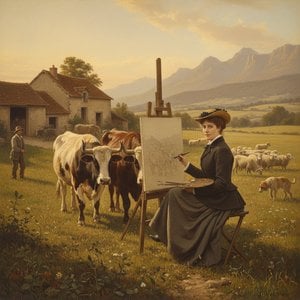
A Life Intertwined with History: Mary Johnson Stover
Mary Johnson Stover, born in Greeneville, Tennessee, on May 8th, 1832, was a woman whose life became inextricably linked to the tumultuous events of American history. As the daughter of Andrew Johnson, the nation’s 17th President, her story extends beyond familial connection; she was an artist who quietly pursued her craft amidst personal hardship and national upheaval. While not widely celebrated in traditional art circles during her lifetime, Stover's surviving works offer a poignant glimpse into the life of a woman navigating duty, loss, and artistic expression in 19th-century America. Her early years were shaped by her father’s commitment to education, unusual for a man who himself had limited formal schooling. She attended Rogersville Female Institute, receiving an upbringing that fostered intellectual curiosity and likely sparked her interest in the visual arts.
Early Life and the Shadow of Conflict
In 1852, Mary married Daniel Stover, a farmer from Carter County, Tennessee. Their life together initially promised stability, with the couple building a home and raising three children: Sarah, Lillie, and Andrew Johnson Stover. However, the approaching storm of the Civil War would irrevocably alter their fate. Daniel Stover was a staunch Unionist, and his convictions led him to become deeply involved in clandestine efforts to disrupt Confederate supply lines. He participated in the daring East Tennessee bridge burnings of 1861, an act of defiance intended to pave the way for a federal occupation of the region. This courageous but perilous undertaking forced Daniel into hiding, leaving Mary to manage their homestead and care for her children amidst constant threat. The war years were marked by hardship and uncertainty, with their property pillaged by Confederate forces—a stark reality that would profoundly impact Stover’s life and artistic sensibilities.
A First Lady by Proxy: Life at the White House
The election of Andrew Johnson to the presidency in 1865 brought Mary and her children to the White House. However, their time there was far from conventional. Daniel had died during the war, leaving Mary a widow burdened with responsibility. With her older sister Martha Patterson also absent due to personal commitments, Mary often stepped into the role of acting First Lady, managing social engagements and representing the President’s household. This period offered a unique perspective on national politics and the challenges of Reconstruction. It is believed that she continued to pursue her artistic endeavors during this time, though documentation remains scarce. The White House years were undoubtedly complex—a blend of public duty, personal grief, and the weight of a nation divided.
Artistic Expression: A Legacy in Textiles
Mary Johnson Stover’s known artworks primarily consist of intricately crafted textiles, particularly a remarkable “Baby Belt” that has garnered attention for its unique design and cultural significance. This piece is not merely a functional item; it's a stunning example of Native American textile artistry, showcasing vibrant colors and symbolic motifs. The belt reflects the influence of the surrounding Appalachian culture and potentially represents Stover’s engagement with local artisans or her own exploration of traditional techniques. While the full extent of her artistic output remains unknown, the “Baby Belt” suggests a talent for detail, color harmony, and an appreciation for indigenous art forms. Her work offers a fascinating intersection of personal expression and cultural exchange during a period of significant social change.
Historical Significance and Enduring Remembrance
Mary Johnson Stover’s legacy extends beyond her artistic creations. She represents the resilience and quiet strength of women who navigated the challenges of 19th-century America, particularly those whose lives were touched by the Civil War and its aftermath. Her role as an acting First Lady during a tumultuous period in American history provides a unique perspective on presidential life and the complexities of Reconstruction. While she may not be a household name, her story—and the surviving fragments of her artistic work—offer a valuable glimpse into the lives of those who shaped the nation’s past. Her dedication to family, her quiet courage amidst hardship, and her artistic pursuits serve as a testament to the enduring power of the human spirit. She passed away on April 19th, 1883, and is buried in the Andrew Johnson National Cemetery, a final resting place that acknowledges her connection to one of America’s most controversial presidents—and celebrates the life of a woman who lived through extraordinary times.