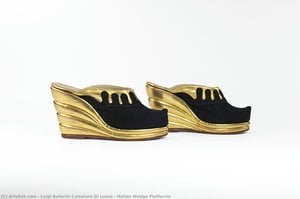
Luigi Bafarini: The Architect of Italian Wedge Heels
Luigi Bafarini, born in Venice in 1930, remains an enigmatic figure within the annals of Italian fashion history—a name synonymous with a singular innovation that irrevocably altered the landscape of footwear design. While biographical details about his personal life are scarce, his contribution to style transcends mere chronology; it represents a pivotal moment where functional practicality married artistic vision.
- Early Life and Influences:
- Born into a family steeped in Venetian craftsmanship—tradition of leatherworking and artisanal design—Bafarini’s formative years undoubtedly instilled within him an appreciation for meticulous detail and enduring quality. Though specifics regarding his formal education are elusive, it's plausible he honed his skills through apprenticeships or self-directed study, absorbing the techniques passed down through generations.
The Birth of the Wedge Platform
Bafarini’s breakthrough arrived in 1930 with the creation of what would become instantly recognizable as the Italian wedge platform. This wasn't simply a shoe; it was an audacious reimagining of the heel—a subtle yet transformative elevation that defied convention and ushered in a new era of feminine elegance. Prior to this innovation, heels were predominantly slender and reliant on arch support for stability. Bafarini’s ingenious solution involved incorporating a hidden wedge beneath the sole, distributing weight more evenly and providing unparalleled comfort without sacrificing height.
- Design Philosophy:
- His design philosophy centered around blending form and function—a principle evident in every piece he crafted. He prioritized ergonomics alongside aesthetic appeal, meticulously considering how the shoe would interact with the wearer’s body. This dedication to craftsmanship resulted in shoes that were not only visually striking but also remarkably supportive and durable.
Technique and Materials
Bafarini's mastery lay in his understanding of materials—primarily leather, meticulously tanned and sculpted to achieve exceptional suppleness and resilience. He employed techniques honed over decades of experience, utilizing specialized tooling and adhesives to ensure structural integrity while maintaining a graceful silhouette. The wedge platform itself was constructed from hardened polyurethane foam encased within a reinforced steel frame, guaranteeing stability and longevity – a testament to his commitment to innovation.
Legacy and Impact
The Italian wedge platform quickly gained traction internationally, becoming a staple of haute couture collections and influencing countless designers. Its enduring popularity speaks volumes about Bafarini’s foresight—he anticipated the desire for footwear that combined glamour with practicality. More than just a shoe, it became an emblem of sophistication and confidence, embodying the spirit of the 1930s while establishing itself as a timeless classic. Today, Luigi Bafarini's contribution to fashion continues to inspire designers and captivate collectors alike—a quiet genius who reshaped footwear design and cemented his place in Italian cultural heritage.