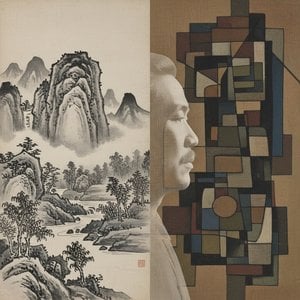
Lee Chun-soo: A Master of Korean Embroidery – Where Nature and Tradition Converge
Born in Incheon, South Korea, in 1981, Lee Chun-soo’s journey is a fascinating blend of athletic prowess and artistic dedication. Initially recognized as a promising football player—a midfielder who represented both his nation and several professional clubs including Ulsan Hyundai, Feyenoord, and Al-Nassr – Lee’s life took an unexpected turn when he discovered the intricate world of Korean embroidery. This shift wasn't merely a change in career; it became the defining expression of his artistic soul, transforming him from a celebrated athlete into a revered master of traditional Korean art.
Lee’s early exposure to embroidery stemmed from a desire for a creative outlet beyond the demands of professional football. He began experimenting with the craft during periods of rest and recovery, drawn to its meditative quality and the opportunity to translate his observations of nature – particularly the serene beauty of pine trees and the symbolic grace of cranes – into tangible works of art. This initial exploration quickly blossomed into a profound passion, fueled by an innate understanding of color, texture, and composition honed during years spent analyzing the game’s strategic landscapes.
The Art of Folding Screens: A Legacy of Symbolism
Lee Chun-soo's signature medium is undoubtedly the folding screen. These intricate works are not simply decorative objects; they are deeply symbolic narratives woven with meticulous detail. Central to his artistic vision is a reverence for Korean folklore and natural imagery, particularly the enduring symbolism of pine trees (representing longevity and resilience) and cranes (symbolizing happiness, good fortune, and marital fidelity). His screens often depict scenes of tranquil landscapes—mountain vistas, flowing rivers, and blossoming gardens – rendered with an astonishing level of realism and emotional depth.
The technique itself is a testament to Lee’s dedication. He employs traditional Korean embroidery stitches, meticulously layering silk threads in a dazzling array of colors. Each stitch is carefully considered, contributing to the overall texture and visual harmony of the screen. The process demands immense patience and precision, reflecting Lee's disciplined approach to both football and his art. Unlike mass-produced textiles, each folding screen is unique, bearing the unmistakable imprint of the artist’s hand and vision.
Influences and Development
While Lee Chun-soo’s artistic journey began with a personal exploration, it was undoubtedly shaped by several key influences. The legacy of Korean embroidery itself—a tradition spanning centuries—provided him with a foundational knowledge of techniques and motifs. Furthermore, his exposure to the works of Korean masters like Lee Ungno – particularly his Abstract Letter series and paintings depicting prison life – instilled in him an appreciation for both artistic innovation and the power of visual storytelling. The influence of Lee Ungno is evident in Lee Chun-soo’s ability to convey complex emotions through simple forms and restrained color palettes.
Lee's development as an artist has been characterized by a gradual refinement of his style, building upon traditional techniques while simultaneously injecting his own unique perspective. He began with simpler designs, gradually increasing the complexity and scale of his works over time. His early screens often featured more literal depictions of nature, but he increasingly embraced abstraction and symbolism, allowing viewers to interpret the scenes on their own terms.
Recognition and Contemporary Significance
Lee Chun-soo’s work has garnered significant recognition within South Korea and internationally. His folding screens are exhibited in prestigious museums such as the Lee Ungno Museum in Daegu, showcasing his mastery of traditional techniques and his ability to imbue them with contemporary relevance. His pieces have been featured in numerous art publications and collected by discerning patrons worldwide.
Beyond his artistic achievements, Lee Chun-soo is also known for his philanthropic endeavors, having donated substantial sums to various charitable causes throughout his life. This commitment to social responsibility reflects a deep sense of empathy and a desire to give back to the community that has supported him. Lee’s story—a former football star who found fulfillment in the quiet beauty of Korean embroidery – serves as an inspiring testament to the transformative power of art and the enduring legacy of traditional craftsmanship.