Karl Friedrich Schinkel (1781–1841): A Prussian Visionary
Karl Friedrich Schinkel, born in Neuruppin, Germany, in 1781, occupies a singular position within the annals of 19th-century art and architecture. His life was a compelling narrative woven with threads of personal hardship and professional triumph, unfolding against the backdrop of shifting political landscapes and burgeoning artistic movements. The devastating fire that ravaged Neuruppin in 1787, tragically claiming his father’s life while Schinkel was still a young boy, cast a long shadow over his formative years. This early experience, perhaps, instilled within him a profound appreciation for order, permanence, and the enduring power of form—qualities that would later define his artistic vision. It undoubtedly contributed to the meticulous precision and emotional resonance so characteristic of his mature work. He received early mentorship under Friedrich Gilly and his father David Gilly, both influential architects in Berlin, absorbing their classical principles while simultaneously encountering more experimental ideas – a crucial blend that shaped his developing aesthetic sensibilities. These foundational years provided Schinkel with a robust understanding of architectural history and technique, preparing him for the pivotal decisions that lay ahead.Early Artistic Aspirations: Painting Before Architecture
Initially, Schinkel pursued painting as his chosen profession, demonstrating considerable talent in landscape and portraiture. He honed his skills under Gilly’s guidance, mastering techniques of tonal gradation and capturing atmospheric effects with remarkable sensitivity. However, a transformative encounter occurred during an exhibition in Berlin in 1810—a moment that irrevocably altered the trajectory of his artistic career. There he beheld Caspar David Friedrich’s *Wanderer above the Sea of Fog*, a painting that profoundly moved him. The sheer emotional depth and masterful execution of Friedrich's work struck Schinkel with an undeniable force, prompting a critical self-assessment. Recognizing that his own artistic inclinations did not align with achieving such heights in painting—that it lacked the grandeur and expressive power he craved—he made the decisive step away from easel painting toward the more ambitious realm of architecture. This wasn’t merely a change of medium; it represented a fundamental shift in Schinkel's worldview, reflecting his conviction that true artistic fulfillment lay in shaping the physical environment rather than merely depicting it.The Birth of Neoclassical Influence: Shaping Berlin’s Identity
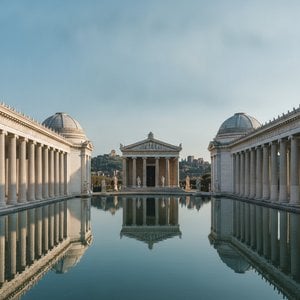
Schinkel’s architectural vision was decisively shaped by his exposure to classical art and architecture during his formative years in Italy. He studied the ruins of Rome with unwavering dedication, absorbing the principles of Greek sculpture and design—a pursuit that would become central to his artistic practice. This fascination with antiquity instilled within him a reverence for symmetry, proportion, and idealized forms—values that he consistently championed throughout his career. His early projects—including the Neues Rathaus (New Town Hall) in Berlin—embodied these neoclassical ideals, demonstrating an unparalleled command of architectural technique and conveying a sense of solemn grandeur intended to inspire civic pride. Schinkel’s designs were characterized by meticulous attention to detail, utilizing refined materials like marble and sandstone to create spaces that evoked the majesty of ancient Greece. He skillfully blended classical ornamentation with functional considerations, crafting buildings that served both aesthetic beauty and practical purpose—a hallmark of his distinctive architectural style.A Synthesis of Styles: Gothic Revival and Beyond
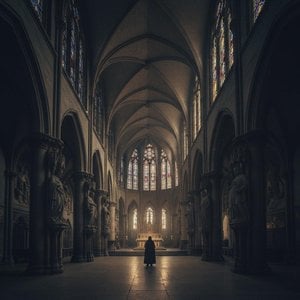
Schinkel’s artistic genius extended beyond Neoclassicism; he embraced the Gothic Revival movement with enthusiasm, recognizing its expressive potential and its ability to convey spiritual grandeur. Inspired by medieval cathedrals and churches, Schinkel incorporated elements of ribbed vaulting, pointed arches, and stained glass into his designs—a bold departure from prevailing architectural trends. The Friedrichswerdersche Kirche (Friedrichstadt Church), completed in 1832–1834, stands as a testament to this innovative fusion of styles, demonstrating Schinkel’s willingness to experiment with new techniques and materials while retaining an unwavering commitment to classical principles. He skillfully juxtaposed Gothic ornamentation with neoclassical proportions, creating spaces that evoked both solemn reverence and visual harmony—a stylistic hallmark that distinguishes his oeuvre from many of his contemporaries.Legacy: An Architect Who Defined Prussia's Aesthetic Vision
Karl Friedrich Schinkel’s influence on German architecture and art is undeniable. His designs profoundly shaped the cityscape of Berlin and established a new standard for monumental buildings throughout Prussia. He championed the idea that architecture should serve as a vehicle for cultural expression, fostering a sense of national identity and inspiring generations of artists and builders. Beyond his architectural achievements, Schinkel was also a prolific theorist and draftsman, disseminating his ideas through publications like *Sammlung architektonischer Entwürfe* (1820–1837) and *Werke der höheren Baukunst* (1840–1846)—works that continue to inform architectural discourse today. Though political constraints and his untimely death in 1841 curtailed his ambitions, Schinkel remains a pivotal figure in German artistic history—a visionary architect who irrevocably transformed the aesthetic landscape of his time. His buildings endure as symbols of Prussian grandeur and intellectual excellence, embodying the enduring power of thoughtful design and unwavering artistic conviction.- Notable Projects: Neues Rathaus Berlin, Friedrichswerdersche Kirche, Altes Museum
- Influences: Caspar David Friedrich, Classical Antiquity (Greek Sculpture), Gothic Revival
- Legacy: Considered one of Prussia’s most influential architects; his designs continue to inspire contemporary architectural practice.
Otázky a odpovědi
Mohu si prohlédnout díla umělce Karl Friedrich Schinkel podle tématu?
Stránka Abeceda témat mapuje díla umělce Karl Friedrich Schinkel podle tématu.
Kde mohu vidět barevný profil děl umělce Karl Friedrich Schinkel?
Genom palety umělce Karl Friedrich Schinkel je stránka, která představuje barevný profil celkového díla tohoto umělce.
Jaká jiná jména nebo pseudony používá Karl Friedrich Schinkel?
Karl Friedrich Schinkel se vystupuje även pod alternativními jmény Schinkel.