Joseph Badolo: A Vibrant Voice from Niger
Joseph Badolo, born in Niamey, Nigeria in 1962, stands as a captivating figure within the realm of contemporary African art – an artist whose distinctive style and unwavering connection to his cultural roots have garnered international recognition. Known affectionately as Lionba – a moniker reflecting his signature artistic approach – Badolo’s canvases burst forth with bold colors and expressive brushstrokes, transforming everyday scenes into narratives brimming with emotion and vitality.
Early Life and Artistic Beginnings
Information regarding Badolo's formative years remains somewhat elusive, mirroring the challenges inherent in documenting artistic development within contexts where comprehensive records are scarce. However, it’s understood that he cultivated his artistic prowess through diligent self-exploration and meticulous observation of Nigerien landscapes and communities – a practice that profoundly shapes his visual vocabulary. His initial inspirations undoubtedly stemmed from traditional Nigerian art forms and folklore, elements subtly interwoven into the fabric of his subsequent artworks.
Style and Technique: Color as Narrative
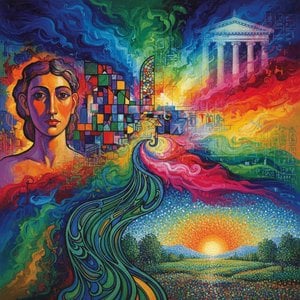
Badolo’s artistic hallmark resides in his unrestrained utilization of color—primarily luminous shades of emerald green, golden yellow, fiery orange, and ruby red—which dominate his paintings. These hues transcend mere decoration; they function as conduits for conveying emotion and encapsulating the exuberant spirit of Nigerien culture. Employing loose brushwork and layering techniques, he builds up textures with remarkable dexterity, mirroring the dynamism inherent in rural life. Unlike many Western artists who prioritize painstaking realism, Badolo champions expressive color and form over precise representation—a stylistic choice that distinguishes him from his peers and imbues his oeuvre with a singular character.
Themes and Subjects: Portraits of Everyday Life
Badolo’s artistic focus pivots on portraying scenes emblematic of ordinary Nigerien existence – portraits capturing the faces of villagers, landscapes teeming with flora and fauna, and depictions commemorating rituals and celebrations. These subjects are rendered with profound sensitivity and meticulous detail, striving not merely to capture visual appearances but also to convey the essence of human connection and cultural traditions. His paintings resonate deeply with viewers because they offer glimpses into worlds often marginalized by mainstream artistic discourse—a testament to his unwavering commitment to portraying authentic experiences.
Recognition and Exhibitions
Despite operating largely outside established artistic circles, Badolo’s work has garnered considerable acclaim both domestically within Nigeria and internationally. He participated in exhibitions showcasing African contemporary art, attracting the attention of discerning collectors and critics alike. Notably, his paintings were showcased at St Joseph Chapel in Hungary and Brodsky House Museum in Russia, demonstrating the expansive reach of his artistic vision across geographical boundaries. Furthermore, his inclusion in “Josephplatz” – a UNESCO World Heritage site celebrating Austrian Baroque grandeur – underscores the significance of his contribution to cultural heritage.
Legacy: A Continuing Dialogue with Tradition
Joseph Badolo’s enduring legacy rests upon his steadfast devotion to preserving and reimagining Nigerian artistic traditions. He continues to draw inspiration from his surroundings, producing paintings that reflect not only his personal aesthetic but also the broader narrative of Nigerien culture—a dialogue between past and present ensuring his art remains relevant for generations to come. His work serves as a poignant reminder of the transformative potential of art to illuminate diverse perspectives and celebrate human experience.