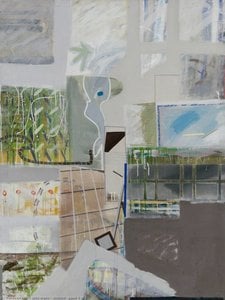
The Soul of the Highlands: The Life and Art of John Inglis
Born into a world of refined aesthetic appreciation on August 26, 1867, in Dublin, Ireland, John Inglis was destined to become a master of light and landscape. His early years were shaped by the prestigious lineage of Sir Malcolm and Lady Caroline Inglis of Montrose, Donnybrook, an environment where art was not merely a hobby but a fundamental way of perceiving the world. Under the watchful eye of his father, a dedicated art collector, the young Inglis developed an exceptional talent for sketching that went far beyond mere imitation; he possessed an innate ability to capture the very essence of his subjects. This early immersion in the fine arts, coupled with a deep connection to his Irish heritage through his maternal grandmother in Malahide, provided him with a rich emotional and cultural foundation that would later define the atmospheric depth of his canvases.
The trajectory of Inglis’s career was profoundly influenced by his formal training and his exposure to the great artistic movements of Europe. Seeking to refine his natural gifts, he pursued rigorous studies at the Kensington Art School and the Hibernia Academy. However, it was his time in Paris that truly transformed his artistic identity. Immersing himself in the vibrant atmosphere of the French capital, he studied under masters such as Gérôme and Courtois, absorbing the sophisticated techniques of academic realism while simultaneously being seduced by the burgeoning Impressionist movement. This duality became a hallmark of his style: a disciplined command of form and anatomy married to a revolutionary use of color and light. He learned to move away from rigid academic conventions, embracing instead a belief in capturing fleeting moments of beauty through expressive brushstrokes and a luminous palette.
A Mastery of Atmosphere and Landscape
While his training was international, the heart of Inglis’s work remained deeply rooted in the rugged, evocative landscapes of the British Isles. He became particularly renowned for his depictions of the Scottish Highlands and the serene, mist-covered shores of Loch Lomond. His paintings were far more than topographical records; they were emotional journeys through terrain. Inglis possessed an unparalleled sensitivity to the shifting qualities of light and atmosphere, using subtle tonal variations to convey the weight of a storm cloud or the gentle warmth of a setting sun. He approached his subjects with the precision of a naturalist, meticulously studying geological formations and local flora, yet he translated these scientific observations into works imbued with a palpable sense of place and spirit.
His technical prowess allowed him to manipulate texture and light to create a sense of depth that invited the viewer to step directly into the scene. Whether through the delicate rendering of plant life or the heavy, textured application of paint to represent rocky outcrops, his work achieved a rhythmic beauty. This ability to blend meticulous detail with atmospheric mood earned him significant recognition within the art community, most notably his election as an associate of the Royal Hibernian Academy of Arts in 1890. This achievement solidified his status as a prominent figure in the Irish and British art scenes, marking him as an artist capable of bridging the gap between classical tradition and modern sensibility.
Legacy and Artistic Significance
The legacy of John Inglis lies in his ability to evoke the sublime through the lens of a miniaturist’s precision and a landscapist’s grandeur. His work serves as a vital link in the evolution of late 19th and early 20th-century landscape painting, representing a period where artists sought to find a new language for the natural world—one that honored the permanence of nature while celebrating its ephemeral beauty. Through his mastery of light, shadow, and texture, Inglis created a body of work that continues to resonate with collectors and art enthusiasts alike, offering a window into a vanished era of quiet elegance and profound connection to the earth.