John Andrew Lawson: A Northern Irish Painter of the English Countryside
John Andrew Lawson (1951-2023), a quietly influential figure in British art, dedicated his career to capturing the serene beauty and subtle drama of the English countryside. Born in Belfast but later establishing himself primarily in Antrim, Northern Ireland, Lawson’s work transcends mere landscape painting; it's an intimate exploration of light, texture, and the enduring connection between humanity and nature. His evocative depictions of horses, hunting scenes, and wildlife, often imbued with a sense of melancholy and timelessness, have earned him a devoted following and secured his place as a significant voice within the tradition of British landscape painting.
Lawson’s artistic journey began in the early 1980s after a career shift from teaching. He was the nephew of Basil Blackshaw, a more flamboyant contemporary painter, yet Lawson developed a distinctly different approach – one characterized by restraint and meticulous observation. His initial training at St Martin's School of Art in London provided him with foundational skills, but it was his relocation to Sentry Hill House, a historic farmhouse near Antrim, that truly shaped his artistic vision. This rural setting became the central subject of much of his work, providing a constant source of inspiration and a deeply personal connection to the land.
Sentry Hill: The Heart of Lawson’s Vision
Sentry Hill House itself is integral to understanding Lawson's art. The house, acquired by Dr. Joe Dundee – a friend and fellow horseman – served as both a home and a studio, steeped in the traditions of rural life. Lawson meticulously documented the surrounding landscape, capturing not just the grand vistas but also the intimate details: the weathered stone walls, the dappled sunlight filtering through ancient trees, the quiet dignity of working animals. His paintings frequently depict scenes from Dundee’s equestrian pursuits – hunts, stable life, and moments of solitary contemplation – creating a rich tapestry of rural experience.
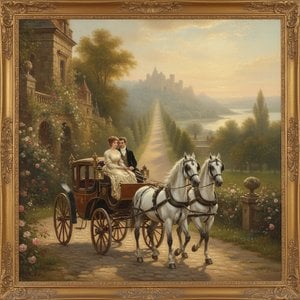
A key element of Lawson's style is his masterful use of light and color. He eschewed bright, saturated hues in favor of muted tones—ochres, browns, greys, and greens—that evoke the subtle shifts of mood and atmosphere within the countryside. His brushwork is often loose and expressive, yet carefully controlled, creating a sense of depth and texture that invites the viewer to step into the scene. The influence of Pre-Raphaelite painters, particularly in their attention to detail and romanticized depictions of nature, can be discerned in his work, though Lawson’s style remains uniquely his own.
Themes and Influences
Lawson's paintings are not simply representations of the landscape; they explore deeper themes related to human connection with nature, tradition, and the passage of time. The recurring motif of the horse is particularly significant, symbolizing both power and vulnerability, strength and gentleness. Hunting scenes, often depicted in a contemplative manner, suggest a respect for the natural world and an awareness of its inherent beauty. Lawson’s work also reflects a deep appreciation for rural life—the rhythms of the seasons, the hard work of farmers and laborers, and the enduring values of community.
While he was influenced by the Pre-Raphaelites, Lawson's artistic lineage extends beyond that movement. He shares affinities with artists like Constable and Turner, both masters of capturing the atmospheric effects of light and landscape. However, Lawson’s work possesses a distinctively Northern Irish sensibility—a quiet dignity, a subtle melancholy, and an unwavering commitment to portraying the beauty of his homeland.
Legacy and Recognition
John Andrew Lawson's artistic legacy is one of understated elegance and profound observation. Despite not achieving widespread fame during his lifetime, his work has gained increasing recognition in recent years, thanks in part to the efforts of WahooArt, which has championed his art through its reproductions and online exhibitions. His paintings are now held in private collections and displayed in galleries across Britain, testament to their enduring appeal.
Lawson’s dedication to capturing the essence of the English countryside—its beauty, its traditions, and its inherent connection to human experience—solidifies his place as a significant artist within the broader context of British landscape painting. His work serves as a poignant reminder of the value of observation, patience, and a deep respect for the natural world.
Otázky a odpovědi
Existuje kompletní seznam děl umělce John Andrew Lawson?
Veškerá díla umělce John Andrew Lawson na tento web lze prohlédnout na jeho stránce Všechna umělecká díla.
Jak se umění umělce John Andrew Lawson v čase vyvíjelo?
Kariéra umělce John Andrew Lawson se na stránce Kronika odvíjí období po období: jako horizontální časová osa děl uspořádaných do kapitol podle tvůrčích etap.
V jakém historickém období působil/a John Andrew Lawson?
John Andrew Lawson působil v období Contemporary. Toto období historicky vymezuje uměleckou činnost tohoto autora.