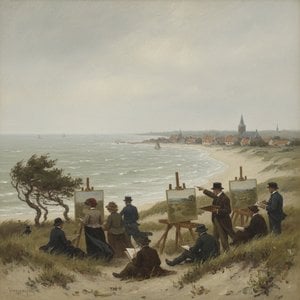
Jan Weissenbruch: Mistr nizozemských atmosférických krajin
Raný život a umělecké počátky
- Narozen: 19. června 1824, Haag, Nizozemsko.
- Jan Weissenbruch vyrostl v umělecké rodině; jeho otec, Johannes Weissenbruch, byl malířem a sběratelem umění.
- Raná blízkost s díly umělců jako Andreas Schelfhout a Bartholomeus van Hove prostřednictvím otcovy sbírky měla na něj zásadní vliv.
- V šestnácti letech absolvoval lekce kreslení u Johannese Lowe a později, v roce 1843, navštěvoval večerní kurzy vedené Bartholomeuse van Hove na Haagské akademii umění.
Umělecký rozvoj a vlivy
- Rané vlivy: Weissenbruchovy počáteční práce vykazovaly silnou podobnost s romantickým stylem Andrease Schelfhouta.
- Dopad Ruisdaela: Hluboce obdivoval XVII. století maláře krajin Jacoba van Ruisdaela, jehož díla studoval v muzeu Mauritshuis v Haagu. Právě tento obdiv se stal inspirací pro jeho velkolepé a dramatické nebeské tvary.
- Evoluce stylu: Postupem času se Weissenbruchovo používání barev stalo více střízlivým a způsob nanášení barvy se stal širším a volnějším, což vedlo k vytváření stále atmosféričtějších krajin.
Klíčové charakteristiky a umělecký styl
- Atmosférické krajiny: Weissenbruch je proslul svou schopností zachytit v malbě jemné nuance světla a atmosféry.
- Mistrovství akvarelu: Byl si zejména známý svými výjimečnými dovednostmi v akvarelu, díky kterým vytvářel něžné a evokativní scény.
- Reprezentace Haagské školy: Jeho dílo ztělesňuje charakteristiky Haagské školy – zaměření na realistické zobrazení nizozemské krajiny a každodenního života.
Významná díla a výstavy
- Své první vystavení zažil na Výstavě živoucích mistrů v roce 1847, což znamenalo jeho oficiální vstup do světa umění.
- Zakládající člen: Weissenbruch byl jedním ze zakladatelů Pulchri Studio, prestižní umělecké společnosti v Haagu.
- Rané uznání: V roce 1849, pouhé dva roky po své první výstavě, získalo Teylers Museum v Haarlemu jedno z jeho panoramatických krajin.
- Významné malby: Mezi jeho nejslavnější díla patří „Lodní kanál v Rijswijk“, „Krajina s mlýnem u Schiedamu“ a „Pohled na les u Barbizonu“.
Pozdní život a odkaz
- Vliv Barbizonu: V roce 1900, ve věku sedmdesáti let, cestoval Weissenbruch do Barbizonu ve Francii, kde namaloval svůj slavný „Pohled na les u Barbizonu“.
- Práce venkovním světlem: Preferoval práci venku a hledal inspiraci v krajině obklopující Haag.
- Smrt a vzpomínka: Jan Weissenbruch zemřel v roce 1903 a zanechal po sobě odkaz jednoho z nejlepších představitelů Haagské školy. Jeho jemné tahy štětcem a střízlivá barevná paleta i dnes fascinují milovníky umění.
Historický význam
- Nizozemská krajinná tradice: Weissenbruch hrál zásadní roli v pokračování nizozemské tradice malování krajiny a stavěl na odpočinku dřívějších mistrů, jako byl Ruisdael.
- Příspěvek Haagské školy: Jeho práce pomohla definovat estetické a filozofické principy Haagské školy, zdůrazňující realismus, atmosféru a spojení s přírodou.
- Trvalý vliv: Zůstává důležitou postavou v historii nizozemského umění, která inspiruje generace krajinářů svými citlivými zobrazeními přirozeného světa.
Otázky a odpovědi
Mohu si prohlédnout díla umělce Jan Weissenbruch podle tématu?
Díla umělce Jan Weissenbruch si můžete prohlédnout podle tématu na stránce Abeceda témat tohoto umělce.
Existuje chronologický přehled tvorby umělce Jan Weissenbruch?
Chronologický přehled tvorby umělce Jan Weissenbruch je k dispozici na jeho stránce Kronika, kde jsou díla uspořádána v pořadí jejich vzniku v jednotlivých kapitolách.
Kde a kdy se narodil/a Jan Weissenbruch?
Jan Weissenbruch se narodil(a) ve městě Haag v roce 1824.
Odkud pochází Jan Weissenbruch?
Jan Weissenbruch se narodil(a) v zemi Nizozemsko.
Kde mohu vidět všechna umělecká díla autora Jan Weissenbruch?
Veškerá díla umělce Jan Weissenbruch na tento web lze prohlédnout na jeho stránce Všechna umělecká díla.
Mohu si prohlédnout díla umělce Jan Weissenbruch podle nálady?
Stránka umělce Pokoj nálad zobrazuje díla Jan Weissenbruch uspořádaná podle jejich atmosféry.
V jakém městě a z jaké země pochází Jan Weissenbruch?
Jan Weissenbruch se narodil(a) ve městě Haag v zemi Nizozemsko.