Jan Martszen de Jonge (1609 – 1647): A Flemish Landscape Painter Amidst Baroque Splendor
Jan Martszen de Jonge (1609 in Haarlem – 1647 in Haarlem) stands as a relatively obscure figure within the illustrious tapestry of Dutch Golden Age art, yet his contribution to landscape painting and particularly his depictions of military skirmishes holds considerable interest for scholars examining the artistic currents of the era. Primarily active in Haarlem, Martszen’s oeuvre reflects both the stylistic innovations of the Baroque period and a grounding in Flemish traditions—a duality that distinguishes him from many of his contemporaries.
- Early Life & Training: Precise biographical details surrounding Martszen's formative years remain scarce. He apprenticed under Hans van Steenwyck II, a prominent Haarlem landscape painter known for his dramatic compositions and meticulous attention to detail. This association undoubtedly instilled in Martszen a foundational understanding of Flemish landscape aesthetics—characterized by atmospheric perspective, luminous color palettes, and an emphasis on conveying mood and emotion through visual cues.
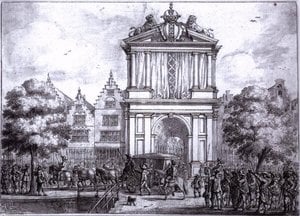
- Notable Works & Artistic Style: Martszen’s artistic style is notable for its blend of Baroque grandeur and Flemish realism. He excelled in capturing the dynamism of battle scenes with impressive accuracy—a genre that gained considerable popularity during his lifetime, fueled by ongoing conflicts between European powers. However, he wasn't solely focused on military subjects; he produced serene landscapes imbued with subtle tonal variations and evocative lighting effects. The Rijksmuseum houses several paintings attributed to Martszen, including “The Entry of Maria de’ Medici to Amsterdam,” showcasing his masterful command of color and composition.
- Influences & Connections: Martszen's artistic sensibilities were undoubtedly shaped by the broader artistic landscape of Haarlem during the Baroque period. He collaborated closely with Jan Brueghel the Elder, a celebrated Flemish painter known for his monumental landscapes and allegorical narratives—a partnership that exemplifies the cross-border exchange of ideas and techniques prevalent in 17th-century art circles. Furthermore, Martszen’s work demonstrates an awareness of scientific observation, mirroring the burgeoning interest in natural history during this era.
- Legacy & Historical Significance: While Martszen's fame didn't rival that of Rembrandt or Vermeer, his paintings continue to resonate with viewers today due to their skillful execution and expressive qualities. He represents a crucial link between Flemish landscape painting and the Dutch Baroque tradition—a testament to Haarlem’s artistic vitality during its golden age. His contribution to documenting military events provides valuable insight into the visual culture of the time.
Exploring Martszen's Landscape Vision
Martszen’s landscapes aren’t merely scenic representations; they are imbued with a palpable sense of atmosphere and emotion. Unlike some contemporaries who prioritized idealized beauty, Martszen sought to capture the complexities of nature—its subtle shifts in light and color—with remarkable precision. His use of tonal gradations—particularly his masterful manipulation of chiaroscuro—creates dramatic contrasts that heighten visual impact and convey psychological depth. Consider “Battle Scene,” where Martszen skillfully depicts a chaotic battlefield, utilizing muted colors and dynamic brushstrokes to convey the intensity of combat. This approach aligns with the broader Baroque preoccupation with conveying emotion through art, distinguishing Martszen from artists prioritizing purely decorative considerations.
Further Resources
For deeper exploration into Jan Martszen de Jonge’s artistic life and work, consult the following resources:
Related Artists
Consider examining the works of Jan Brueghel the Elder and Pieter Van Laan for comparative insights into Flemish Baroque landscape painting during Martszen’s era.