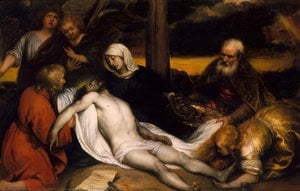
Jan Andrea Lievens: A Dutch Master Caught in Rembrandt’s Shadow
Jan Andrea Lievens, born on October 24th, 1607, in Leiden, Netherlands, stands as a captivating figure within the vibrant tapestry of the Dutch Golden Age. His life and artistic journey are inextricably linked to that of his contemporary, Rembrandt van Rijn, creating a complex narrative of collaboration, rivalry, and ultimately, relative obscurity. Lievens’s work, characterized by dramatic compositions, masterful use of light and shadow, and a distinctive Caravaggisti influence, deserves renewed recognition as a significant contributor to the artistic landscape of 17th-century Europe.Early Years and Artistic Training
Lievens's early life was steeped in artistry. His father, Lieven Hendriksze, was a skilled embroiderer – a profession that instilled an appreciation for detail and craftsmanship from a young age. At the tender age of ten, he entered the studio of Joris van Schooten, a respected Leiden artist who provided him with the foundational elements of drawing and painting. This apprenticeship laid the groundwork for his future development, introducing him to techniques and principles that would later inform his distinctive style. Shortly thereafter, Lievens was sent to Amsterdam to study under Pieter Lastman, a renowned history painter known for his dynamic compositions and dramatic use of light. Lastman’s influence is readily apparent in Lievens's early works, particularly in the way he rendered figures and staged scenes with theatrical flair. This period marked a crucial stage in Lievens’s artistic education, shaping his understanding of perspective, anatomy, and color theory.A Collaborative Partnership with Rembrandt
Around 1626, at the age of nineteen, Jan Lievens entered into a remarkable partnership with Rembrandt van Rijn. This collaboration, spanning approximately six years, produced over two dozen paintings, drawings, and etchings—a period marked by intense creative energy and mutual influence. The pair worked together in Amsterdam, sharing a studio and developing their artistic styles in tandem. While the exact nature of their relationship remains debated among art historians, it’s clear that they pushed each other to explore new techniques and approaches. Rembrandt's experience as a seasoned master undoubtedly guided Lievens, while Lievens’s youthful exuberance and willingness to experiment likely invigorated Rembrandt’s work. However, this competitive collaboration also created difficulties in attributing works from this period, leading to years of misattribution and uncertainty about the authorship of many paintings.The Influence of Caravaggisti Style
Lievens's artistic style is deeply rooted in the influence of the *Caravaggisti*, a group of Italian painters who had popularized the dramatic use of light and shadow, intense colors, and dynamic compositions during the late 16th century. This influence is particularly evident in his early works, such as *Head of an Old Man* (held at the New Orleans Museum of Art) and *Bearded Man with a Beret*, where he employs tenebrism—a technique characterized by stark contrasts between light and dark—to create a sense of drama and immediacy. Furthermore, Lievens’s penchant for portraying figures in dramatic poses and capturing fleeting moments of emotion aligns closely with the aesthetic principles of the Caravaggisti.A Journey Beyond Amsterdam: London, Antwerp, and Berlin
Following his collaboration with Rembrandt, Lievens embarked on a peripatetic career that took him to various European centers, including London, Antwerp, The Hague, and Berlin. In London, he was invited to the court of King James I in 1631, where he created portraits for the royal family. This marked a significant turning point in his career, establishing him as a sought-after artist among Europe’s elite. In Antwerp, he continued to receive commissions from wealthy patrons and city officials, producing a diverse range of works—from religious paintings to genre scenes depicting everyday life. His time in Berlin saw him working for the Prussian court, further expanding his artistic horizons and solidifying his reputation as a versatile and accomplished painter.Legacy and Rediscovery
Despite his considerable talent and prolific output, Jan Lievens’s legacy was largely overshadowed by that of Rembrandt during his lifetime. For centuries, his work was frequently misattributed to the more famous master, contributing to its relative obscurity. However, in recent decades, a renewed interest in Lievens's art has led to a reassessment of his contributions to the Dutch Golden Age. Exhibitions such as “Jan Lievens: A Dutch Master Rediscovered” at the Milwaukee Art Museum have played a crucial role in bringing his work to wider audiences and correcting historical misinterpretations. Today, Jan Andrea Lievens is increasingly recognized as a significant artist in his own right—a dynamic and innovative painter who deserves a prominent place among the leading figures of the Dutch Golden Age.Otázky a odpovědi
Odkud pochází Jan Andrea Lievens?
Jan Andrea Lievens se narodil(a) v zemi Nizozemsko.
V jakém městě a z jaké země pochází Jan Andrea Lievens?
Jan Andrea Lievens se narodil(a) ve městě Leiden v zemi Nizozemsko.
Kde najdu díla umělce Jan Andrea Lievens uspořádaná podle barvy?
Stránka Spektrální index organizuje díla umělce Jan Andrea Lievens podle barvy.
Kde a kdy se narodil/a Jan Andrea Lievens?
Jan Andrea Lievens se narodil(a) ve městě Leiden v roce 1607.
Kde najdu díla umělce Jan Andrea Lievens seskupená podle barevné palety?
Stránka Podle barevné palety seskupuje díla umělce Jan Andrea Lievens podle jejich barevných palet.
V jakém historickém období působil/a Jan Andrea Lievens?
Jan Andrea Lievens působil v období – Raná modernita. Toto období historicky vymezuje uměleckou činnost tohoto autora.
Kde najdu díla umělce Jan Andrea Lievens seskupená podle klíčových slov?
Díla umělce Jan Andrea Lievens můžete prozkoumat podle klíčových slov na jeho stránce Podle klíčových slov. Každé klíčové slovo seskupuje související umělecká díla.