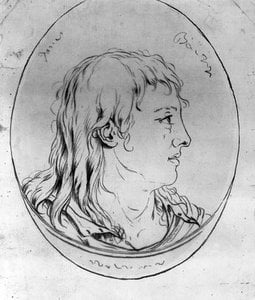
A Life Shrouded in Secrecy and Artistic Ambition
The story of James Barry is one of remarkable contradiction, a life lived under the weight of carefully constructed deception yet illuminated by genuine artistic talent and unwavering professional dedication. Born either in 1789 or 1799 – the discrepancy itself a testament to the deliberate obfuscation that characterized his existence – in Cork, Ireland, as Margaret Anne Bulkley, Barry navigated a world rigidly defined by gender roles by assuming a male identity. This audacious act wasn’t born of personal inclination towards a different gender, but rather a pragmatic necessity; it was a calculated maneuver to access opportunities denied to women of the era, most notably a career in medicine. The young Margaret came from a family touched by both artistic sensibility – her aunt being the celebrated Irish artist James Barry RA – and financial instability following her father’s dismissal from his post. A complex conspiracy involving her mother, Mary-Ann Bulkley, General Francisco de Miranda, Dr. Edward Fryer, and solicitor Daniel Reardon enabled this transformation, setting in motion a life of extraordinary accomplishment concealed behind a carefully maintained facade.From Medical Pioneer to Military Surgeon
In 1809, “James Barry” embarked on medical studies at the University of Edinburgh, facing skepticism regarding his youth and perceived effeminacy but ultimately qualifying as a ‘literary and medical student’ and earning a Medicinae Doctor (MD) degree in 1812. Further training followed at Guy’s and St Thomas’ Hospitals in London, culminating in passing the examination of the Royal College of Surgeons of England in 1813. Thus equipped, Barry entered the British Army, embarking on a fifty-year career that saw him rise to the rank of Inspector General – equivalent to a Brigadier General – the second-highest medical office attainable. His service took him across the vast expanse of the British Empire, with significant postings in Cape Town, South Africa, where he championed improvements in hospital conditions and surgical practices. He was a progressive figure, advocating for better sanitation and patient care long before such concepts were widely accepted. Barry’s skill as a surgeon was undeniable; he is credited with performing the first successful caesarean section in Africa – with both mother and child surviving – a testament to his courage and medical prowess. Throughout his military career, Barry remained fiercely independent and often clashed with superiors due to his uncompromising standards and refusal to compromise on patient welfare.An Artistic Inclination Alongside a Medical Calling
Despite the demanding responsibilities of his profession, James Barry possessed a demonstrable artistic talent that ran parallel to his medical pursuits. He produced numerous drawings and watercolors, often depicting scenes from his military life or portraits of individuals he encountered during his service. These works reveal a keen eye for detail, a sensitivity to composition, and a clear aptitude for capturing the likenesses of his subjects. Though not a professional artist in the same vein as his uncle, James Barry RA, his artistic endeavors were recognized by influential patrons like Sir Thomas Burke, who provided early support. His drawings often served as studies for larger compositions or as personal reflections on his experiences. The surviving artworks offer glimpses into a private world alongside the public persona of the dedicated surgeon. A striking example is “Male With Arms Spread Wide Seen From Behind”, a charcoal study showcasing Renaissance-inspired anatomy and masterful technique, revealing Barry’s dedication to anatomical precision – a skill honed through his medical training but applied with artistic flair. This piece exemplifies his meticulous attention to detail and demonstrates the profound influence of classical art on his creative vision.The Revelation and Enduring Legacy
The extraordinary secret of James Barry's true identity remained concealed until after his death in 1865. The revelation that the highly respected military surgeon was born female sent shockwaves through Victorian society, sparking both scandal and fascination. While some viewed it as a transgression, others recognized the remarkable achievement of living successfully and achieving professional prominence while concealing one’s gender in an era defined by strict patriarchal norms. Barry's story has since become a subject of intense scholarly inquiry, exploring themes of gender identity, social constraints, and the lengths to which individuals will go to pursue their ambitions. The limited evidence surrounding his personal life beyond his military career continues to fuel speculation and myth-making, adding layers of intrigue to this unique figure. Today, James Barry is celebrated as a pioneering surgeon, a symbol of defiance against societal expectations, and an artist whose work deserves recognition alongside his extraordinary life story. His legacy resonates with contemporary discussions about gender identity and transgender experiences, though it’s crucial to understand his choices within the historical context of the 19th century. He remains a compelling figure, challenging conventional narratives and inspiring continued exploration of his multifaceted persona.Otázky a odpovědi
V jakém historickém období působil/a James Barry?
James Barry působil v období – 19. století. Toto období historicky vymezuje uměleckou činnost tohoto autora.
Mohu navštívit virtuální muzeum děl umělce James Barry?
3D galerie umělce James Barry je stránka, která v rámci virtuální trojrozměrné galerie prezentuje umělecká díla tohoto tvůrce.
Pod jakými dalšími jmény nebo pseudony je James Barry známý/á?
James Barry je známý/á také pod jmény Margaret Anne Bulkley, Bulkeley.