

Entering the Subway (1946) je nejslavnější obraz autora Jack Perlmutter, který se nachází v muzeu The Phillips Collection ve městě Washington, D.C.. Z 2 děl umělce Jack Perlmutter v našem katalogu uvádíme 2 těch, na které se kolektéři a návštěvníci muzeí nejčastěji dívají, včetně roku vzniku, názvu muzea a příběhu každého díla.
Seřazeno podle našeho skóre popularity, které kombinuje počet vyhledávání, návštěv a objednávek u každého díla. Aktualizováno listopad 2026.


Muzeum s největším počtem obrazů na této stránce.
| Muzeum | Město | Díla autora Jack Perlmutter | Obrazy z tohoto seznamu |
|---|---|---|---|
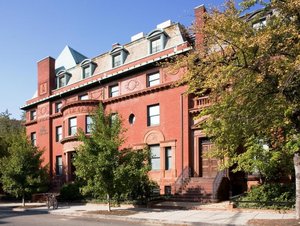 The Phillips Collection |
Washington, D.C. | 2 | Entering the Subway, Still Life with Cheese Box |
1946 je rok vzniku všech díel s datem vzniku od Jack Perlmutter na této stránce: zde jsou, seřazena podle slávy.

Entering the Subway (1946)
26 let: dílo Entering the Subway pochází z roku 1946 a Jack Perlmutter se narodil/a v roce 1920.
Náš katalog obsahuje 2 děl autora Jack Perlmutter.
Většina z nich se nachází v The Phillips Collection (Washington, D.C.). V tabulce výše jsou jednotlivé muzea uvedeny postupně.
Entering the Subway a Still Life with Cheese Box patří mezi 2 děl na této stránce, která má v zastarání The Phillips Collection, Washington, D.C..
Born in New York City in 1920, Jack Perlmutter spent his formative years growing up in the Bronx. His path toward a life in the arts was not shaped by the traditional corridors of academia; he never attended college and remained entirely self-taught. This lack of formal instruction did not hinder his technical development, as his early practical experiences provided a rigorous, if unconventional, education in the mechanics of printmaking.
The onset of World War II redirected the course of his life when he enlisted in the Navy. During his service, he found a specialized niche working for the Navy's Hydrographic Office. As a lithographer, he was tasked with the precise and demanding work of drawing and printing nautical charts. This period of service was more than a military obligation; it was a technical apprenticeship that allowed him to master the complicated art of lithography through direct, repetitive practice.
During the 1950s, Perlmutter identified his approach as that of an "abstract realist," a term that captured his attempt to reconcile two seemingly contradictory impulses. His compositions were typically anchored by recognizable urban scenes, such as bridges, buildings, or milling crowds, yet these subjects were often overlaid with busy, linear forms. He sought to portray the energy and movement of city life through semi-abstract paintings and prints, creating works that felt both structured and restless.
His technical evolution was significantly influenced by his time in Japan on a Fulbright scholarship from 1959 to 1960. This period allowed him to study new printmaking techniques and incorporate elements of Japanese design into his aesthetic. This infusion of international influence added a layer of complexity to his already energetic style, blending the grit of American urbanism with a more disciplined, graphic sensibility.
His mastery of various media allowed him to explore these themes through different textures and layers. Whether working in oil on board or through the precision of printmaking, he maintained a focus on the tension between the solid architecture of the city and the fluid motion of the people within it.
Perlmutter’s professional life was deeply intertwined with the cultural fabric of Washington, D.C. Following his service in the Navy during World War II, where he worked as a lithographer for the Hydrographic Office, he transitioned into a significant role within the city's academic and artistic institutions. From 1960 to 1982, he held a position of influence at the Corcoran Gallery of Art, serving as a Professor of Art and as the Chairman of the Printmaking Department. His tenure there coincided with a period of significant growth for the institution, during which he helped shape the technical development of many emerging printmakers.
His influence extended beyond the classroom and into the curation of local art. He served as an art curator at the Cosmos Club, contributing to the selection and presentation of works within that community. This period of his life was marked by a balance between formal instruction and the practical demands of managing art programs. His technical expertise, refined through years of working with nautical charts and lithography, allowed him to navigate both the academic and administrative sides of the art world with ease.
In the 1970s and 1980s, his career took a turn toward the scientific and the celestial. He received commissions from NASA to portray the Apollo and space shuttle missions. These assignments required him to translate the complex, technical realities of space exploration into visual forms. This work bridged the gap between the structured precision of government documentation and the expressive possibilities of his painting and printmaking.
Perlmutter’s output often focused on the rhythmic, sometimes chaotic energy of urban environments. His early explorations into the mechanics of city life are evident in Entering the Subway, a work dating from about 1946. This period of his development saw him translating the movement of metropolitan transit into structured compositions. Later, his interest in the verticality of the city was captured in Fire Escape, a color woodcut and screenprint produced during the 1960s-1970s.
The artist also demonstrated a profound command over printmaking techniques, moving between the starkness of monochrome and the complexity of layered color. His 1951 lithograph, Aurora Borealis, utilizes black ink on wove paper to explore light and form. In contrast, his silkscreen work Under The El employs a multi-colored approach to capture the atmosphere of industrial spaces. Even in his more traditional subjects, such as Still Life with Cheese Box, there is a sense of the structured, deliberate arrangement that defined his visual language.
The reach of Jack Perlmutter’s work extends through several of the most significant institutions in the United States. His prints and paintings are held within the permanent collections of the National Gallery of Art and the Smithsonian American Art Museum. In Washington, D.C., his presence is also felt in the Phillips Collection. Beyond the capital, his pieces have found a place in New York's Metropolitan Museum of Art.
His influence was deeply rooted in the artistic fabric of Washington, D.C., where he remained an active figure in the community until his death in 2006. He left behind a body of work that captured the energy of urban life, from the movement of crowds to the structural lines of the city. His ability to translate these scenes into both lithographs and paintings ensured his place in the regional and national art history of the mid-twentieth century.