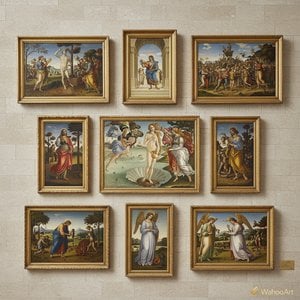
Giovanni Antonio Sogliani: A Florentine Renaissance Painter
Life and Early Career
- Giovanni Antonio Sogliani was born in Florence, Italy, in 1492.
- Details of his early life are scarce, but he became a prominent painter during the High Renaissance period.
- According to Giorgio Vasari’s *Vite*, Sogliani apprenticed with Lorenzo di Credi for two decades. While the length of this apprenticeship is debated, it suggests a strong foundational influence on his artistic style.
- He served as the executor of Lorenzo di Credi's will in 1531, demonstrating a close professional relationship.
Artistic Style and Influences
- Sogliani’s style is characterized by an archaic quality, often attributed to the lasting impact of his training with Lorenzo di Credi.
- He blended elements of traditional Florentine painting with emerging Renaissance techniques.
- Fra Bartolomeo significantly influenced Sogliani’s work, particularly in his use of color and composition, as noted by Vasari in relation to the *Martyrdom of St Acasio*.
- His paintings often feature religious themes, reflecting the prevalent artistic patronage of the time.
Major Works and Commissions
- Martyrdom of St Acasio: Painted for the church of San Lorenzo in Florence, this work showcases Fra Bartolomeo’s influence.
- St Martin: A painting created for the Orsanmichele, a significant public building in Florence.
- St Brigitta Altarpiece: Now housed in the Museo di San Marco, this altarpiece demonstrates Sogliani’s skill in religious iconography.
- Pisa Cathedral Commissions: He received important commissions for the cathedral of Pisa, including three canvases depicting scenes from biblical stories – *Sacrifice of Abel*, *Sacrifice of Cain*, and *Sacrifice of Noah* (completed by May 15, 1533).
- Altarpiece of the Virgin with Child and Saints: Commissioned in 1536.
- Allegory of the Immaculate Conception: Currently located in the Accademia di Belli Arti in Florence.
Artistic Development & Historical Context
- Sogliani worked during a period of significant artistic transition, bridging the High Renaissance and early Mannerism.
- His work reflects the religious fervor and patronage prevalent in Florence during the 16th century.
- He navigated a competitive art scene alongside prominent artists like Perino del Vaga, from whom he took over some commissions at Pisa Cathedral.
Legacy and Significance
- Sogliani’s artistic legacy lies in his preservation of traditional Florentine painting techniques while incorporating Renaissance innovations.
- He trained several pupils, including Sigismondo Foschi and Zanobi di Poggino, continuing the artistic lineage.
- Although not as widely celebrated as some of his contemporaries, Sogliani’s work provides valuable insight into the artistic landscape of 16th-century Florence.
- His paintings remain important examples of religious art from the Renaissance period and are studied for their stylistic characteristics.